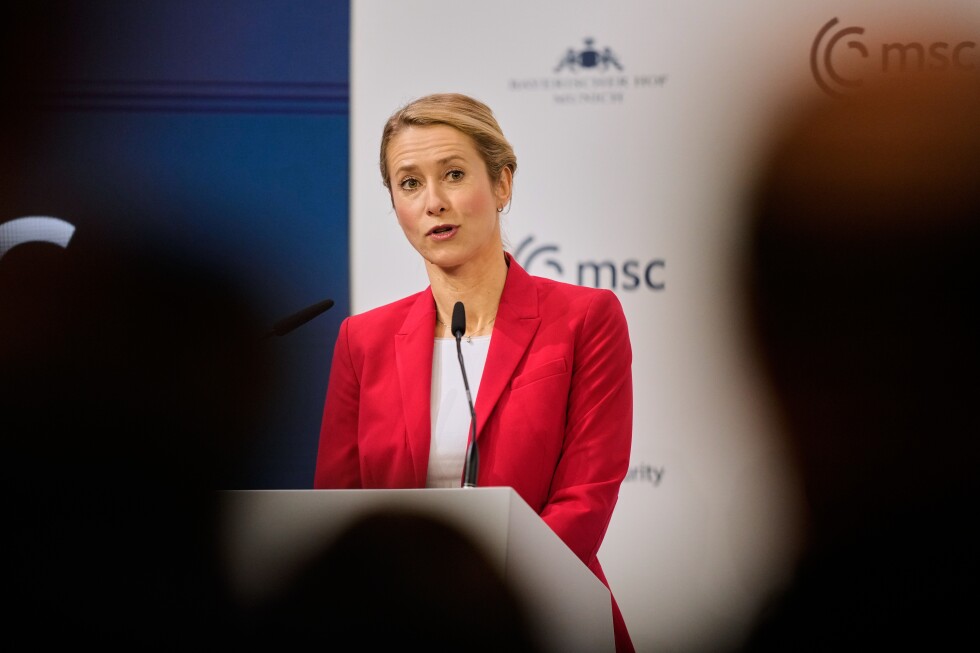
MUNICH — European Union Foreign Policy Chief Kaja Kallas delivered a robust rebuttal to claims of Europe’s decline during her address at the Munich Security Conference on Sunday, directly countering assertions made in recent U.S. national security assessments.
Kallas challenged the characterization of Europe as facing “civilizational erasure”—a concept outlined in the Trump administration’s December national security strategy document. That document had pointed to European economic stagnation, immigration policies, declining birth rates, and alleged suppression of political opposition as factors contributing to what it described as a loss of national identity and self-confidence.
“Contrary to what some may say, woke, decadent Europe is not facing civilizational erasure,” Kallas asserted before the international security gathering. “People still want to join our club and not just fellow Europeans,” she added, referencing her conversations during a recent Canada visit where many expressed interest in EU membership.
The EU diplomat characterized such criticism as “European-bashing” and emphasized Europe’s ongoing role in advancing human rights and prosperity. “We are pushing humanity forward, trying to defend human rights and all this, which is actually bringing also prosperity for people,” Kallas stated.
Her comments followed Saturday’s address by U.S. Secretary of State Marco Rubio, who struck a more conciliatory tone than previous Trump administration officials while maintaining firm positions on policy differences. Rubio assured European allies that ending the trans-Atlantic partnership was “neither our goal nor our wish,” acknowledging America’s enduring ties to Europe while reaffirming the administration’s stance on migration, trade, and climate policies.
European leaders including British Prime Minister Keir Starmer emphasized the strength derived from Europe’s diverse societies. Starmer noted the importance of defending “vibrant, free and diverse societies” while demonstrating how “people who look different to each other can live peacefully together.”
Kallas acknowledged that while differences persist on specific issues, the fundamental trans-Atlantic relationship remains intact. “It is also clear that we don’t see eye to eye on all the issues and this will remain the case as well, but I think we can work from there,” she concluded.