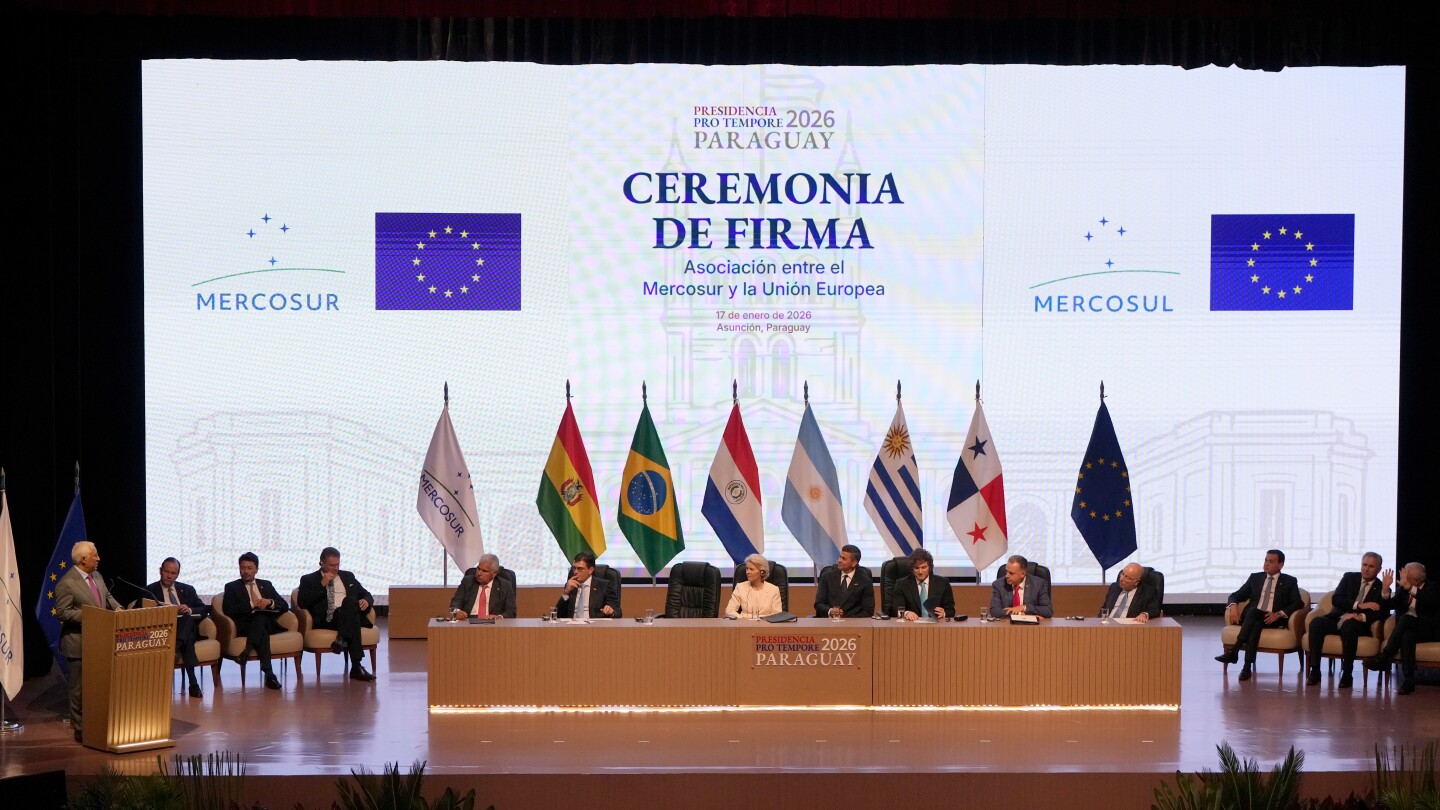
ASUNCIÓN, Paraguay — In a significant geopolitical maneuver, the European Union and South America’s Mercosur bloc finalized a groundbreaking free trade agreement on Saturday, concluding over 25 years of complex negotiations. The signing ceremony in Paraguay’s capital represents a strategic expansion of EU influence in resource-rich South America during an era marked by escalating U.S. tariffs and growing Chinese export dominance.
European Commission President Ursula von der Leyen emphasized the agreement’s profound geopolitical implications, stating: “We choose fair trade over tariffs. We choose a productive long-term partnership over isolation.” The event gathered presidents from Argentina, Uruguay, and Paraguay, along with Brazil’s foreign minister, demonstrating regional commitment to diversified international relations despite U.S. claims of hemispheric dominance.
This accord establishes one of the world’s largest free trade zones, uniting over 700 million consumers and representing approximately 25% of global GDP. The agreement particularly benefits South America’s agricultural exporters and European industrial manufacturers seeking new markets for automotive and machinery exports.
However, the deal faces one final obstacle: ratification by the European Parliament. Powerful protectionist interests on both continents, especially European farmers concerned about cheap agricultural imports, continue to oppose the agreement. To address these concerns, the pact includes gradual tariff reductions over 10-15 years, strict beef import quotas, safeguard mechanisms, and substantial EU subsidies for farmers. While these measures secured Italy’s support, France remains opposed to the agreement.