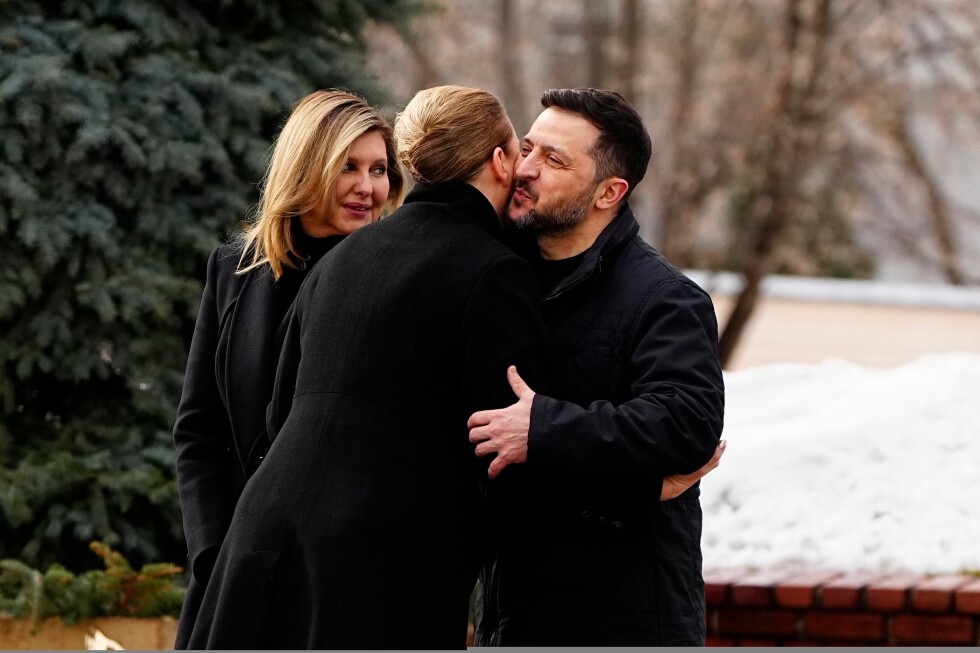
KYIV, Ukraine — In a powerful demonstration of solidarity, more than a dozen high-ranking European officials converged on the Ukrainian capital Tuesday, marking the somber fourth anniversary of Russia’s full-scale invasion. The diplomatic delegation included European Council President Antonio Costa, European Commission President Ursula von der Leyen, Finnish President Alexander Stubb, along with seven prime ministers and three foreign ministers.
Ukrainian President Volodymyr Zelenskyy declared that despite overwhelming odds, Ukraine has successfully preserved its sovereignty against Russia’s superior military forces. According to analysis from the Washington-based Institute for the Study of War, Russian forces captured merely 0.79% of Ukrainian territory over the past year of fighting. “We have defended our independence, we have not lost our statehood,” Zelenskyy stated via social media, emphasizing that President Vladimir Putin “has not achieved his goals” and “has not broken Ukrainians.”
However, the conflict has evolved into a corrosive war of attrition with no diplomatic breakthrough in sight. U.S.-led peace initiatives remain stalled over critical issues including the status of the Russian-occupied Donbas region and post-war security arrangements demanded by Kyiv to prevent future invasions.
The human cost continues to mount dramatically. A recent Center for Strategic and International Studies report estimates combined casualties on both sides could reach 2 million by spring, representing the highest troop mortality rate for any major power since World War II.
European leaders increasingly view the conflict as directly impacting their own security. German Chancellor Friedrich Merz characterized the war as “a nightmare for us all” in a social media post, adding that “the fate of Ukraine is our fate.”
The conflict has assumed global dimensions, with NATO countries providing military assistance while Russia receives support from North Korea (troops and artillery), Iran (drone technology), and China (machine tools and chips according to U.S. and analyst reports). This internationalization threatens to exacerbate shortages, hunger, and political instability across developing nations.
With Ukraine dependent on foreign assistance to continue resisting Russian aggression, NATO members have stepped up weapons procurement following the Trump administration’s policy shift away from direct arms donations. The European Union has provided financial aid, though occasionally facing resistance from member states Hungary and Slovakia.
The staggering reconstruction costs for Ukraine are now estimated at nearly $588 billion over the next decade—almost triple the country’s nominal GDP for last year, according to a joint report from the World Bank, European Commission, United Nations, and Ukrainian government.