BRUSSELS (AP) — In a significant policy shift reflecting Europe’s evolving political landscape, 46 member states of the Council of Europe have initiated deliberations that could substantially reinterpret human rights protections for migrants. The discussions, held Wednesday in Strasbourg, France, signal a growing consensus toward modifying the application of the European Convention on Human Rights—a foundational document established post-World War II.
Council of Europe Secretary General Alain Berset characterized the 75-year-old convention as a ‘living instrument’ while acknowledging nations’ responsibility to ‘safeguard national vital interests such as security.’ This development emerges as mainstream political parties across Europe increasingly adopt stricter migration policies to counter far-right political advances, despite data showing a 22% decrease in irregular border crossings into the EU this year.
The movement gained momentum last year when nine nations signed a letter seeking to curtail the powers of the European Court of Human Rights—the council’s independent judicial arm. Critics, including Italy, Denmark and the United Kingdom, argue the court’s interpretations hinder their ability to deport migrant criminals and ensure national security. On Wednesday, 27 nations endorsed a separate statement advocating for less restrictive legal interpretations.
Andrew Forde, co-founder of the AGORA legal academic group and former council employee, noted this represents the first time in the Council of Europe’s history that member states have explicitly identified a specific population segment for reduced rights protections.
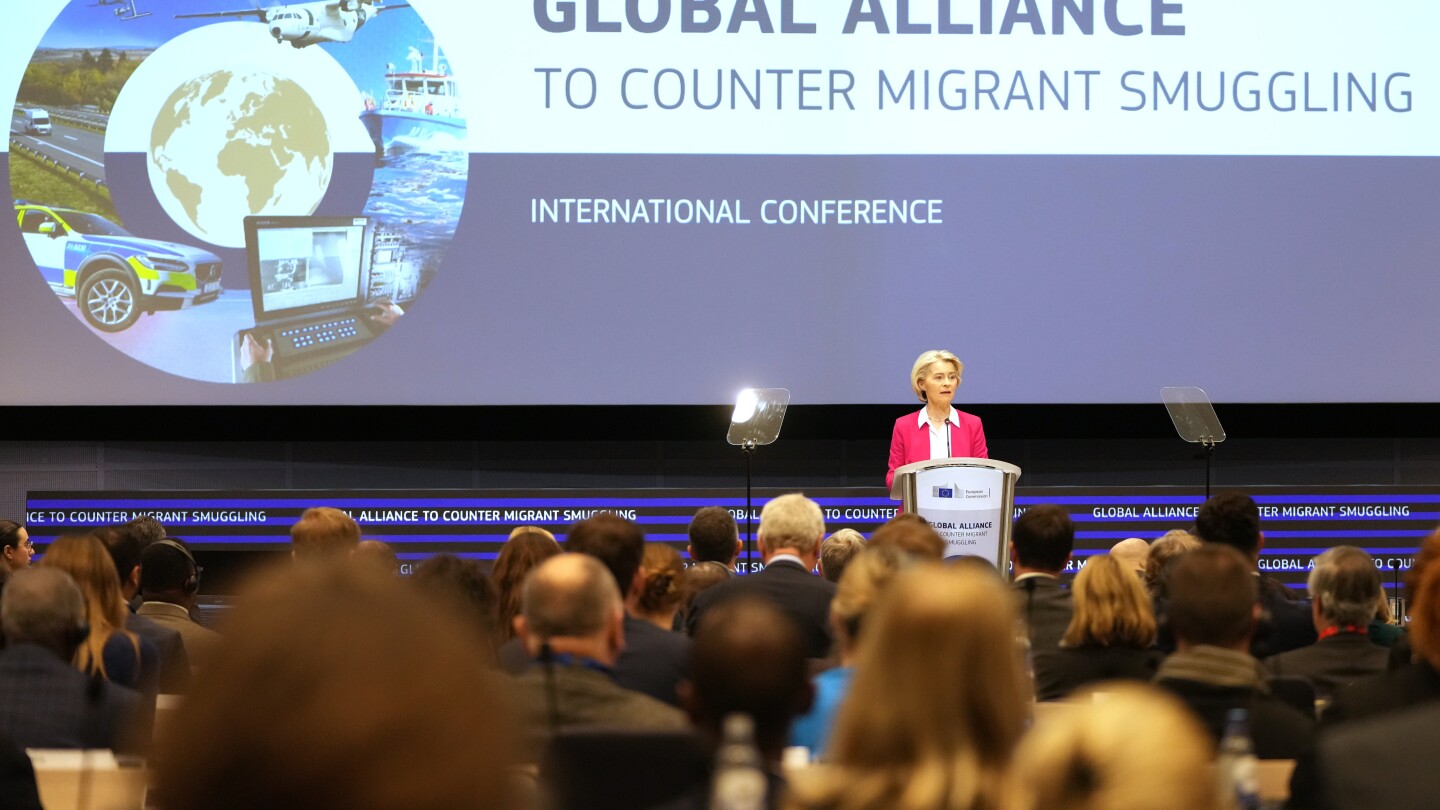
Concurrently, European Commission President Ursula von der Leyen pledged in Brussels to dismantle human smuggling networks, declaring: ‘Our goal is simple. We want to bankrupt their businesses through all means available.’ This commitment came during the second anniversary observance of the EU-led Global Alliance to Counter Migrant Smuggling.
Paradoxically, while migration dominates political discourse, European nations simultaneously invest in programs to attract foreign workers to address aging populations and labor shortages, highlighting the continent’s complex relationship with migration policy.