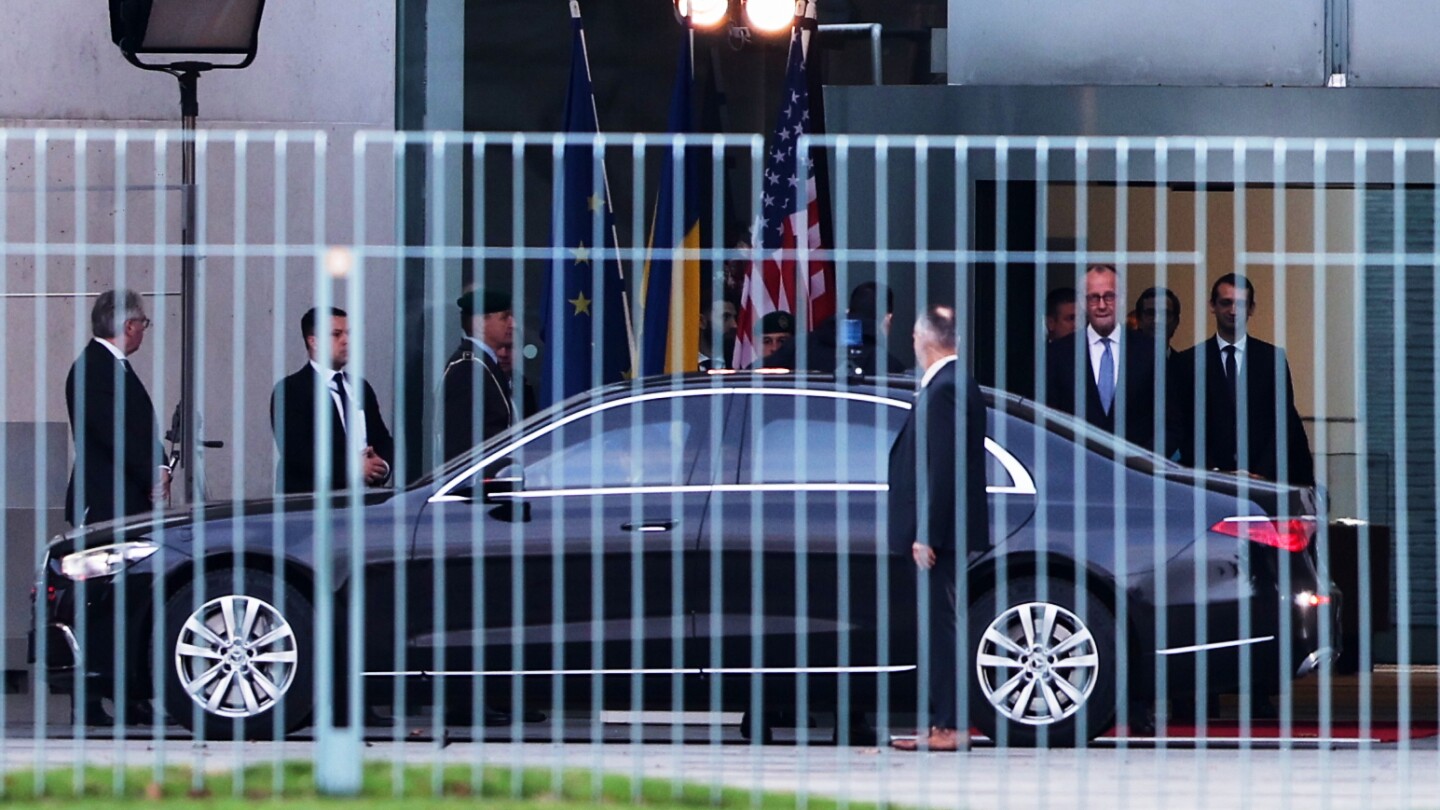
European leaders are convening in Berlin to reinforce their commitment to Ukraine as the nation faces mounting pressure from Washington to accept a U.S.-brokered peace agreement. The diplomatic engagements follow Sunday’s crucial discussions between Ukrainian President Volodymyr Zelenskyy and U.S. envoys, including President Trump’s special envoy Steve Witkoff and senior advisor Jared Kushner, held at the German federal chancellery.
The negotiations occur against the backdrop of increasing U.S. frustration with the protracted conflict duration. Washington has intensified efforts to mediate between the warring parties, though significant obstacles persist. Primary sticking points include territorial control over Ukraine’s eastern Donetsk region, currently predominantly occupied by Russian forces, and Ukraine’s potential NATO membership status.
In a significant strategic shift, President Zelenskyy indicated willingness to abandon Ukraine’s NATO membership aspirations if Western nations provide equivalent security guarantees. However, he maintained firm opposition to territorial concessions demanded by Russian President Vladimir Putin, who insists on Ukrainian withdrawal from remaining Donetsk territories under its control.
The geopolitical landscape has been further complicated by German Chancellor Friedrich Merz’s declaration that the era of ‘Pax Americana’ has concluded for Europe. Merz cautioned that Putin’s ultimate objective involves fundamental border alterations across Europe and potential restoration of the former Soviet Union’s boundaries. Concurrently, French President Emmanuel Macron reaffirmed France’s unwavering support for Ukraine’s sovereignty and European security through robust, lasting peace arrangements.
President Putin has consistently denied expansionist ambitions toward European allies while maintaining that Ukraine’s NATO integration pursuits represent an existential threat to Russian security—the primary justification cited for the February 2022 invasion.