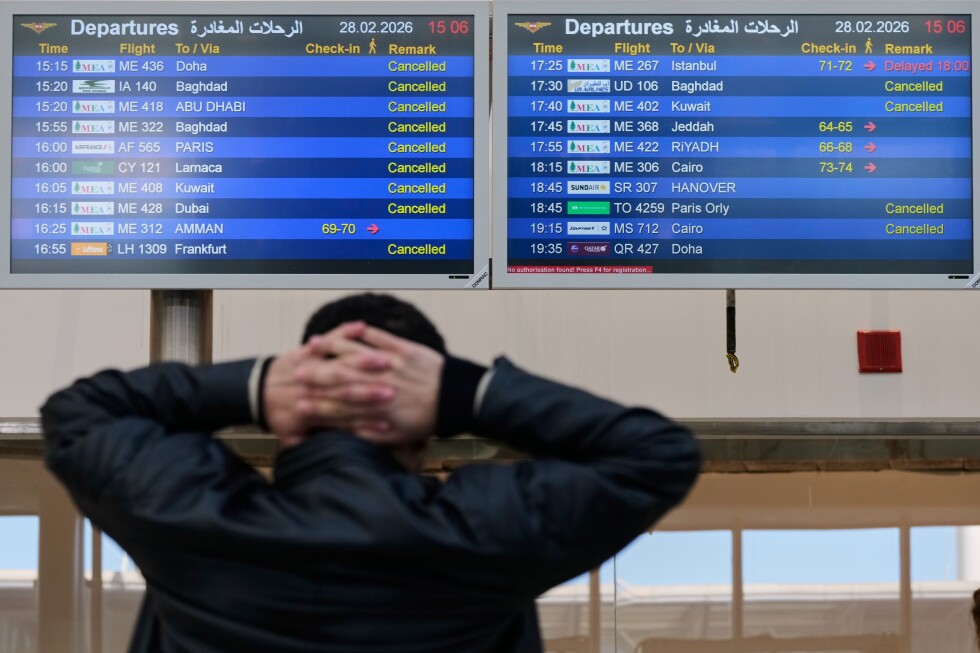
BRUSSELS (AP) — European nations are being reluctantly drawn into the escalating Middle East conflict between the U.S.-Israel alliance and Iran, despite having no direct involvement in initiating hostilities. The continent now finds itself compelled to implement defensive measures to safeguard military installations and coordinate evacuation operations for thousands of citizens trapped in conflict zones.
The strategic importance of the Middle East to European interests cannot be overstated. The region serves as a critical trading partner and contains vital maritime routes essential for global commerce. Significant European populations reside in cities including Beirut, Dubai, and Jerusalem, while substantial Middle Eastern communities have established roots across European nations. This deep interconnection means European countries inevitably face consequences from a conflict they did not authorize.
Britain, France, and Germany have declared their intention to collaborate with the United States in countering Iranian offensive capabilities, while explicitly avoiding direct combat participation. Notably, the United Kingdom has authorized American forces to utilize British military bases for operations targeting Iranian missile launch sites.
The conflict’s proximity to Europe became alarmingly evident when a Shahed-type drone—an Iranian-developed weapon previously deployed by Russia in Ukraine—struck a British air base in Cyprus, the current holder of the EU’s rotating presidency. The incident forced Cypriot officials to publicly deny involvement in the hostilities. Consequently, several European nations have heightened security at transportation hubs including airports and rail stations.
European leadership remains predominantly supportive of the U.S.-Israeli military campaign against Iran, viewing it as targeting a regime that has repeatedly arrested European citizens and challenged European economic interests. Spain emerged as a notable exception, with Prime Minister Pedro Sánchez condemning the military intervention as “unjustifiable, dangerous and outside of international law.”
Beyond immediate security concerns, Europe faces substantial economic vulnerabilities. Iran has threatened maritime traffic through the Strait of Hormuz, a critical choke point through which approximately 20% of globally traded oil passes. In response, France is deploying additional warships to reinforce Operation Aspides, the EU’s naval mission protecting commercial shipping in the Red Sea and Gulf of Aden. Discussions are underway regarding potential enhancements to the operation’s mandate and rules of engagement.
The European Union prioritizes preventing regional escalation that could trigger oil price surges and unpredictable migration patterns. EU foreign policy chief Kaja Kallas is scheduled to convene a meeting with Gulf Cooperation Council foreign ministers to reassure regional partners and coordinate diplomatic efforts. The EU remains committed to preventing Iranian nuclear weapon acquisition despite the collapse of the nuclear agreement following the U.S. withdrawal.
Regarding Iran’s political future, European officials expressed solidarity with the Iranian people’s aspirations for human rights and fundamental freedoms, while acknowledging it is premature to endorse specific leadership candidates. The EU has explicitly ruled out engagement with any leadership influenced by Iran’s Revolutionary Guard, which was recently added to the bloc’s terror list.