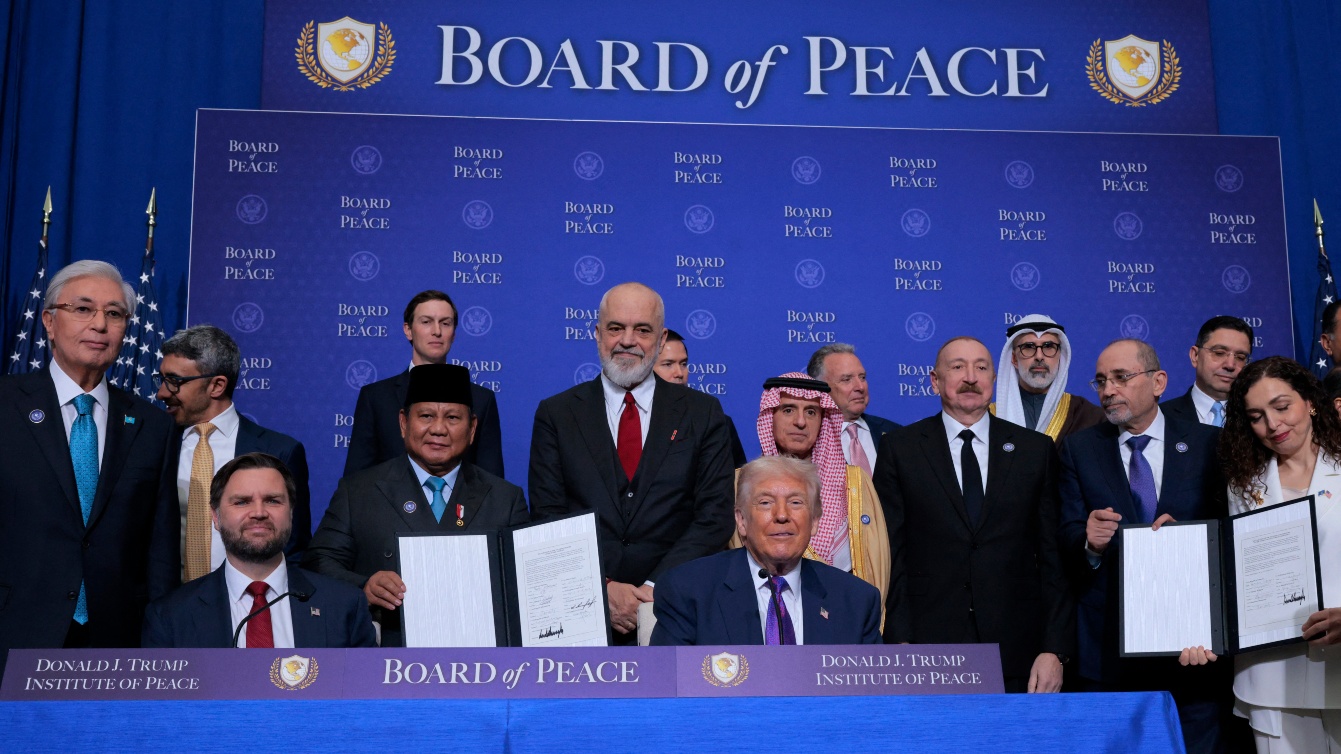
The European Union finds itself navigating significant diplomatic turbulence following its engagement with the newly established Board of Peace for Gaza, an initiative spearheaded by US President Donald Trump. This development has exposed profound divisions within the bloc regarding its appropriate role in Middle Eastern peacemaking efforts.
According to Associated Press reports, EU diplomats are scheduled to meet with Nikolay Mladenov, the UN diplomat selected by President Trump to lead the Board. The meeting will include EU foreign policy chief Kaja Kallas and foreign ministers from member states. This engagement occurs despite the EU’s position as the primary donor to the Palestinian Authority and its crucial oversight role at the Rafah border crossing.
The bloc’s participation has sparked considerable controversy, particularly after France expressed surprise at the European Commission’s decision to send Mediterranean Commissioner Dubravka Šuica as an observer without formal consultation with the European Council. French Foreign Minister Jean-Noel Barrot declared this move violated EU regulations, stating on social media platform X that “The European Commission should never have attended the Board of Peace meeting in Washington.”
This diplomatic friction emerges amid broader concerns about the Board’s legitimacy and scope. Originally conceived to address the Gaza conflict within the framework of a 20-point ceasefire plan ratified in Davos on January 22, the Board has expanded its mandate to encompass global conflicts—a development critics suggest could position it as a potential rival to the United Nations.
Several EU members, including Germany, Italy, the Netherlands, and Greece, opted to send observers to the inaugural Washington meeting, while Spain explicitly declined participation. Spanish Prime Minister Pedro Sanchez cited the Board’s divergence from international law and exclusion of the Palestinian Authority as primary reasons for refusal.
The Board has secured substantial financial commitments, with member nations including Kazakhstan, Azerbaijan, UAE, Morocco, Bahrain, Qatar, Saudi Arabia, Uzbekistan, and Kuwait pledging approximately $7 billion toward Gaza relief efforts. Meanwhile, European leaders continue to question the Board’s governance structure, compatibility with the UN Charter, and its perceived function as a personal vehicle for President Trump, who is set to serve as chairman for life.
Concurrently, the EU has called on Israel to reverse recent land registration measures in the occupied West Bank, which European officials characterize as illegal annexation and a “new escalation” in regional tensions. These developments underscore the complex diplomatic landscape the EU must navigate as it balances its commitment to multilateral institutions with engaging with emerging peace initiatives.