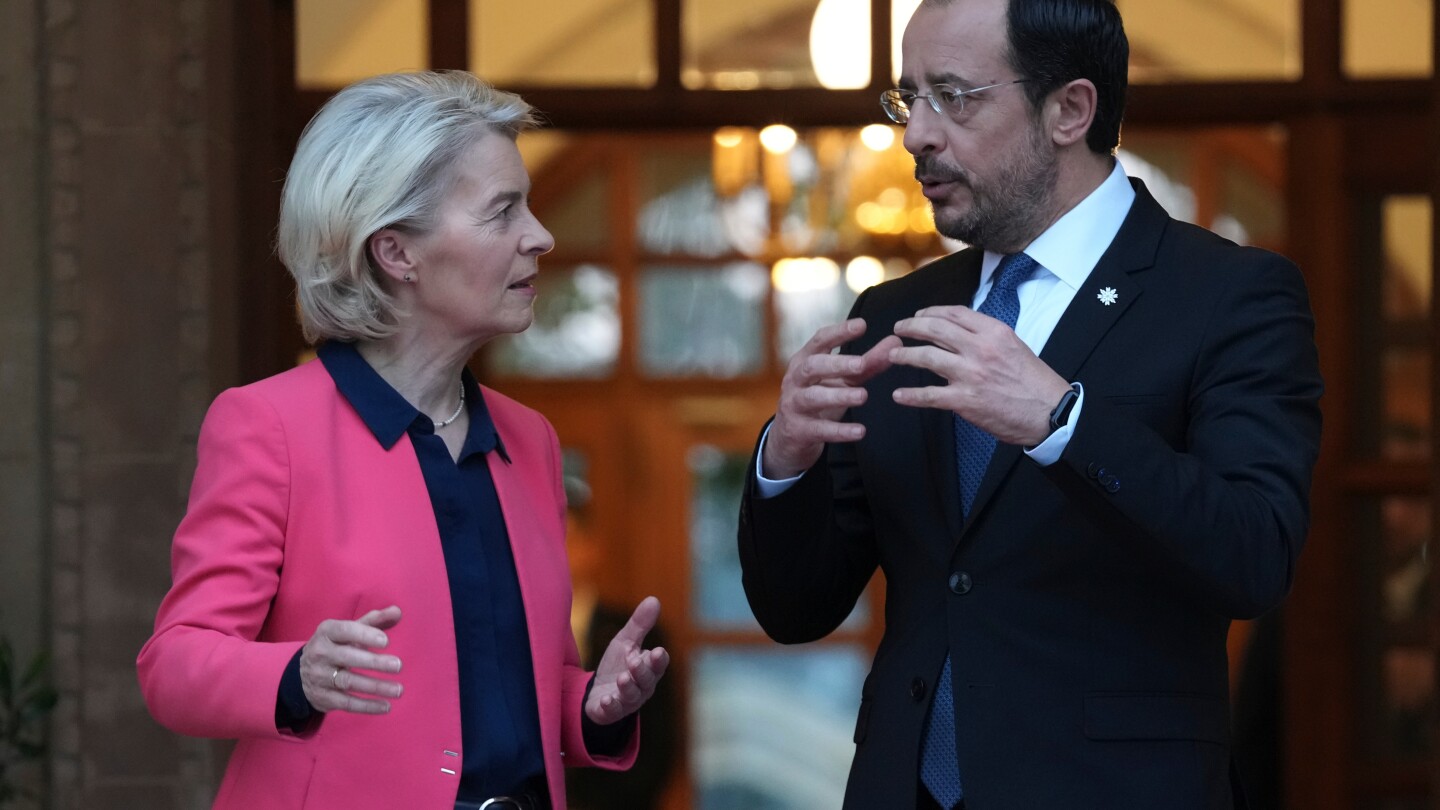
BRUSSELS — European Commission President Ursula von der Leyen announced Wednesday a comprehensive €90 billion ($105 billion) assistance program for Ukraine, with two-thirds allocated to military requirements and the remainder designated for economic stabilization. The substantial financial package represents the European Union’s strategic commitment to strengthening Ukraine’s defense capabilities while addressing its severe economic challenges.
The landmark loan arrangement, approved by EU leaders last month, features unprecedented repayment terms: Kyiv will only commence repayment after Russia concludes its military aggression and provides compensation for war-related damages. This condition acknowledges Ukraine’s current financial precarity, with the International Monetary Fund estimating the nation requires €137 billion ($160 billion) through 2027 to maintain basic government functions.
Von der Leyen emphasized the strategic rationale behind the allocation, stating, “We all want peace for Ukraine, and for that Ukraine must be in a position of strength.” The military component, totaling €60 billion ($70 billion), will primarily procure defense equipment from Ukrainian, EU, and European Economic Area manufacturers, though provisions allow for external acquisitions when necessary for operational effectiveness.
The remaining €30 billion ($35 billion) will provide direct budget support to prevent governmental collapse, with initial disbursements targeted for April 2024 pending approval by EU member states and the European Parliament. The Commission simultaneously confirmed that portions of military funding could be channeled through NATO procurement mechanisms involving United States defense contractors.
Critical to the agreement are stringent governance conditions requiring Ukraine to implement comprehensive anti-corruption measures and rule-of-law reforms. “These conditions are non-negotiable for any financial support,” von der Leyen asserted, referencing Ukraine’s historical challenges with institutional corruption. This stipulation follows recent high-profile investigations within President Zelenskyy’s administration, including the resignation of chief negotiator Andrii Yermak amid corruption probes.
The EU anticipates additional financial contributions from international partners including Britain, Canada, Japan, and Norway to bridge Ukraine’s funding gap, with the IMF preparing complementary loan programs for consideration next month.