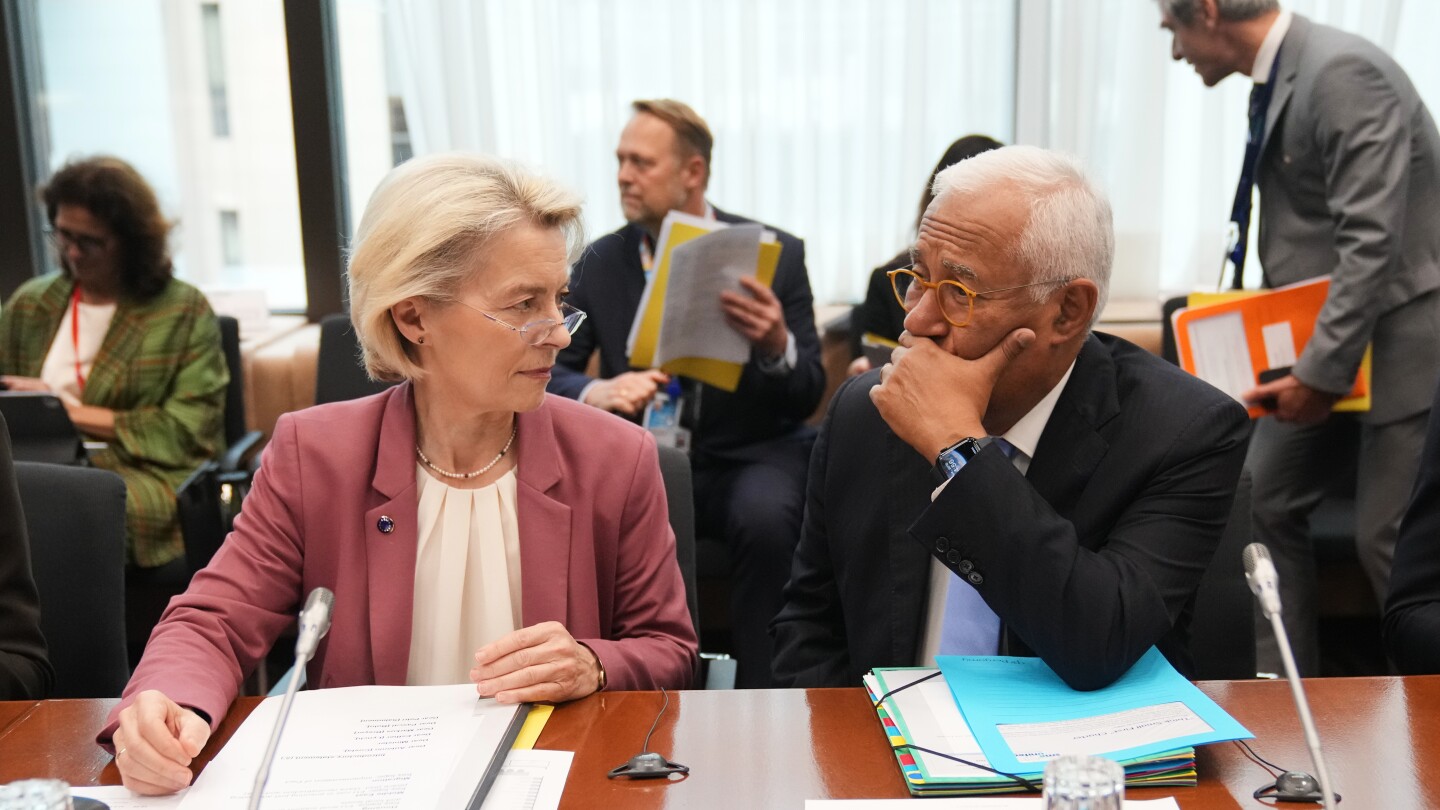
European Union leaders convened in Brussels on Thursday for a critical summit aimed at approving a new set of sanctions against Russia and advancing plans to utilize Moscow’s frozen assets to bolster Ukraine’s war effort and economy over the next two years. Ukrainian President Volodymyr Zelenskyy participated in the one-day meeting, joining his European allies in advocating for a ceasefire to end nearly four years of conflict. EU Council President António Costa emphasized in his invitation letter that both sustained support for Ukraine and continued pressure on Russia are essential for achieving a just and lasting peace. The summit follows U.S. President Donald Trump’s announcement that his proposed meeting with Russian President Vladimir Putin is on hold, citing concerns over its potential futility. This development adds another layer of complexity to Trump’s fluctuating approach to resolving the Ukraine crisis. Meanwhile, EU leaders are also focused on Trump’s Gaza peace plan, seeking ways to maintain the bloc’s involvement in the process. Despite being the largest provider of aid to Palestinians, the EU faces challenges in influencing Israel due to internal divisions among member states. The summit occurs as Russian forces intensify attacks on Ukraine’s power grid, exacerbating the humanitarian crisis as winter approaches. Earlier this week, Ukraine’s staunchest European allies, part of the ‘coalition of the willing,’ rejected any proposal requiring Ukraine to cede territory in exchange for peace, a suggestion recently floated by Trump. The U.K. is set to host a meeting of this coalition on Friday. On the financial front, EU leaders are determined to proceed with plans to use billions of dollars in frozen Russian assets to support Ukraine’s military and economic needs, despite reservations from some member states. Belgium, which holds the largest portion of these assets—approximately $225 billion—has expressed caution, seeking assurances from its European partners before taking action. Ukraine’s projected budget and military requirements for 2026 and 2027 are estimated at $153 billion. Additionally, EU leaders are expected to endorse a new ‘road map’ to enhance Europe’s defense capabilities against a potential Russian attack by the end of the decade, with top officials warning that Russia could target another European country within 3-5 years.
EU summit aims for new Russia sanctions and a plan to use Moscow’s assets to help Ukraine