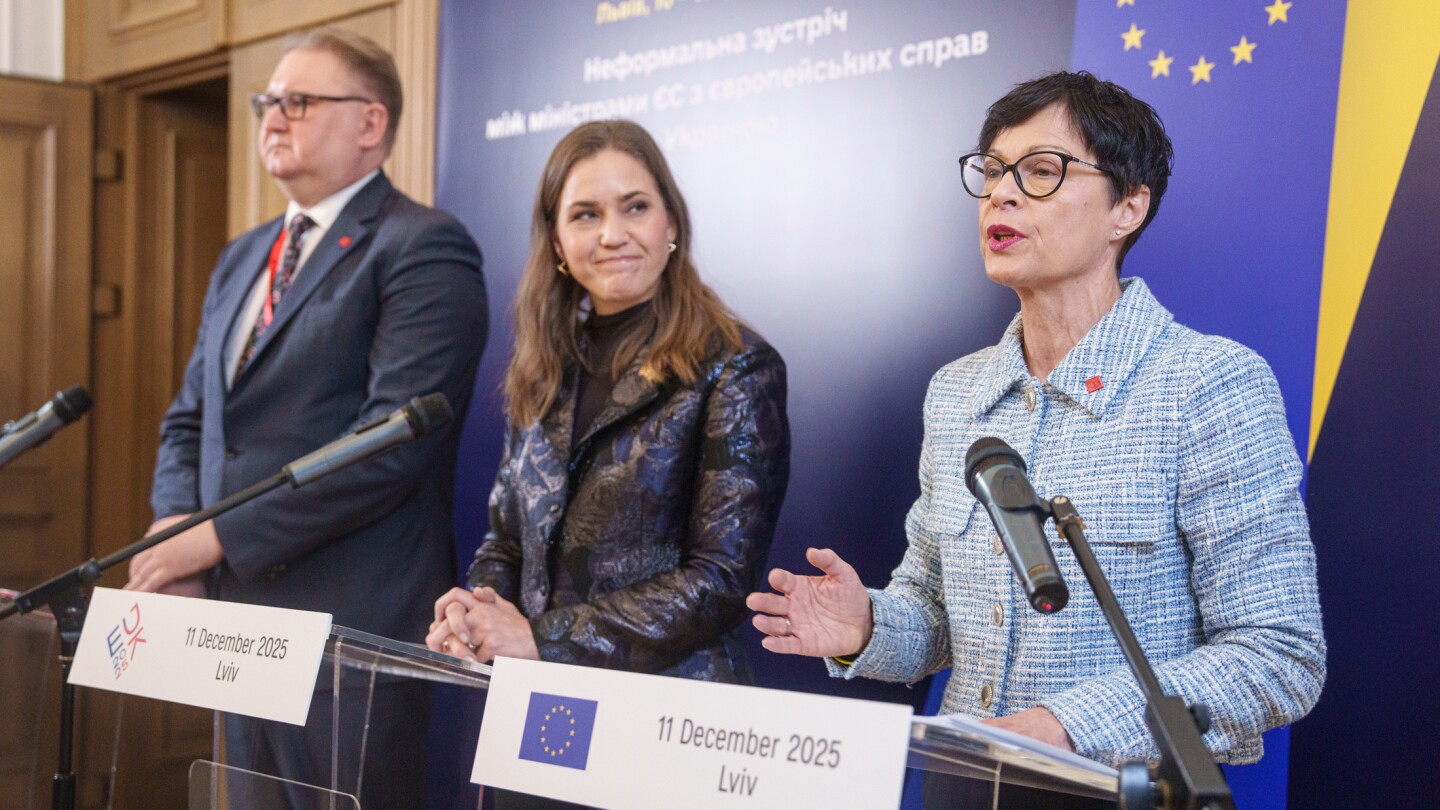
In a significant move demonstrating continued support for Ukraine, the European Union presented Kyiv with a comprehensive reform roadmap during high-level talks in Lviv on Thursday. This development comes despite Hungary’s persistent objections to advancing Ukraine’s membership aspirations during ongoing hostilities.
EU diplomats and officials, meeting in western Ukraine, established detailed requirements covering approximately half of the necessary reform clusters needed for accession. This approach allows substantive progress while formal negotiations remain stalled due to Budapest’s opposition. Hungarian Prime Minister Viktor Orbán maintains that accession talks should not proceed during wartime, citing concerns about Ukraine’s Hungarian minority and potential economic risks. Hungary notably abstained from sending representation to the Lviv meeting.
Denmark’s European Affairs Minister Marie Bjerre emphasized the broader EU consensus, stating, ‘Twenty-six member countries envision Ukraine’s future within the EU. The question is not if, but when this will happen.’
Cyprus, which joined the EU in 2004 as a divided nation, emerges as a potential model for Ukraine’s accession path. As Cyprus prepares to assume the EU’s rotating presidency in January, its officials have pledged to maintain momentum on Ukraine’s bid. Cypriot Deputy Minister for European Affairs Marilena Raouna commended Kyiv’s ‘extraordinary political will’ to implement crucial reforms despite Russia’s ongoing aggression.
Ukraine’s reform requirements are organized into six comprehensive clusters, with Thursday’s agreement covering three critical areas: rule of law and democratic institutions, internal market regulations, and external relations. Ukrainian Deputy Prime Minister Taras Kachka acknowledged that recent corruption scandals have elevated judicial and anti-corruption reforms as immediate priorities, noting that implementation pace now rests primarily with Kyiv.
Should Ukraine eventually join the EU, it would become the bloc’s largest member by land area, surpassing France. Its accession would significantly enhance the union’s agricultural capacity, energy security, and geopolitical influence while countering Russian dominance in the region. EU Enlargement Commissioner Marta Kos affirmed that providing Kyiv with a clear roadmap would accelerate transformative changes, asserting that ‘nobody can veto Ukraine from implementing these reforms’ or ultimately block its membership.