The 2024 World Economic Forum in Davos has become the epicenter of escalating geopolitical tensions, predominantly driven by U.S. President Donald Trump’s aggressive trade policies toward European allies. The picturesque Swiss resort, typically known for its consensus-building among global elites, now faces unprecedented diplomatic friction as the American administration threatens tariffs against eight European nations in the ongoing dispute over Greenland’s sovereignty.
European leadership mounted a coordinated response on Tuesday, with European Commission President Ursula von der Leyen and French President Emmanuel Macron delivering addresses that emphasized European sovereignty and unity. Their appearances preceded President Trump’s scheduled Wednesday address, creating a dramatic sequencing of competing visions for global governance.
The confrontation intensified when U.S. Treasury Secretary Scott Bessent, leading an unusually large American delegation, cautioned that European retaliation would be ‘very unwise.’ This warning came after President Trump explicitly threatened tariffs targeting Denmark and other EU members regarding the Greenland territorial dispute.
Diplomatic efforts are underway to prevent further escalation. German Chancellor Friedrich Merz confirmed he would seek direct dialogue with President Trump on Wednesday, stating European consensus favors de-escalation. Meanwhile, Denmark has proposed NATO-led surveillance operations in Greenland to address security concerns, a measured response to what Finnish President Alexander Stubb called ‘unacceptable tariff threats at the allied level.’
The crisis has prompted an emergency summit of EU27 leaders scheduled for Thursday in Brussels, marking one of the most severe transatlantic ruptures in recent years. Simultaneously, other global leaders including Chinese Vice Premier He Lifeng and Canadian Prime Minister Mark Carney are navigating their own complex relationships with the Trump administration, with Canada notably pursuing trade diversification strategies to reduce American dependency.
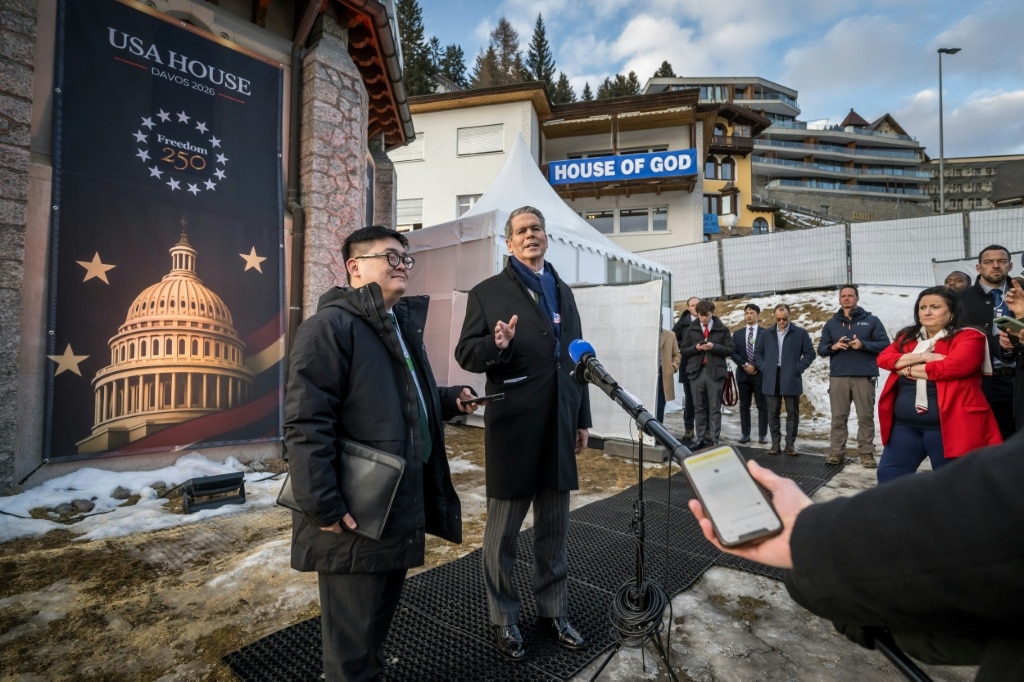
Beyond the transatlantic rift, the WEF agenda addresses multiple global flashpoints including Venezuela, Gaza, Ukraine, and Iran, though these issues risk being overshadowed by the immediate Western diplomatic crisis. The United States has established a prominent ‘USA House’ venue in a converted church along Davos’s main promenade, signaling both its substantial presence and alternative approach to global economic diplomacy.