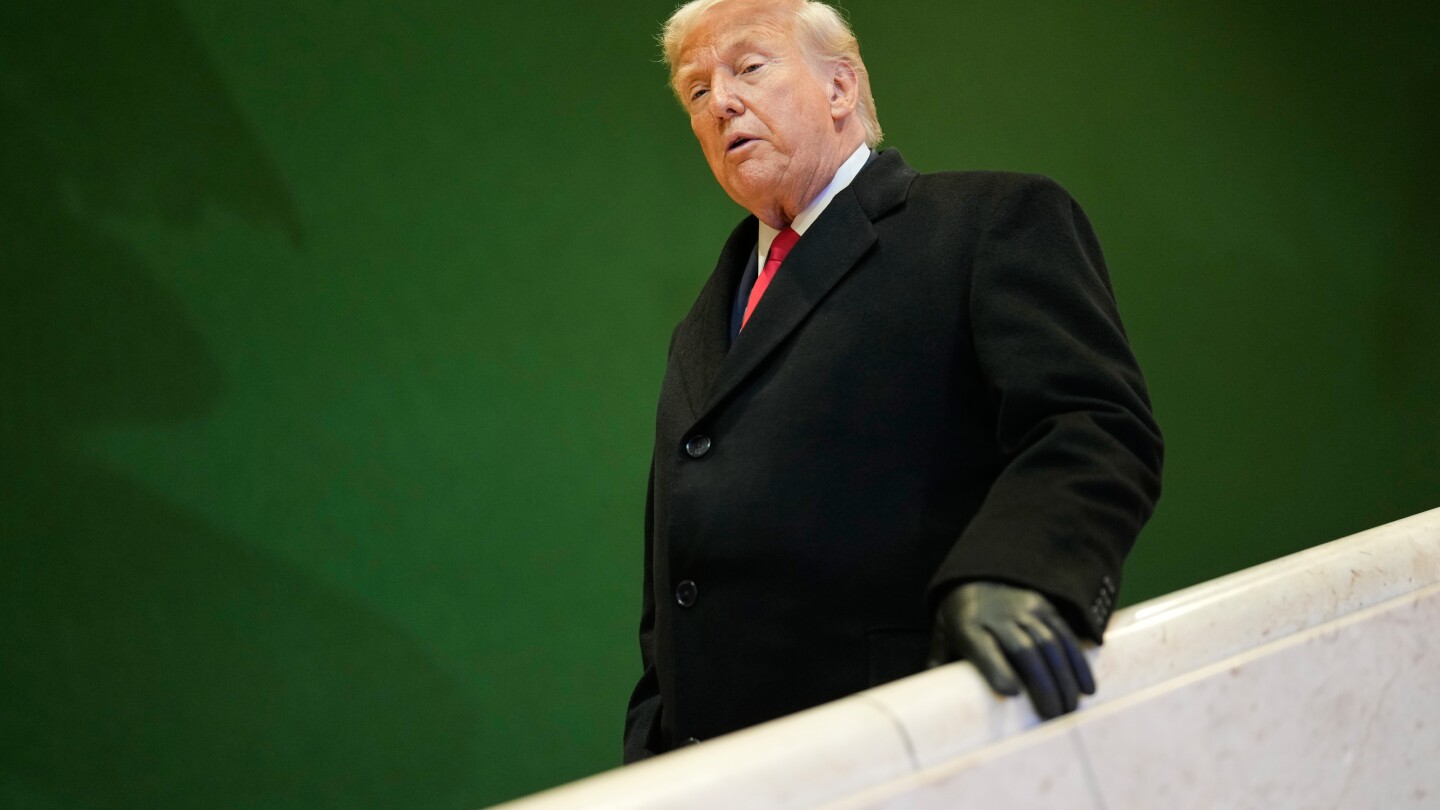
BRUSSELS — European Union leadership is assembling for an urgent summit on Thursday to redefine transatlantic diplomacy following two weeks of diplomatic turbulence triggered by U.S. President Donald Trump’s volatile statements regarding Greenland. Although Trump recently retracted his threats to forcibly acquire the Danish autonomous territory and impose tariffs on eight European nations, the episode has exposed profound concerns about American reliability.
The situation underscores deepening transatlantic tensions. European Commission President Ursula von der Leyen openly questioned Trump’s trustworthiness this week, particularly regarding his apparent readiness to abandon a July EU-U.S. trade agreement designed to prevent further tariffs. ‘In politics as in business – a deal is a deal. When friends shake hands, it must mean something,’ von der Leyen told EU lawmakers, emphasizing the importance of diplomatic consistency.
Danish Prime Minister Mette Frederiksen remains firm that her country’s sovereignty is not negotiable, despite Trump’s sudden reversal. The hastily arranged ‘framework’ agreement that prompted Trump’s change of position remains shrouded in secrecy, fueling ongoing skepticism among European officials.
Beyond Greenland, EU leaders are formulating a unified response to Trump’s proposed ‘Board of Peace,’ an initiative originally conceived to oversee Gaza ceasefire efforts but since expanded into a more ambitious international platform. Several European nations, including Norway, Slovenia, and Sweden, have declined participation. Trump responded characteristically, threatening French President Emmanuel Macron with ‘200% tariffs on his wines and champagnes’ should France refuse to join.
While Hungary has accepted the invitation and Germany has offered a noncommittal response, European Council President António Costa acknowledged that the Trump administration presents fundamental challenges to European security, principles, and prosperity. ‘All these three dimensions are being tested in the current moment of transatlantic relations,’ Costa stated ahead of the summit.
EU leaders have reaffirmed their commitment to international law, territorial integrity, and national sovereignty—principles they uphold in supporting Ukraine against Russian aggression and which Trump threatened regarding Greenland. The European Parliament has temporarily suspended ratification of the EU-US trade agreement in response to Trump’s tariff threats.
The Greenland episode has galvanized European leaders to reconsider their relationship with their traditionally strongest ally. Polish Prime Minister Donald Tusk, a prominent advocate for strong transatlantic ties, warned that ‘appeasement is always a sign of weakness. Europe cannot afford to be weak — neither against its enemies, nor allies.’
Von der Leyen revealed that the European Commission is developing plans for substantial economic investments in Greenland to strengthen its economy and infrastructure, alongside crafting a new European security strategy. She emphasized that the EU stands ‘fully prepared to act, if necessary, with unity, urgency and determination’ should tariffs be imposed, characterizing the current juncture as a critical ‘crossroads’ for European foreign policy.