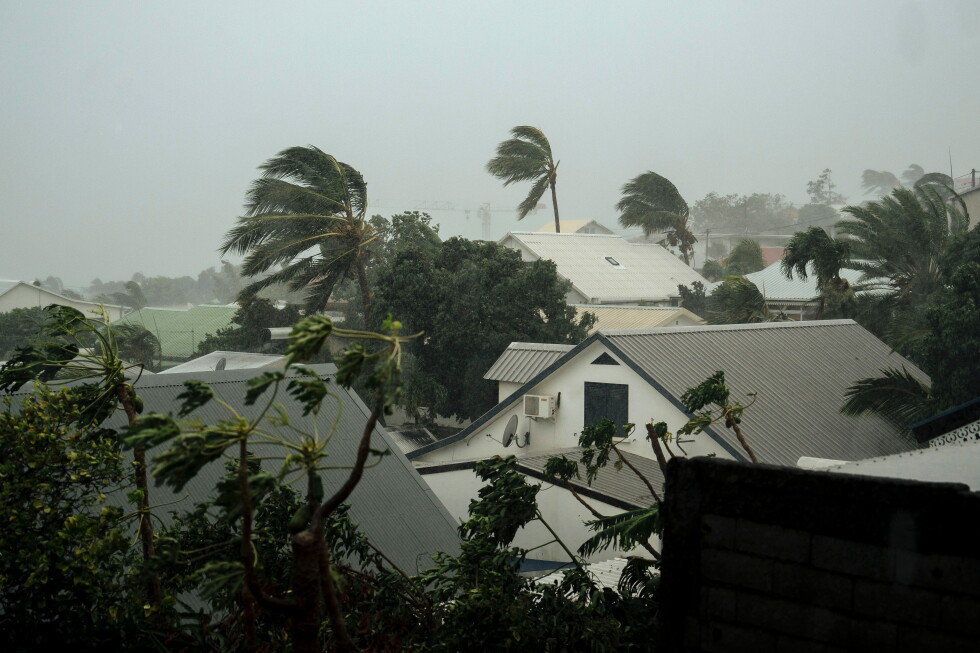
As climate change accelerates ocean warming and amplifies extreme weather events worldwide, and the Trump administration moves forward with deep cuts to a critical U.S. ocean observation program, the European Union is stepping into the gap with a €92 million ($107 million) investment to expand its international ocean monitoring network. Named OceanEye, the new initiative was announced Wednesday by European Commission President Ursula von der Leyen, who said the funding will position the EU at the forefront of global efforts to map and study Earth’s largely underexplored oceans.
Oceans cover more than 70% of the planet’s surface, underpinning global life systems by producing half the world’s oxygen and absorbing roughly 30% of human-caused carbon dioxide emissions. But decades of greenhouse gas emissions have pushed ocean temperatures to record highs, with warming accelerating faster in recent decades than at any point in modern recorded history. This warming has supercharged tropical cyclones, extended drought conditions, bleached and killed 50% of the world’s coral reefs, and pushed thousands of marine species toward extinction — threats compounded by overfishing and industrial ocean pollution. Scientific projections warn that climate change will continue to increase the intensity of heatwaves and severe storms across Europe in the coming decades, making accurate ocean data more critical than ever for disaster preparedness and mitigation.
Systematic, continuous ocean monitoring is the foundation of effective marine protection: it maps existing ecosystem damage, identifies emerging threats, and provides the empirical data needed to craft evidence-based regulations to halt biodiversity loss. “This is about using science and good governance to understand our ocean and secure our future,” von der Leyen emphasized in her announcement of the initiative.
The EU’s investment comes at a moment of growing gap in global ocean observation capacity. In May of this year, the Trump administration signaled plans to eliminate funding for the U.S. Ocean Observatories Initiative, a 10-year-old network of more than 900 fixed and mobile ocean sensors that cost $386 million to build. Funded by the U.S. National Science Foundation, the initiative has collected free, real-time ocean data on everything from circulation patterns to marine ecosystem shifts, climate change trends and extreme weather activity. That open-source data has supported more than 500 peer-reviewed scientific studies, and the project was originally scheduled to operate for another 15 to 20 years before the funding cuts were proposed.
Prior to the U.S. funding announcement, global ocean observation efforts were coordinated through the UN-affiliated Global Ocean Observing System, with the United States historically collecting more than half of all global ocean observation data, Europe contributing roughly 25%, and the remainder coming from Japan, Australia, India and China. EU officials and ocean scientists say the funding gap created by U.S. cuts makes increased European investment an urgent priority.
“Europe needs to do more,” explained Pierre-Yves Le Traon, oceanographer and scientific director of Toulouse-based Mercator Ocean International. Under the OceanEye plan, the EU has set an ambitious target to take responsibility for 35% of global ocean monitoring by 2035, and to become the world’s leading provider of standardized “ocean intelligence” data for researchers, governments and private industries.
Ocean observation data powers far more than just climate research. Data collected by underwater drones, robotic sensors and orbiting ocean-focused satellites is shared with shipping companies, commercial fisheries, emergency disaster response agencies, and research institutions. Mercator Ocean International is currently building the Digital Twin Ocean, a real-time interactive virtual reality replica of the world’s oceans that relies entirely on continuous observational input to model changes. Le Traon noted that this data is critical not just for climate adaptation, but for a wide range of coastal and maritime sectors including aquaculture, Arctic shipping, coastal tourism, agriculture, and even maritime security operations. “Knowledge is essential if we want to manage the ocean,” Le Traon said. “We really have to be very active for the monitoring and protecting of the ocean because the ocean matters to everyone: for life at sea, for life on Earth.”
Odran Corcoran, a policy advisor for the marine conservation non-profit Oceana, added that systematic observation is particularly critical to filling gaps in existing scientific knowledge that hold back effective policy. Only by collecting consistent data from the deep ocean — which remains one of the least understood environments on Earth — can lawmakers craft evidence-based regulations for sustainable fisheries management, marine protected area expansion, and marine ecosystem restoration projects. “Europe does not just need more ocean data; it needs data that closes biodiversity and seabed knowledge gaps,” Corcoran said.
Funding from the OceanEye initiative will go toward two core priorities: supporting private sector innovation incubators for ocean monitoring technology, and expanding the capacity of existing international coordination bodies including the Global Ocean Observing System. Of the EU’s 27 member states, 22 have coastal territories bordering the Baltic Sea, Atlantic Ocean, Black Sea and Mediterranean Sea. France holds the bloc’s largest network of ocean science institutions and the most extensive maritime boundaries, stretching from Réunion in the South Pacific to Saint Martin in the Caribbean to the Scattered Islands in the Indian Ocean.
This reporting is supported by a grant from the Walton Family Foundation, with The Associated Press retaining full editorial control over all content.