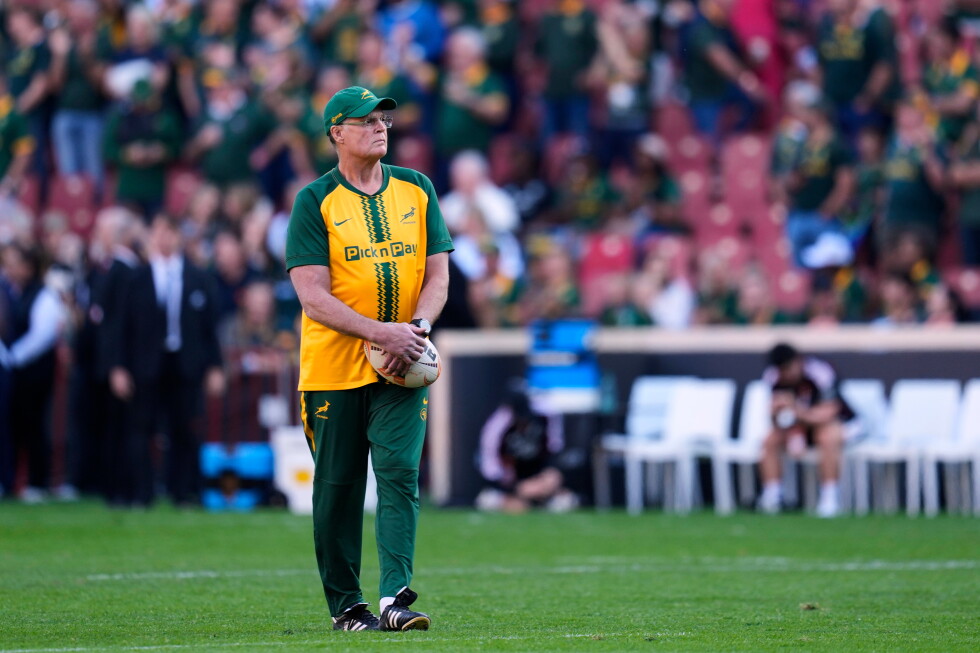
JOHANNESBURG – A historic opening test match between two of rugby union’s most dominant global powers has left the four-year world champion South African Springboks facing an uphill battle for series victory, after New Zealand’s All Blacks delivered a stunning 33-16 win at Ellis Park over the weekend.
The result marked the All Blacks’ largest ever victory on the iconic Ellis Park pitch, snapping South Africa’s 12-match unbeaten test streak – the longest winning run for the Springboks under head coach Rassie Erasmus – and stripping the double world champions of their coveted number one world test ranking.
With the first full bilateral test series between the two sides in three decades still in play, three matches remain on the schedule, with the second test set to kick off next Saturday in Cape Town. Speaking to reporters after the defeat, Erasmus struck a confident tone, reminding supporters that the Springboks have rallied from opening match losses to claim major titles twice in recent years.
“We have been in many difficult, high-stakes situations before,” Erasmus said, pointing to the 2021 test series against the British and Irish Lions, where South Africa dropped the opening match but rallied to win the three-match series. He also cited the 2019 Rugby World Cup, where an opening pool stage loss to New Zealand did not prevent the Springboks from lifting the world trophy.
“The path forward is clear: we have to win three consecutive matches to take the series,” Erasmus said. “There’s no question this result puts New Zealand in a fantastic position, and they fully deserve that standing. They outplayed us completely, and they are the new number one team in the world – honestly, it will be nice to go into the next game as the underdogs.”
Erasmus refused to soften the blunt assessment of his side’s performance, rejecting the common cliché that a heavy defeat acts as a necessary wake-up call for improvement. The Springboks held a narrow 13-12 halftime lead after a physically dominant opening 40 minutes in the scrum, but failed to convert a string of clear scoring chances, allowing the All Blacks to seize control after the break. New Zealand finished the match with five tries to South Africa’s one, pulling away comfortably in the final minutes.
The defining turning point came with just over an hour played, when the Springboks held a 19-16 deficit and won a scrum just in front of the All Blacks’ goal line. Instead of capitalizing on the prime attacking opportunity, South Africa conceded a penalty from their own scrum feed, ceding momentum to the visitors.
“I’m not going to sugarcoat this with generic lines about learning from defeat and getting better,” Erasmus said. “We didn’t need this loss to know what we had to do today – we knew exactly what we needed to do, we just failed to execute it. Even if we had scraped a one-point win out of this match, there would still be dozens of adjustments we need to make. We didn’t play well, we missed too many chances, and New Zealand forced those mistakes by playing with incredible intensity and sharpness.”
Beyond on-field performance, Erasmus flagged injury concerns for two starting wingers heading into the second test: Cheslin Kolbe and Kurt-Lee Arendse. Arendse failed a mandatory head injury assessment in the first half after his mouthguard triggered a concussion alert, and under league protocol, the mandatory concussion stand-down rules put his availability for Cape Town in serious doubt. Kolbe, who stepped into the starting side as the team’s primary goalkicker ahead of Sacha Feinberg-Mngomezulu for his proven accuracy, left the pitch in the second half with suspected cramping. Kolbe delivered a perfect performance from the tee, converting all four of his attempt on goal.
As the series shifts to Cape Town, all eyes will be on whether Erasmus can refit his side and pull off another historic comeback against the sport’s new top-ranked team.