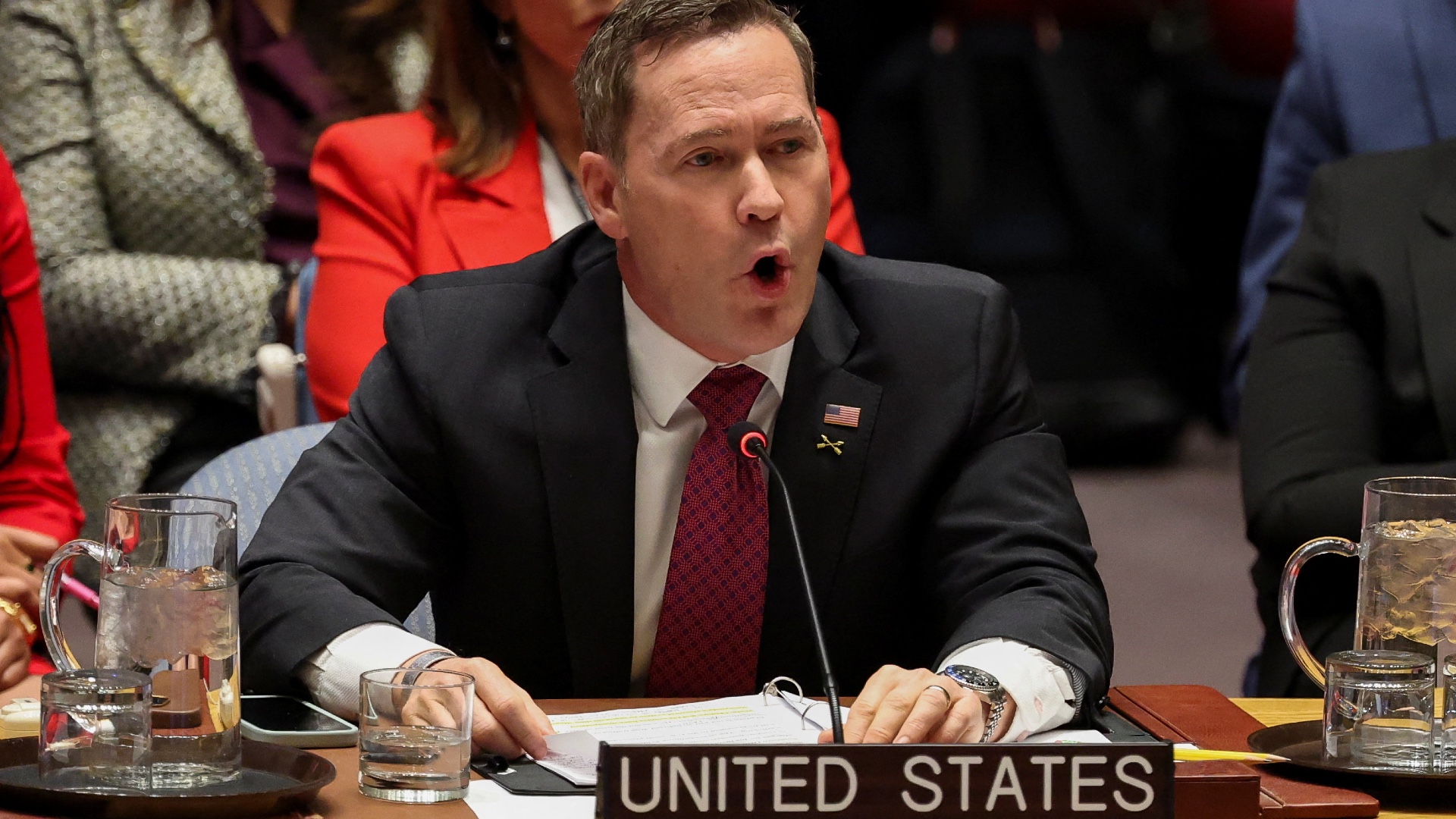
In a tense address to the United Nations Security Council, U.S. Ambassador Mike Waltz articulated a firm stance against adversarial control of global energy reserves, specifically targeting the Venezuelan government of Nicolás Maduro. The diplomatic confrontation unfolded just hours before Maduro and his wife, Cilia Flores, entered not guilty pleas in a New York federal court to a series of severe charges.
Ambassador Waltz emphasized that the Western Hemisphere must not serve as an operational base for nations adversarial to the United States. He explicitly condemned the control of Venezuela’s vast oil reserves—the world’s largest—by what he termed ‘illegitimate leaders,’ asserting that this situation neither benefits the Venezuelan people nor aligns with U.S. national security interests. However, he was quick to clarify the nature of the intervention, stating, ‘There is no war against Venezuela or its people. We are not occupying a country,’ directly countering claims of a military occupation.
The legal basis for the operation stems from a 2020 indictment, unsealed from the Trump administration era, which charges Maduro with Narco-Terrorism Conspiracy, Cocique Importation Conspiracy, and weapons-related violations. A separate, recently unsealed indictment also implicates First Lady Cilia Flores and the couple’s son in drug trafficking, with additional accusations of ordering kidnappings, murders, and accepting bribes leveled against Flores.
The dramatic abduction of President Maduro from Caracas by U.S. special forces, supported by aerial strikes on military targets, has triggered significant international backlash. Permanent UNSC members Russia and China have condemned the act, while UN Secretary-General António Guterres, through political affairs chief Rosemary DiCarlo, expressed ‘deep concern’ over a potential violation of international law and the dangerous precedent set by forcibly removing a head of state from a sovereign nation. The UN charter explicitly mandates member states to ‘refrain from the threat or use of force against the territorial integrity or political independence of any state.’
Venezuela’s UN Ambassador, Samuel Moncada, denounced the operation as ‘an illegitimate armed attack lacking any legal justification.’ The human cost of the intervention is reportedly severe, with a senior Venezuelan official citing a death toll of 80, a figure expected to rise, encompassing both civilians and security personnel. With the U.S. holding a veto power on the Security Council, prospects for formal UN accountability appear dim. In the interim, Venezuela’s Supreme Court has appointed former Vice President Delcy Rodríguez, who decried the seizure as having ‘Zionist undertones,’ to lead the country.