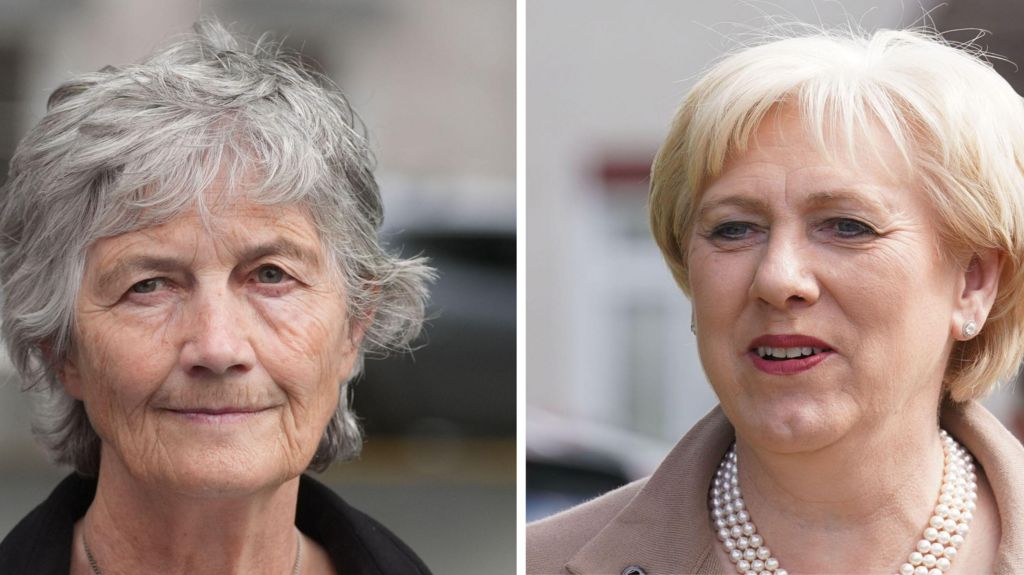
In a heated radio debate, Irish presidential candidates Catherine Connolly and Heather Humphreys clashed over the employment of a woman with a criminal past in the Dáil Éireann, Ireland’s national parliament. Heather Humphreys, representing Fine Gael, criticized Connolly’s decision to hire Ursula Ní Shionnain, who had served nearly four and a half years of a six-year sentence for firearms offences. Humphreys argued that Ní Shionnain’s employment posed a significant risk to the security of the Dáil, citing a lack of proper vetting by gardaí during her six-month tenure in an administrative role. Connolly, an independent TD supported by left-leaning parties, defended her decision, stating that Ní Shionnain had ‘fully rehabilitated her life’ and that no rules were broken in the hiring process. Ní Shionnain, a former member of the socialist republican party Érígí, was convicted in 2014 for her involvement in a dissident republican operation, which included possession of handguns, ammunition, and disguises. Connolly emphasized that Ní Shionnain was a ‘success story of the prison system’ and had been recommended by other parliamentarians involved in prison visiting groups. Despite Connolly’s assurances, Humphreys raised concerns about the potential security implications of employing someone with such a background in the heart of Ireland’s legislative body. The debate has sparked a broader conversation about rehabilitation, security protocols, and the responsibilities of public officials in ensuring the safety of national institutions.