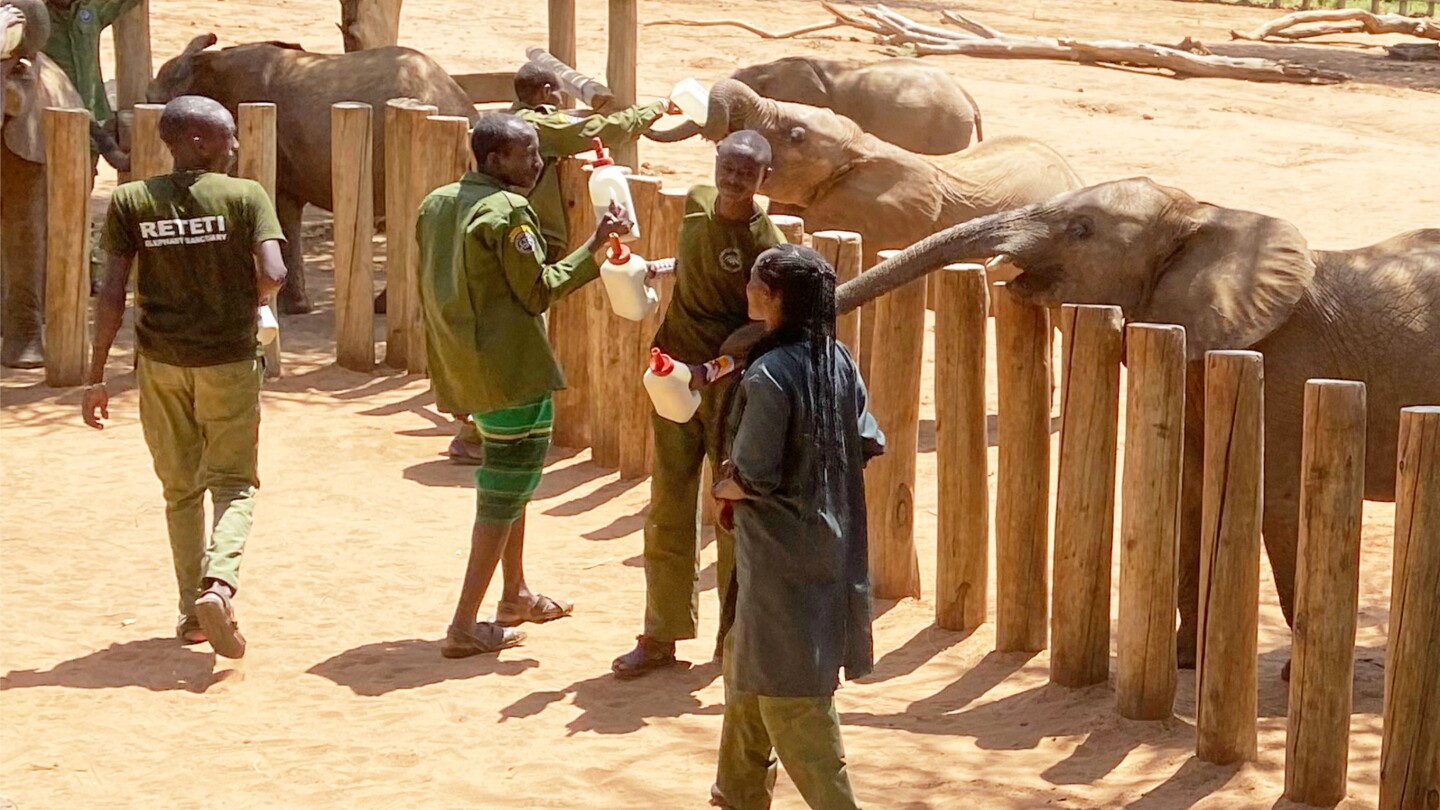
At Kenya’s Reteti Elephant Sanctuary, a revolutionary conservation model is reshaping the relationship between wildlife protection and community development. Under the equatorial sun, Samburu tribespeople have established Africa’s first entirely Indigenous-run elephant sanctuary, creating an innovative symbiotic system that benefits both orphaned elephants and local communities.
The sanctuary’s breakthrough came through an unexpected nutritional solution: goat’s milk. When manufactured formula proved costly and unsuitable, caretakers discovered that milk from local goat herds provided an ideal nutritional substitute for elephant milk. This revelation sparked an economic transformation—more than 1,200 Samburu women now supply nearly 700 liters of milk daily to the sanctuary, generating income that provides financial independence and improved living standards.
Beyond milk production, Reteti employs approximately 100 Samburu people, making elephants what sanctuary spokesperson Dorothy Lowakutuk describes as “the keystone of the entire economy.” The model demonstrates how conservation efforts can directly benefit local populations, particularly women who have traditionally had limited economic opportunities.
The sanctuary’s success reflects a broader trend in Kenyan conservation where tourism and wildlife protection increasingly support Indigenous communities. Organizations like Uplift Travel have emerged specifically to channel tourism revenue into local development projects, particularly those supporting women and girls. Founded by travel writer Kim Schneider and philanthropy partner Tanja Wittrock, the organization demonstrates how strategic tourism can significantly impact quality of life while providing immersive cultural experiences.
Kenya’s conservation landscape includes multiple innovative approaches to human-wildlife coexistence. At the Ol Pejeta Conservancy, armed guards protect the last two northern white rhinos while scientists work on advanced reproductive technologies to save the species. In Masai communities, beehive fences create natural barriers that protect both crops and elephants through the insects’ buzzing and stinging deterrent effect.
These initiatives represent a paradigm shift in conservation philosophy—moving from exclusionary protection models to integrated approaches that recognize Indigenous communities as essential partners in preserving Africa’s magnificent wildlife heritage.