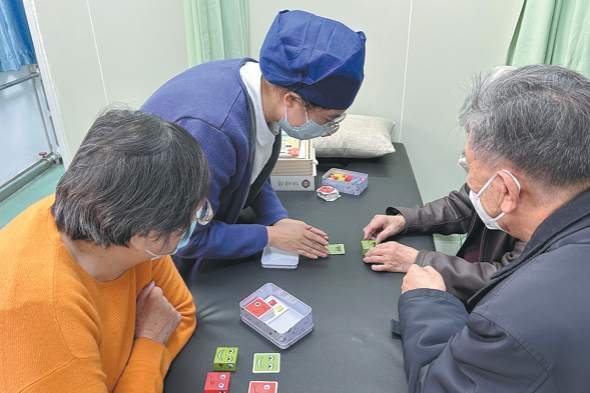
Across Beijing’s neighborhoods, a quiet healthcare revolution is unfolding as community-based memory clinics transform dementia care for elderly residents. Each Wednesday at Hepingli Community Health Service Center, an 88-year-old Alzheimer’s patient engages in cognitive rehabilitation through specialized puzzles and games—a stark contrast to her previous hour-long journeys to distant hospitals for treatment.
This shift to localized care addresses a critical national challenge: with China’s population aged 60 and above exceeding 310 million—representing over one-fifth of the total population—more than 53 million seniors currently experience cognitive impairment. Neurologist Han Ying from Xuanwu Hospital emphasizes that while Alzheimer’s remains incurable, early intervention through structured cognitive training and medication can delay symptom progression by up to five years, potentially preserving patients’ cognitive function throughout their lifetimes.
Despite this medical urgency, societal stigma and misconceptions about aging have created significant barriers. Only approximately 20% of dementia patients in China receive formal diagnoses, exacerbating the healthcare challenge. Community memory clinics are bridging this gap by offering accessible screening, expert consultations, and daily rehabilitation services within walking distance of patients’ homes.
The Hepingli center exemplifies this model, providing free senior health assessments, specialist referrals, and innovative therapies ranging from computer-based cognitive games to group art sessions. These clinics serve dual purposes as both medical facilities and social hubs, combating the isolation that often accompanies cognitive decline. An 86-year-old participant surnamed Feng describes the experience as rejuvenating: ‘I love chatting with everyone—it makes me feel young again.’
Beijing currently operates over 20 such clinics with plans to expand to 100 by 2030, while Shanghai, Guangdong, and private hospitals like Sunbow Obstetrics and Gynecology Hospital are implementing similar initiatives. However, significant disparities persist, as rural areas face equipment shortages, limited medical expertise, and inadequate institutional support.
The Chinese government’s 2024 action plan on elderly dementia targets having over 50% of suspected cognitive impairment cases seek medical care by 2030. As Li Jianguo, deputy director at Hepingli Center, notes: ‘Greater attention from society as a whole is essential. We hope through continuous efforts, we can awaken awareness among both the elderly and society at large, thereby helping more seniors hold onto their memories.’