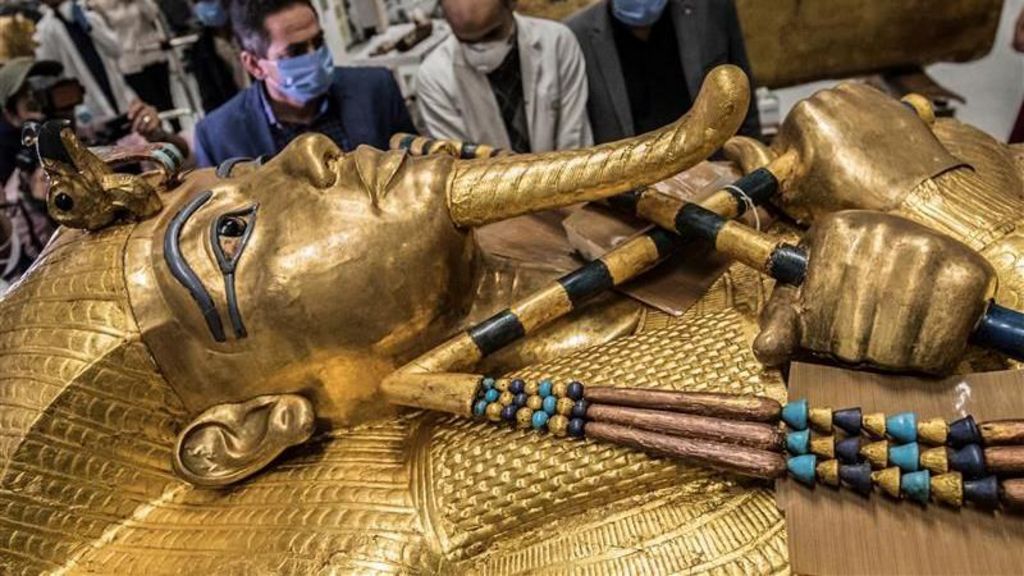
Egypt has officially unveiled the Grand Egyptian Museum (GEM), a monumental cultural institution near the Great Pyramid of Khufu in Giza. Described as the world’s largest archaeological museum, the GEM houses approximately 100,000 artefacts spanning seven millennia of Egyptian history, from pre-dynastic times to the Greek and Roman eras. A centerpiece of the museum is the complete collection from Tutankhamun’s tomb, including his iconic gold mask, throne, and chariots, displayed together for the first time since their discovery by British Egyptologist Howard Carter in 1922. Dr. Tarek Tawfik, President of the International Association of Egyptologists, emphasized the significance of showcasing the entire tomb, offering visitors an immersive experience akin to Carter’s original discovery. The $1.2 billion museum complex, which spans 500,000 square meters, is expected to attract up to 8 million visitors annually, revitalizing Egypt’s tourism sector. The GEM also features other remarkable exhibits, such as the 4,500-year-old funerary boat of Khufu and a 16-meter-long suspended obelisk of Ramesses II. The museum’s opening has reignited calls for the repatriation of key Egyptian antiquities, including the Rosetta Stone, the Dendera Zodiac, and the Bust of Nefertiti, currently held in foreign institutions. Dr. Zahi Hawass, Egypt’s former minister of tourism and antiquities, expressed pride in the museum’s completion, highlighting its role in showcasing Egypt’s cultural heritage and modern achievements. The GEM, which began construction in 2005, faced numerous challenges, including financial crises, political turmoil, and the COVID-19 pandemic, but its completion marks a new era for Egyptology and cultural tourism.