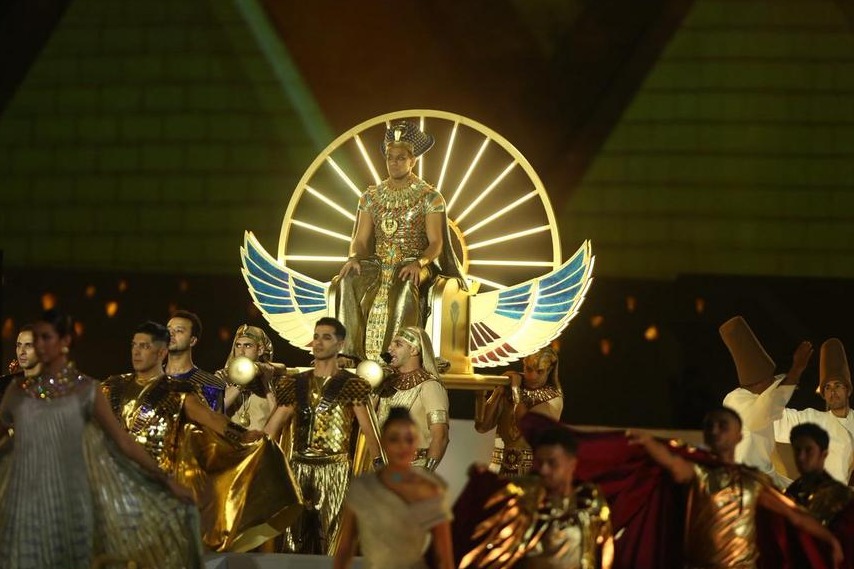
Egypt has officially unveiled the Grand Egyptian Museum (GEM), a monumental project poised to revitalize the nation’s tourism sector and stimulate economic growth. Situated on the Giza Plateau, a mere 2 kilometers from the iconic Pyramids and the Sphinx, the GEM spans an impressive 500,000 square meters, making it the largest museum dedicated to a single civilization globally. The inauguration ceremony, held on November 1, 2025, was graced by numerous international delegations, including heads of state and government, marking a significant cultural milestone.
The GEM houses over 100,000 artifacts that chronicle thousands of years of Egyptian history, including a towering 12-meter statue of King Ramses II, dating back 3,200 years. The museum’s design, which overlooks the Pyramids, symbolically bridges the ancient and modern worlds. Mohamed Othman, head of the Cultural Tourism Marketing Committee in Upper Egypt, emphasized the museum’s potential to extend visitor stays and boost cultural tourism, aligning with Egypt’s ambitious goal of attracting 30 million tourists annually.
The economic implications of the GEM are substantial. Tour operators are already crafting week-long itineraries centered around the museum, reflecting its significant impact on the tourism sector. The museum has also spurred job creation in Giza, generating tens of thousands of direct and indirect employment opportunities. Furthermore, it is encouraging visitors to explore other historical sites in Luxor and Aswan, thereby creating a new tourism flow from Cairo to Upper Egypt.
Tourism is a cornerstone of Egypt’s economy, contributing significantly to foreign currency earnings alongside remittances, Suez Canal revenues, and exports. Despite regional instability, the sector has shown resilience, with tourism revenues reaching $15.3 billion in 2024, a 9% increase from the previous year. The government aims to attract approximately 18 million visitors in 2025, with the GEM expected to draw around 15,000 visitors daily, or roughly 5 million annually.
The museum’s centerpiece is the complete collection of King Tutankhamun’s artifacts, including his iconic golden mask, gilded coffins, and royal chariots, displayed together for the first time since their discovery in 1922. Abdel Fattah al-Assi, a former assistant minister of tourism and antiquities, highlighted the GEM’s unique focus on ancient Egyptian civilization, which enhances Egypt’s competitive edge in global tourism. He likened the museum’s economic role to that of the Suez Canal, emphasizing its potential to inject much-needed foreign currency into the economy.
Infrastructure upgrades, such as new highways, hotels, and the Sphinx International Airport, further bolster the GEM’s appeal by simplifying travel and lodging. These developments are expected to encourage tour operators to combine Cairo trips with resort packages to destinations like Hurghada and Sharm el-Sheikh. ‘The GEM will reshape Egypt’s tourism map, especially in Cairo,’ al-Assi remarked. ‘Its impact on the country’s tourism industry and economy will be profound.’