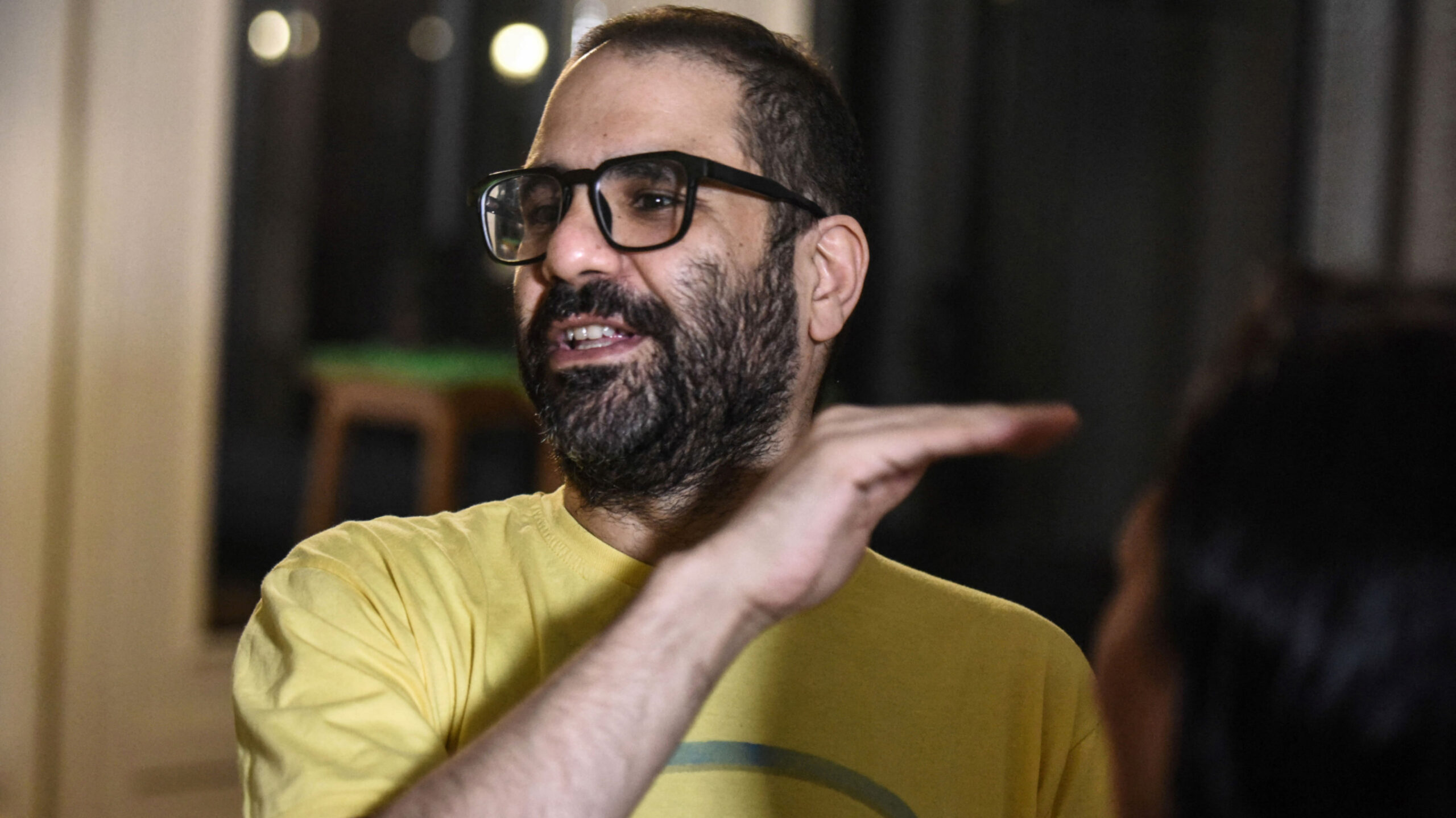
Egyptian authorities have officially removed travel restrictions against prominent Egyptian-British political activist Alaa Abd el-Fattah, enabling his international movement following years of imprisonment. The development occurred after his legal representative, Khaled Ali, formally petitioned for the ban’s revocation.
This decision follows President Abdel Fattah el-Sisi’s September 22 presidential pardon that secured Abd el-Fattah’s release from Wadi el-Natrun prison, a facility notorious for housing political detainees. The activist had endured nearly ten years of incarceration across multiple sentences.
The 43-year-old dissident rose to prominence as a symbolic figure during the 2011 Arab Spring revolution that reshaped Egypt’s political landscape. His imprisonment commenced following the 2013 military coup that brought President el-Sisi to power.
Despite the presidential pardon, Egyptian border officials previously prevented Abd el-Fattah from departing Cairo International Airport last month as he attempted to travel to Britain. The activist had been scheduled to accept the 2025 Courage Under Fire award at the Magnitsky Human Rights Awards ceremony in London.
Abd el-Fattah’s history of opposition spans two decades, beginning in the early 2000s when Egyptian activists pioneered digital dissent through social media platforms. His legal troubles intensified in 2014 when he received a 15-year sentence for organizing unauthorized protests, later reduced to five years upon appeal.
Following his 2019 release, Abd el-Fattah remained under state supervision until his re-arrest later that year on charges of disseminating false information—a common accusation against government critics in Egypt. He received an additional five-year sentence for these allegations.
Two months prior to his release, a Cairo criminal court formally removed Abd el-Fattah from Egypt’s terrorism watchlist after investigations concluded he maintained no connections to the banned Muslim Brotherhood organization.
This case occurs against the backdrop of Egypt’s extensive political detention system, where human rights organizations estimate over 60,000 political prisoners remain incarcerated under deteriorating conditions. According to Freedom House’s 2025 global index, Egypt ranks 18th among 100 nations evaluated for political rights and civil liberties, with higher numerical rankings indicating greater restrictions on freedom.
Human Rights Watch has consistently characterized Egypt’s governance approach as employing “wholesale repression” that systematically detains and penalizes peaceful activists while effectively criminalizing dissent. The organization’s latest world report documented thousands of detainees held in prolonged pretrial detention or serving sentences from unjust judicial proceedings.