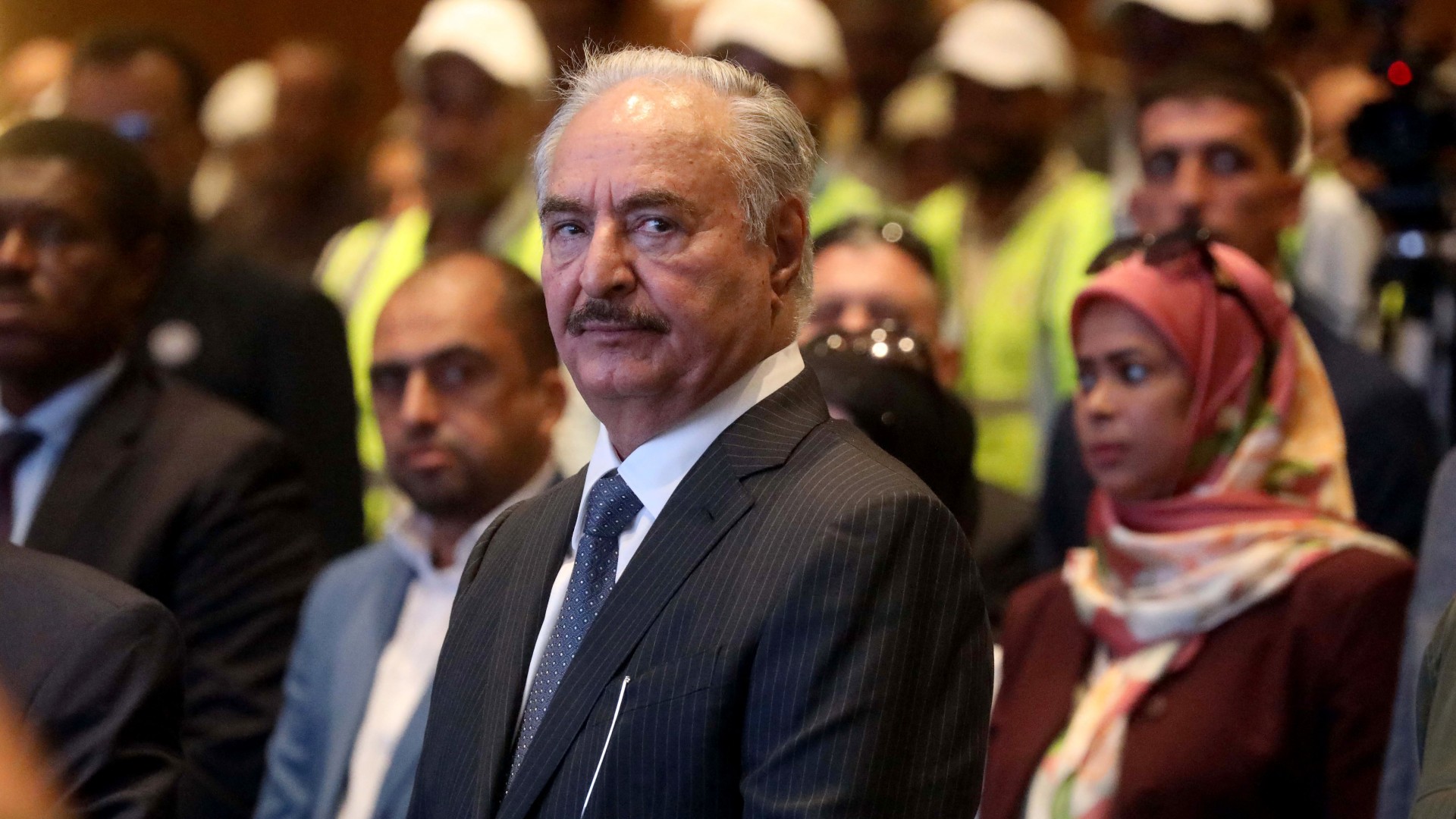
Egypt and Saudi Arabia have escalated diplomatic pressure on eastern Libyan commander Khalifa Haftar concerning his alleged facilitation of Emirati military support to Sudan’s Rapid Support Forces (RSF). Security sources indicate this assistance could fundamentally reshape Cairo’s relationship with Haftar’s administration.
This development forms part of a coordinated Egyptian-Saudi initiative to intercept arms, fuel, and combatant flows to the RSF, counter UAE regional influence, and stabilize the volatile border region connecting Egypt, Libya, and Sudan.
Earlier this month, Saddam Haftar, the commander’s son and deputy leader of the Libyan Arab Armed Forces (LAAF), was urgently summoned to Cairo for meetings with Egyptian Defense Minister Abdel Meguid Saker and senior security officials. While publicly framed as routine military cooperation, intelligence sources confirm the discussions centered on compelling evidence of Haftar’s complicity in weapons transfers.
According to a high-ranking Egyptian military official, surveillance confirmed weapons shipments originating from Abu Dhabi transiting through Haftar-controlled territories before reaching RSF positions in Sudan. Additionally, monitoring revealed Libyan fuel tankers supplying paramilitary forces in Darfur and documented mercenary movements from South America through Libya to Sudan.
Despite historical Egyptian support for Haftar’s eastern Libyan administration, his parallel backing by the UAE—the RSF’s primary patron—has created strategic complications. Recent reports indicate supply lines established through Libyan border areas directly enabled RSF military advances, including the capture of el-Fasher where thousands reportedly faced massacre.
Cairo and Riyadh presented Saddam Haftar with offers of alternative financial and military support to replace Emirati backing. These discussions coincided with a substantial $4 billion Saudi arms agreement with Pakistan, with portions reportedly earmarked for Haftar’s forces and the Sudanese military led by Abdel Fattah al-Burhan.
Egyptian officials shared intelligence revealing alleged Emirati plans to fragment Haftar’s territory following RSF consolidation in western Sudan. The strategy purportedly involved dividing Libya into multiple zones, potentially diminishing Haftar’s control.
The geopolitical realignment follows public friction between Saudi Arabia and the UAE, previously close allies. Riyadh has grown increasingly assertive against Emirati regional policies, particularly regarding Yemen where UAE-backed separatists recently faced setbacks against Saudi-supported government forces.
Egypt demonstrated its resolve through a targeted air strike against a military convoy transiting from Libya to RSF-controlled territory in Sudan. The operation destroyed dozens of vehicles carrying weapons and fuel near the al-Uwaynat border triangle. Subsequent air patrols continue monitoring the region, with authorities warning any further support convoys will face similar consequences.
Analysts interpret these developments as emerging Egyptian-Saudi coordination to counter expanding Emirati influence across multiple conflict zones, though underlying differences regarding regional leadership persist between Cairo and Riyadh.