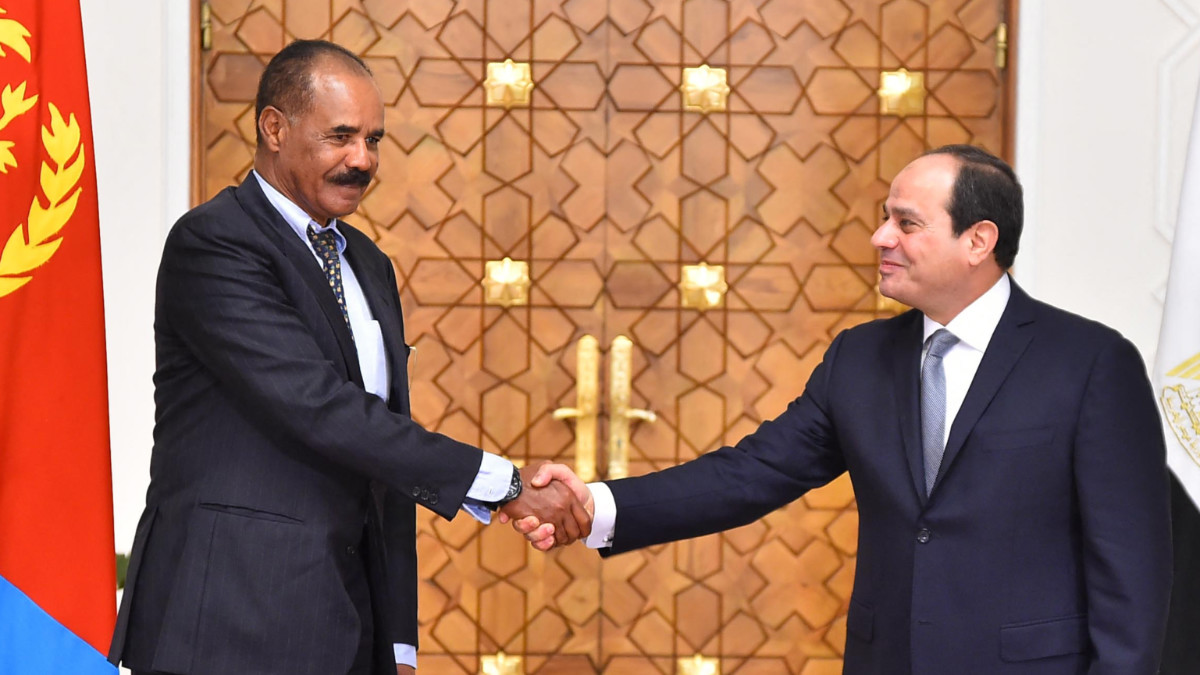
A significant geopolitical realignment is unfolding in the strategically vital Red Sea region as Egypt actively brokers enhanced security cooperation between Saudi Arabia and Eritrea. This diplomatic maneuver aims to counterbalance the United Arab Emirates’ expanding military footprint, particularly its growing partnership with Ethiopia—Eritrea’s historical adversary.
The emerging三方 (three-way) diplomacy mirrors a recent defense agreement between Sudan’s military and Pakistan, reportedly Saudi-financed, though weapon systems remain undelivered. This complex arrangement underscores the rapidly shifting alliances transforming Red Sea security dynamics.
Both Egypt and Eritrea previously maintained strong ties with the UAE, but relationships have strained over divergent approaches to Sudan’s civil war and Gaza conflict. Eritrea, under President Isaias Afwerki’s authoritarian rule since 1993 independence, previously hosted UAE military operations in Yemen at Assab port until its 2021 closure. The UAE’s subsequent military partnership with Ethiopia significantly altered regional calculations.
University of Maryland Horn of Africa expert Michael Woldemariam notes: ‘Supporting Eritrea aligns with Egypt’s regional security perspective, but Cairo faces financial constraints. Bringing financially robust Saudi Arabia into the equation serves Egyptian interests.’ He adds that Eritrea requires no encouragement to embrace Saudi ties, having sought this alignment independently.
The reclusive President Afwerki visited Saudi Arabia for four days in December 2025, discussing enhanced security cooperation. The 80-year-old leader, governing one of Africa’s most repressive states, possesses considerable experience navigating complex regional dynamics since Eritrea’s decades-long independence struggle against Ethiopia.
Current tensions between Eritrea and Ethiopia have intensified, with Addis Ababa accusing Asmara of arming rebel groups. This hostility occurs against Ethiopia’s construction of the Grand Renaissance Dam, which Cairo views as an existential threat to Nile water security.
Meanwhile, the UAE has reportedly redeployed personnel from Somalia to Ethiopia, with Emirati military transport aircraft frequently observed at Ethiopian Air Force bases throughout January. Experts suggest Abu Dhabi relies on Ethiopia to supply Sudan’s paramilitary Rapid Support Forces (RSF), while Egypt and Saudi Arabia back the opposing Sudanese military faction.
Middle East Institute Egypt program director Mirette Mabrouk characterizes Egypt’s lobbying as demonstrating ‘a proactive tilt in Cairo’s approach to Red Sea security.’ She observes: ‘Saudi Arabia was caught sleeping at the wheel regarding UAE activities in the Red Sea. Egypt awakened earlier and now attempts to plug strategic gaps, including Eritrea.’
The challenge remains translating this loose alignment into concrete deliverables. The Sudan-Pakistan agreement exemplifies these difficulties, with no confirmed weapons transfers despite announced deals. Sources indicate Saudi Arabia, facing domestic economic pressures, remains hesitant to fully commit despite overtures from Cairo and Asmara.
Eritrea’s limited revenue streams—peasant taxes, mining operations, and a 2% diaspora tax—create urgent need for Saudi financing, particularly as Asmara seeks new military equipment amid concerns over Ethiopian drone capabilities.