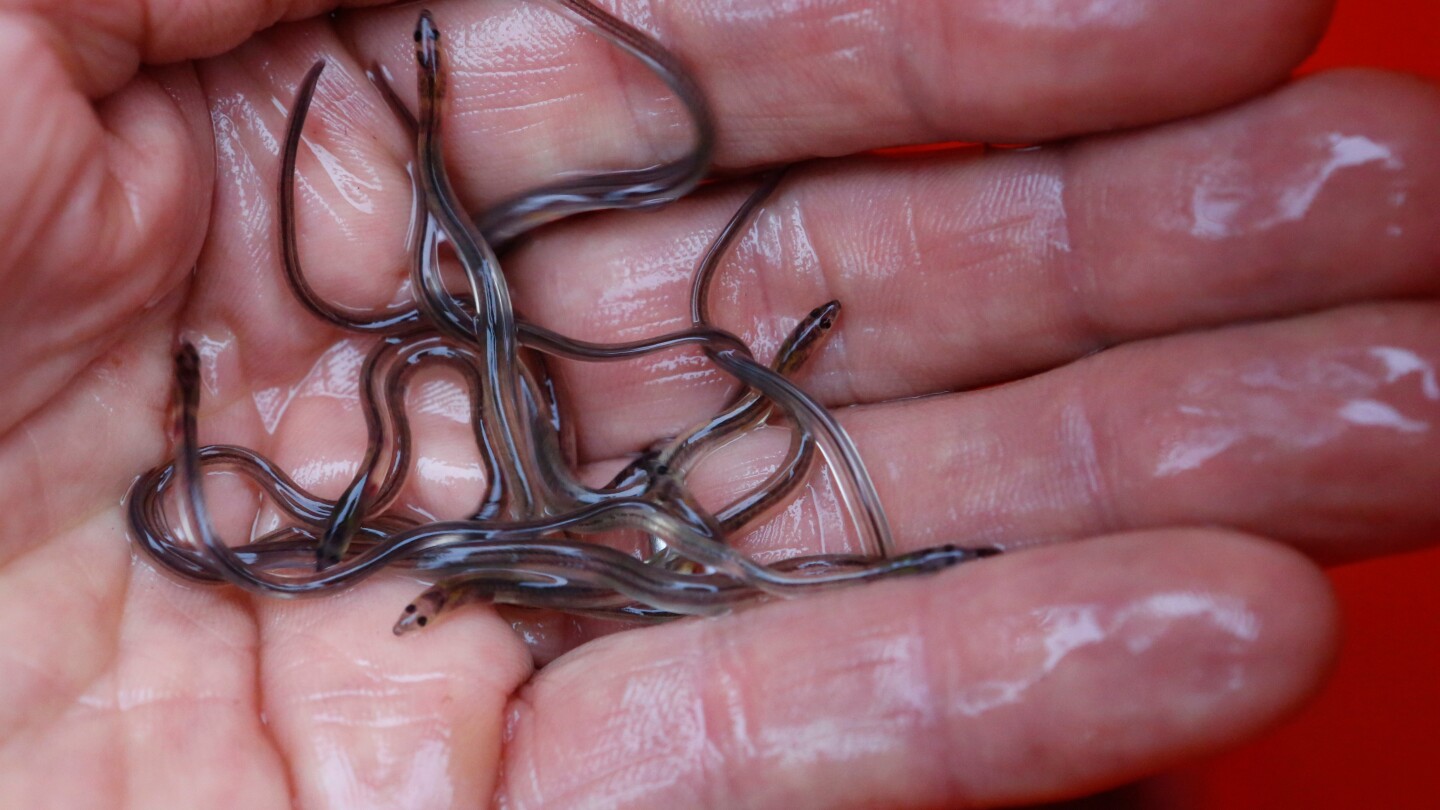
SCARBOROUGH, Maine — Freshwater eels, a prehistoric species vital to the global sushi industry, are facing precipitous decline, with some populations plummeting over 90% since the 1980s. This alarming trend prompted the Convention on International Trade in Endangered Species of Wild Fauna and Flora (CITES) to consider stringent trade restrictions during its recent meeting in Uzbekistan.
Despite scientific consensus on their vulnerability, CITES member nations voted against implementing new protections on Thursday, delivering a significant setback to conservation efforts. The decision highlights the intense conflict between international environmental policy and economic interests in the multi-million dollar eel trade.
These serpentine fish, which have existed since the dinosaur era, are succumbing to a perfect storm of threats including river dams, hydroelectric turbines, pollution, habitat degradation, climate change, and rampant illegal poaching. Their peculiar life cycle—migrating to oceans to spawn before dying—makes them particularly vulnerable to human activities.
The culinary value of eels, especially juvenile “elvers,” has skyrocketed alongside their scarcity. In Maine, America’s only significant elver fishery, prices reached unprecedented heights exceeding $1,200 per pound in 2024. This economic incentive has fueled both legal harvesting and illegal trafficking operations.
The proposed CITES protections would have required export permits and scientific verification that trade wouldn’t harm species survival. Conservation organizations including the Wildlife Conservation Society argued these measures were “vital to strengthen trade monitoring, aid fisheries management, and ensure the species’ long-term survival.”
However, fishing industries and regulatory bodies from the United States, Japan, and China—nations where eel consumption is culturally and economically significant—successfully opposed the restrictions. They maintained that national management strategies are more effective than international trade bans, with some industry representatives criticizing CITES as “an international body dominated by volunteer scientists and unelected bureaucrats.”
Environmental groups warn that without coordinated international action, these ancient migratory fish may continue their slide toward extinction, with irreversible consequences for both marine ecosystems and global food cultures.