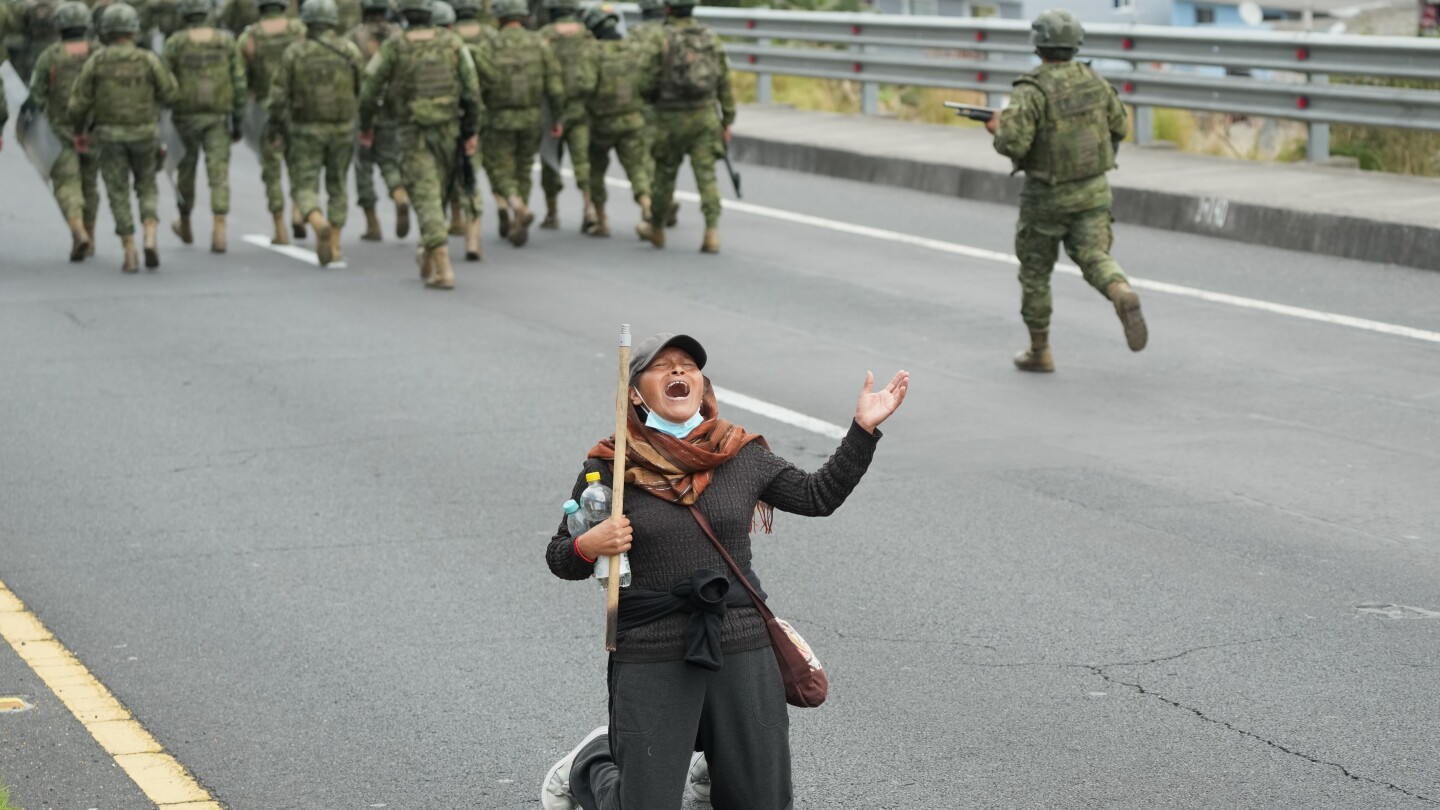
Ecuador is facing a deepening political crisis as widespread protests over the government’s decision to eliminate diesel subsidies enter their third week. The unrest, led by the Confederation of Indigenous Nationalities of Ecuador (CONAIE), has resulted in one fatality, numerous injuries, and over 100 arrests. President Daniel Noboa, who assumed office in May, is grappling with one of the most challenging moments of his presidency as tensions escalate. The government has deployed 5,000 troops to Quito to prevent vandalism and property destruction, following violent clashes between protesters and security forces. The protests, initially concentrated in rural areas, particularly Imbabura province, are now threatening to spread to urban centers, raising fears of further violence. The CONAIE, a powerful Indigenous organization, has rejected government offers of economic handouts, insisting on the restoration of the diesel subsidy and broader policy changes. Critics accuse Noboa of authoritarian tendencies and a lack of willingness to engage in dialogue, while the Indigenous movement is seen as uncompromising in its demands. The situation has drawn international attention, with concerns over the excessive use of force by security forces. Experts warn that without mediation from institutions like the Catholic Church or civil society, the crisis could worsen.