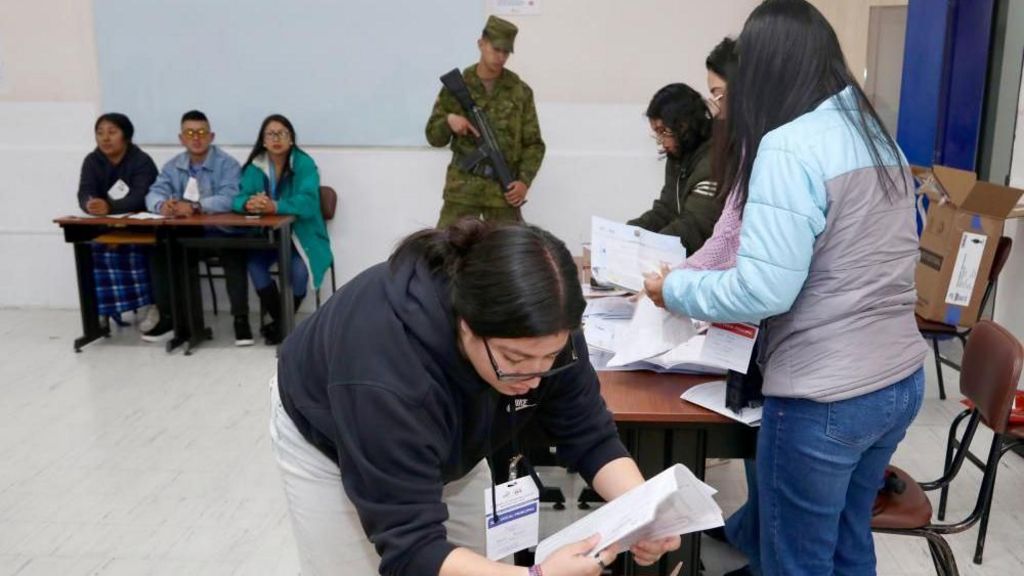
In a decisive referendum, Ecuadorian voters have rejected the proposal to allow foreign military bases on their soil, thwarting both President Daniel Noboa’s agenda and US ambitions to expand its military presence in the Eastern Pacific. The vote, held on Sunday, marks a significant setback for Noboa, who had championed constitutional changes to overturn a 2008 legislative ban on foreign military installations. He argued that such bases would bolster efforts to combat organized crime and curb the nation’s escalating violence, which has transformed Ecuador into a global hub for drug trafficking. Despite his efforts, the electorate delivered a resounding ‘no,’ reflecting widespread skepticism about foreign military involvement. The referendum also saw voters reject other proposals, including ending public funding for political parties, reducing the size of Congress, and establishing a constitutional assembly to rewrite the nation’s charter. Noboa, who has pursued a hardline military approach to crime, including deploying armed soldiers on the streets, expressed respect for the outcome but faces mounting criticism over his authoritarian tactics. The US, which had hoped to reestablish a military base in Ecuador after being forced to close its previous site in 2009, now finds its regional strategy in question. The referendum coincides with a significant US military deployment to the Caribbean, including the world’s largest warship and bomber planes, raising speculation about potential strikes on land targets in Venezuela. Critics argue that the US’s actions in the region, including recent strikes on alleged drug-trafficking vessels, may violate international law. Meanwhile, Ecuador’s struggle against powerful drug cartels continues, as evidenced by the recent capture of Wilmer ‘Pipo’ Chavarria, a leader of the notorious Los Lobos gang, in a joint operation with Spanish police. The referendum outcome underscores the complexities of balancing security, sovereignty, and international relations in a region grappling with violence and geopolitical tensions.