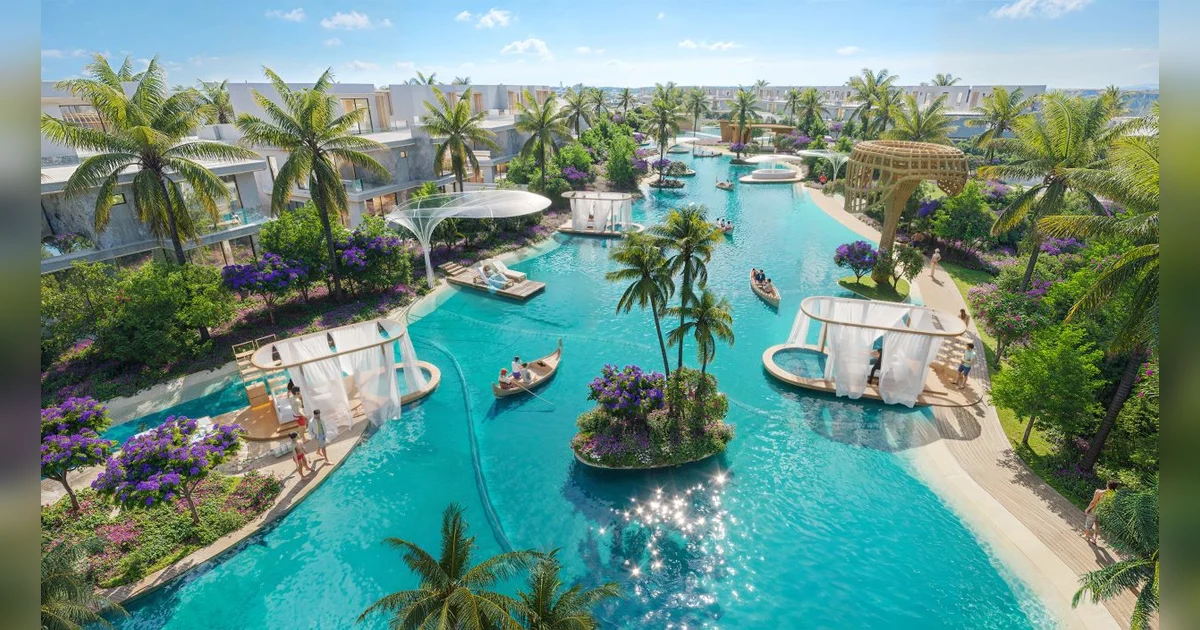
Dubai’s real estate sector is undergoing a transformative shift as artificial ‘water cities’ emerge as the new benchmark for urban development. With natural coastline properties becoming increasingly scarce, developers are pioneering inland lagoon communities, floating neighborhoods, and marina-style districts that integrate water features deep within the urban fabric.
This evolution transcends mere aesthetics, reflecting fundamental changes in residential preferences where wellness-oriented, nature-infused environments are becoming essential rather than optional. Industry leaders from Damac Properties, Metropolitan Premium Properties, and Golden Bridge confirm that water-centric developments align with Dubai’s 2040 Urban Master Plan, which prioritizes expanding blue and green corridors throughout the emirate.
The technological advancements enabling this trend are significant. Modern lagoon systems utilize sophisticated water recycling mechanisms, advanced filtration, and energy-efficient operations that minimize environmental impact. These engineering solutions allow developers to create sustainable waterfront experiences without traditional ecological costs.
Amira Sajwani of Damac Properties notes that water carries profound emotional value in desert cities, with created oases satisfying deep-seated human connections to water environments. Nikita Kuznetsov of Metropolitan Premium Properties emphasizes the economic rationale, noting that waterfront properties consistently command premium valuations and stronger rental yields.
The concept of luxury itself is being redefined in Dubai’s market. Features once considered premium—private beaches, lagoon access, wellness facilities, and shaded walkways—are now standard expectations among buyers. Aamil Tabani of Golden Bridge observes that elevated living has become the baseline standard, with developers competing through execution quality, sustainability certifications, and integrated lifestyle programming rather than merely adding amenities.
Differentiation now hinges on master plan completeness, maintenance reliability, and genuine lifestyle integration. Successful developments combine water features with everyday conveniences—grocery access, schools, healthcare, and hybrid workspaces—creating self-contained communities that offer both retreat and connectivity.
Market indicators suggest this trend possesses staying power beyond cyclical fluctuations. Waterfront properties historically maintain value due to scarcity principles, and Dubai’s engineered water communities are demonstrating strong resale and rental performance. As global migration continues bringing residents with high lifestyle expectations, and as urban planning prioritizes wellbeing, water-inspired developments appear poised to remain central to Dubai’s residential landscape for decades ahead.