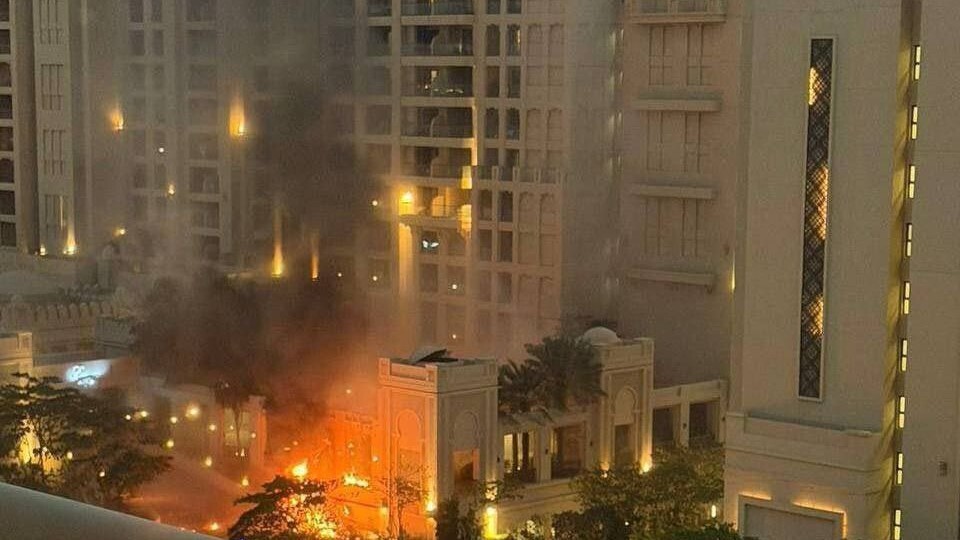
Dubai’s carefully cultivated image as a secure haven in the turbulent Middle East faced an unprecedented challenge on Saturday as Iranian missiles and drones targeted the emirate. The assault, launched in retaliation for a surprise US-Israeli operation, sent billowing smoke and flames across the skyline of the region’s premier business and entertainment capital.
The attack carries profound implications beyond immediate geopolitical tensions. Dubai has emerged as the world’s foremost beneficiary of post-pandemic economic trends, attracting London bankers, American finance professionals, and global entrepreneurs with its low-tax environment and efficient bureaucracy. The city-state’s property market has soared by 75% since 2020, while its financial institutions have become magnets for diverse capital flows—from Sudanese militia leaders trading gold to Eastern European expatriates fleeing conflict.
Symbolic footage of an Iranian drone striking the luxurious Fairmont Hotel on Palm Jumeirah circulated rapidly through expatriate communities, challenging the fundamental calculation that built modern Dubai. The evacuation of the Burj Khalifa—the world’s tallest building—and indefinite flight suspensions at Al Maktoum International Airport further underscored the city’s vulnerability.
Regional analysts note that Dubai’s essence depended on being a safe oasis in a troubled region. The attacks demonstrate that no amount of economic success can fully insulate the emirate from the Middle East’s unpredictable politics. This development potentially reprices risk assessments for the wealthy global citizens who have fueled Dubai’s boom, with competitors like Doha, Riyadh, and Muscat waiting to offer alternatives.
The strikes have unexpectedly unified Gulf Cooperation Council leaders, with Saudi Crown Prince Mohammed Bin Salman expressing solidarity with Emirati leadership. Iran’s broader calculation appears to be forcing regional monarchs to either support US military operations or pressure Washington to de-escalate tensions—particularly if economic hubs continue suffering collateral damage.