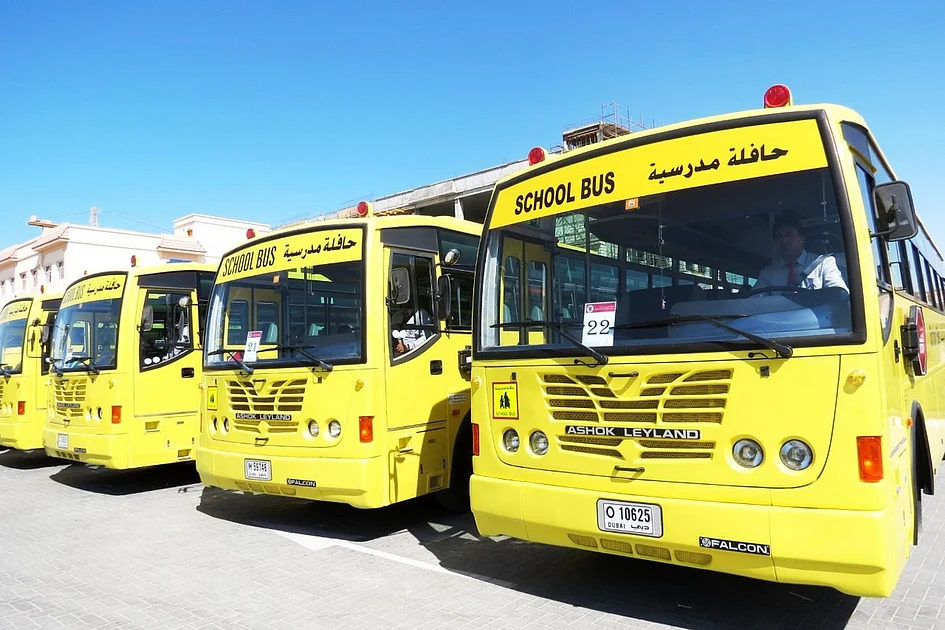
Dubai has embarked on a groundbreaking pilot program that could fundamentally reshape the city’s morning commute. The Roads and Transport Authority (RTA), in collaboration with Yango Group and Urban Express, has launched an innovative school transport pooling system utilizing shared SUV vehicles for students traveling to and from nearby educational institutions.
The initiative specifically targets high-congestion school clusters, beginning with Al Barsha and surrounding neighborhoods where parking limitations and peak-hour traffic create significant challenges. The program represents a strategic response to extensive RTA research identifying key issues including excessive private vehicle usage, prolonged student travel durations, and morning traffic bottlenecks.
Participating schools in this initial phase include prominent institutions such as Al Mawakeb School Al Barsha, American School of Dubai, Bloom World Academy, Brighton College Dubai, Dubai Heights Academy, Dubai International Academy, and multiple GEMS Education schools, among others in the area.
The operational model employs demand-based routing rather than fixed lines for individual schools. After registration, students from similar neighborhoods share SUV vehicles with routes and schedules meticulously planned in advance to align with school timings. Vehicles are assigned to designated parking zones serving several neighboring schools, minimizing unnecessary detours and maintaining journey times within a 60-minute threshold.
Parents of students at participating schools can register interest through Yango’s online portal or the Urban Express platform. Registrations are processed continuously, with routes activated based on demand feasibility and school coordination. The rollout employs a phased approach to ensure service quality, clear family communication, and smooth school coordination.
During the pilot phase, the service operates on a monthly subscription model with introductory rates ranging between Dh800 and Dh1,000, payable exclusively online. The current structure prioritizes predictable attendance to maintain pooling efficiency, though term-based plans may be considered as the service evolves.
This initiative supports the RTA’s broader objective to increase shared or school transportation usage among students to 60% within the next three years. Notably, officials emphasize that the system complements rather than replaces existing bus transport infrastructure.
Expansion into additional communities will occur in phases, contingent on demand patterns, route feasibility, and regulatory approvals. Parents whose schools or residential areas aren’t yet covered can still register interest for future expansion planning.