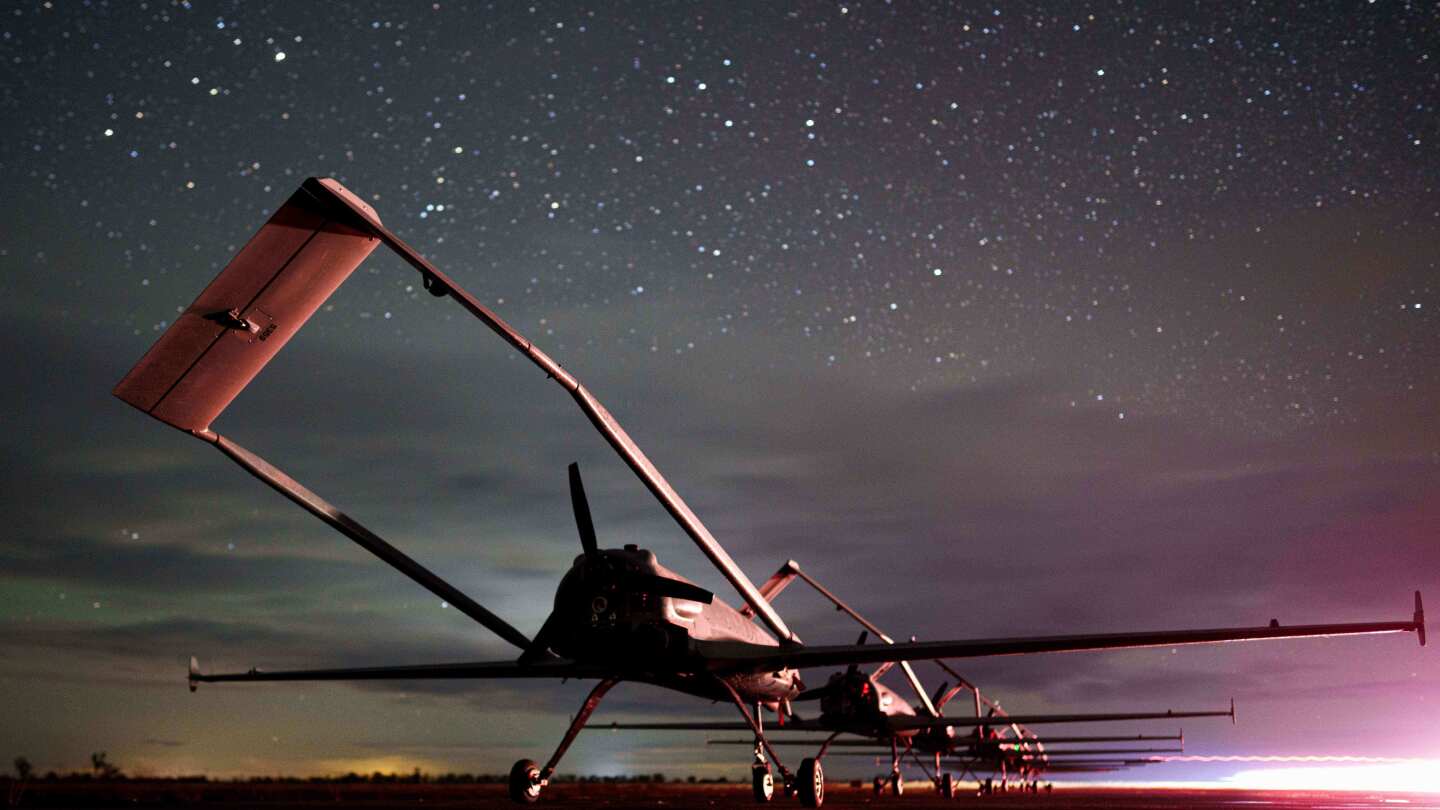
In a covert operation in rural Ukraine, attack drones are assembled under the cover of night to strike strategic targets deep within Russia, including oil refineries, fuel depots, and military logistics hubs. Since the summer, Ukraine’s long-range drone campaign has intensified, significantly impacting Russia’s energy infrastructure and stretching Moscow’s air defenses thin. These drones, constructed from parts produced in a decentralized network of workshops, now boast extended ranges, enabling them to reach targets far beyond previous capabilities. The strikes have led to gasoline shortages in Russia, prompting rationing in some regions and highlighting vulnerabilities in the country’s infrastructure. Western analysts note that while the attacks have had a serious impact, they have not been crippling. According to the Carnegie Endowment, Ukrainian drones have hit 16 major Russian refineries, representing about 38% of the country’s nominal refining capacity. However, most plants have resumed operations within weeks, cushioned by idle capacity and existing fuel surpluses. Despite this, the strikes have given Kyiv the initiative at a critical juncture, as the U.S. and Europe ramp up sanctions on Russia’s oil industry. Ukrainian President Volodymyr Zelenskyy claims that these strikes have caused Russia to lose up to 20% of its gasoline supply, forcing the Kremlin to import fuel and curb exports. The commander overseeing the drone operations, identified by his call sign ‘Fidel,’ emphasized the evolution of drone technology, with some models now capable of flying 1,000 kilometers. The Liutyi, a homegrown drone, has become a symbol of national pride, reflecting Ukraine’s no-frills war production philosophy. The increased range of these drones marks a shift in the conflict’s geography, with attacks now reaching targets within a 1,000-kilometer radius of the border. This has forced Russia to reroute supplies and commit air defenses to a wider area, degrading its capacity to sustain large-scale operations. The Paris-based International Energy Agency reports that repeated drone strikes have cut Russia’s refining capacity by about 500,000 barrels a day, triggering domestic fuel shortages and curbing exports. Ukraine’s independent drone launch capability allows it to bypass Western approval required for imported long-range weapons, providing a strategic advantage. Each mission is meticulously planned, with fewer than 30% of drones reaching their target area. Fidel reflected on the human cost of the war, stating that the current generation is fighting for a free democratic future for their children.
Drones, oil and escalation: Ukraine’s deep strikes impact Russia, altering war calculations