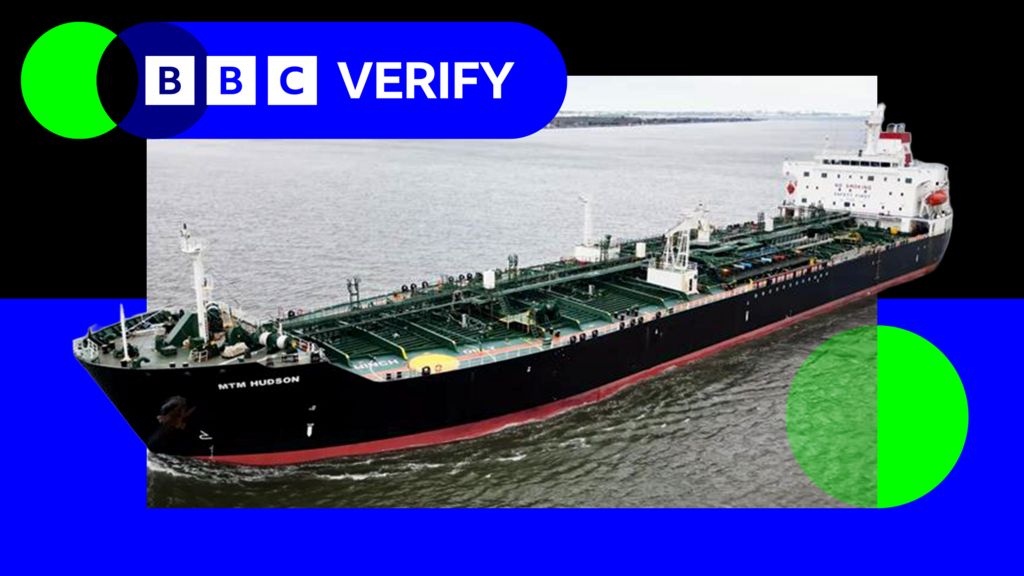
Despite the UK government’s pledge to take assertive action against Russian oil sanctions evasion, dozens of sanctioned tankers from Russia’s shadow fleet have continued to transit the English Channel throughout January. BBC Verify tracking data reveals that 42 sanctioned vessels passed through these strategic waters even after British defense officials received legal authorization to detain such ships under the Sanctions and Money Act 2018.
The shadow fleet—comprising hundreds of aging tankers with obscured ownership—has become Russia’s primary mechanism for circumventing oil embargoes imposed since its full-scale invasion of Ukraine. Among the vessels that transited the Channel was the Sofos, sanctioned by the UK Foreign Office in May 2025. This tanker executed a complex route: loading oil in Russia mid-November, traveling to Turkey, then proceeding to Venezuela where it disabled its tracking system. Satellite imagery confirmed its presence at Venezuela’s Jose oil terminal in late December before reappearing near Russian waters.
Another notable vessel, the Nasledie (formerly Blint), underwent identity transformation in November 2025 by changing its name and switching from a false Comoros registration to Russian registry. This 20-year-old tanker, carrying approximately 100,000 tonnes of Urals crude, entered the Channel just days after BBC reported on the UK’s new legal authority to intercept shadow vessels.
While the UK has assisted allied forces in seizing tankers near Iceland and in the Mediterranean, British troops have yet to independently detain any shadow fleet vessels. This inaction persists despite BBC Verify identifying six tankers operating under false flags in Channel waters—a condition that legally classifies them as stateless vessels subject to seizure under international maritime law.
Political figures have expressed frustration with this enforcement gap. Dame Emily Thornberry, chair of Parliament’s Foreign Affairs Select Committee, stated she was ‘very disappointed’ by the lack of interceptions. Liberal Democrat MP Mike Martin, a former British Army officer, questioned the reluctance to act independently given Royal Marines’ capability for such operations.
Russia has responded to increased Western pressure with both diplomatic warnings and military escorts. The warship General Skobelev accompanied a sanctioned tanker through the Channel on January 20, while Russian foreign ministry spokeswoman Maria Zakharova declared any vessel detention would be viewed as ‘harming Russian interests’ and violating international law.
The economic stakes remain substantial. According to the Center for Strategic and International Studies, shadow fleet tankers transport between $87-$100 billion worth of oil annually. Recent analysis indicates 68% of all Russian crude oil was carried on sanctioned tankers in December 2025, providing critical economic support for Russia’s military operations in Ukraine.
Despite Ministry of Defense assertions that disrupting the shadow fleet remains a government priority, enforcement challenges persist. Tankers continue employing sophisticated evasion tactics including identity changes, tracking signal manipulation, and false location broadcasts—strategies that complicate monitoring efforts and enable continued sanctions circumvention.