Bahrain is confronting significant public anger following the controversial death of Mohamed al-Mosawi, a 32-year-old man who died in state custody under circumstances suggesting torture. The incident has ignited rare public protests and drawn sharp criticism from human rights organizations.
Al-Mosawi was detained with six companions at a security checkpoint on March 19th while returning from a suhoor meal during Ramadan. According to the Bahrain Institute for Rights and Democracy (Bird), the detainees experienced enforced disappearance, with families remaining unaware of their whereabouts until authorities notified them to collect al-Mosawi’s body from the Bahrain Defence Force Hospital.
Visual evidence obtained by Middle East Eye reveals extensive bruising and physical markings across the deceased’s face and body, consistent with allegations of torture before death. The Interior Ministry has denied these claims, labeling circulated images as ‘inaccurate and misleading,’ while simultaneously announcing an investigation into the matter. Officials stated al-Mosawi faced espionage charges for allegedly providing intelligence to Iran’s Islamic Revolutionary Guard Corps.
Notably, al-Mosawi had previously endured over a decade as a political prisoner in Jau Prison before receiving a royal pardon in April 2024 alongside approximately 1,500 other detainees. His death certificate lists the cause as ‘cardiopulmonary arrest’ and ‘acute coronary syndrome’ – medical explanations contradicted by acquaintances who described him as young, healthy, and energetic.
The case occurs against a backdrop of intensified regional conflict and domestic crackdowns. Since the onset of the Israel-Hamas war, Bahraini authorities have arrested at least 220 individuals, primarily targeting Shia communities who constitute Bahrain’s demographic majority. The ruling Al Khalifa family represents the Sunni minority.
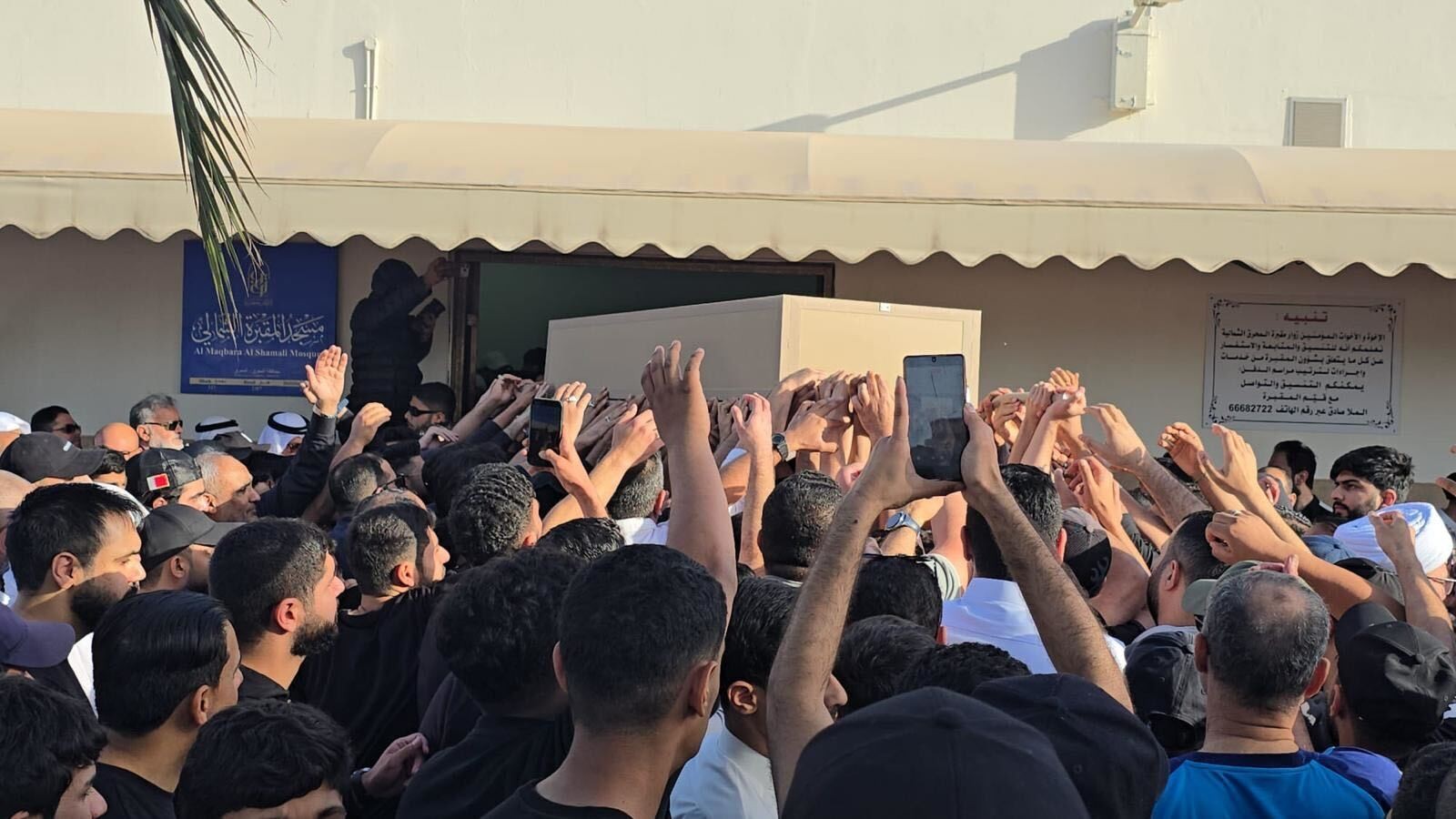
Al-Mosawi’s funeral in Muharraq drew hundreds of participants who chanted anti-government slogans – a rare occurrence given severe restrictions on dissent. Attendees reported widespread fear within Shia communities, particularly regarding arbitrary detention and enforced disappearances.
International observers note that Bahrain’s strategic importance, hosting the U.S. Navy’s Fifth Fleet with approximately 9,000 personnel, has historically influenced Western nations’ responses to human rights concerns. The recent events have renewed scrutiny on the government’s treatment of dissent and the ongoing tensions between Bahrain’s ruling establishment and its Shia population.