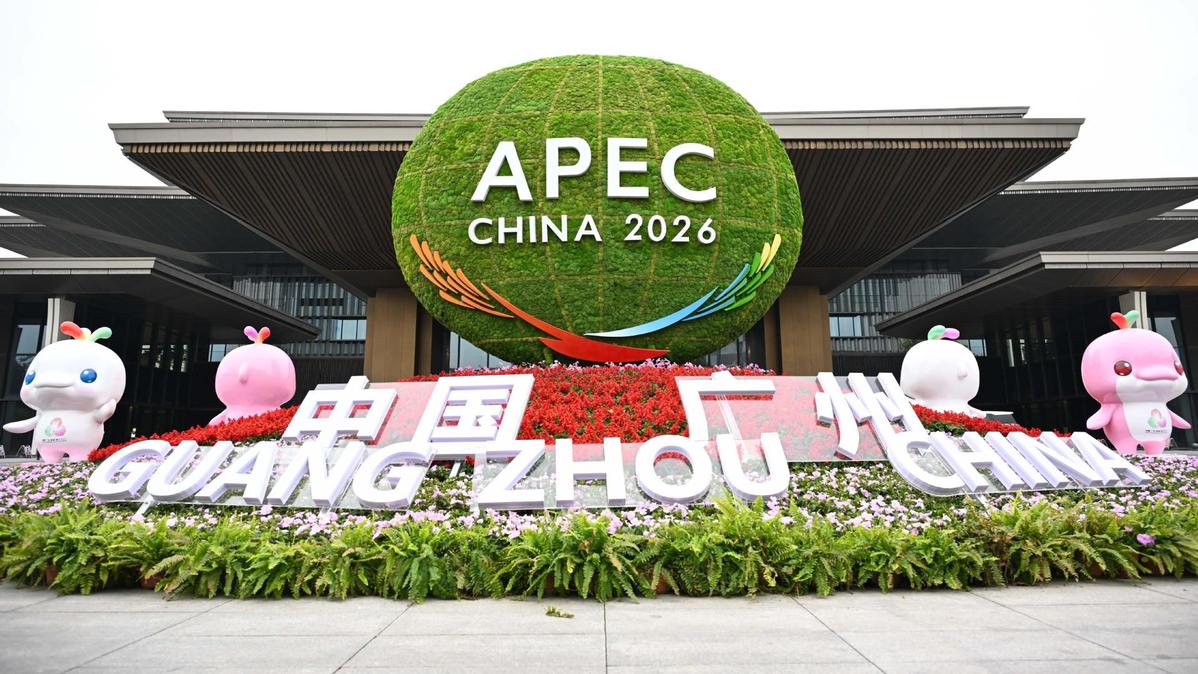
GUANGZHOU – The inaugural Asia-Pacific Economic Cooperation Senior Officials’ Meeting commenced Tuesday in Guangzhou, marking China’s return as APEC host after twelve years and initiating critical dialogue on regional economic integration amidst growing global protectionism.
Chinese Foreign Minister Wang Yi delivered a pivotal keynote address framing the Asia-Pacific region at a developmental crossroads with profound implications for worldwide economic stability. The assembly convened as global institutions project diminished growth trajectories, with IMF forecasts suggesting medium-term expansion hovering near 3% – substantially beneath historical averages.
APEC’s statistical significance underscores the meeting’s global relevance: its 21 member economies collectively represent approximately 60% of worldwide GDP, 48% of international trade, and nearly 40% of the global population. World Bank data confirms the region has driven over half of planetary economic growth during the past three decades, elevating hundreds of millions from poverty.
Minister Wang articulated a vision countering prevailing trends of economic fragmentation, emphasizing that coercive decoupling strategies and trade bullying already inflict measurable damage. UNCTAD modeling indicates prolonged economic segmentation could ultimately reduce global GDP by up to 7%, with developing economies suffering disproportionately. For the deeply interconnected Asia-Pacific, where intermediate goods constitute over 60% of intra-regional trade, the consequences would be particularly severe.
The address reinforced China’s commitment to multilateralism through World Trade Organization frameworks and advancement of the Free Trade Area of the Asia-Pacific initiative – a proposal circulating since the mid-2000s. Wang stressed that decades-old supply networks, now undergoing geopolitical stress-testing, require preservation to avoid inflationary pressures, diminished productivity, and constrained innovation.
Beyond commercial considerations, the foreign minister highlighted inclusive development imperatives. While extreme poverty in East Asia plummeted from 60% (1990) to under 2% presently – largely attributable to China’s unprecedented progress – significant disparities persist across and within economies. Equitable artificial intelligence benefits distribution, developing nation support, and green transformation investment emerged as essential priorities.
China’s forthcoming 15th Five-Year Plan (2026-30) signals sustained dedication to high-quality opening-up policies, offering regional partners continued access to development dividends. The present moment demands reciprocal openness as geopolitical tensions and economic headwinds test international cooperation frameworks.
Historical evidence suggests hegemonic approaches and zero-sum mentalities poorly serve prosperity objectives. APEC members now confront a definitive choice between collaborative benefit-sharing and fragmentation that leaves all parties diminished. The Guangzhou deliberations represent an opportunity to reaffirm the cooperative principles that have historically underpinned regional success.