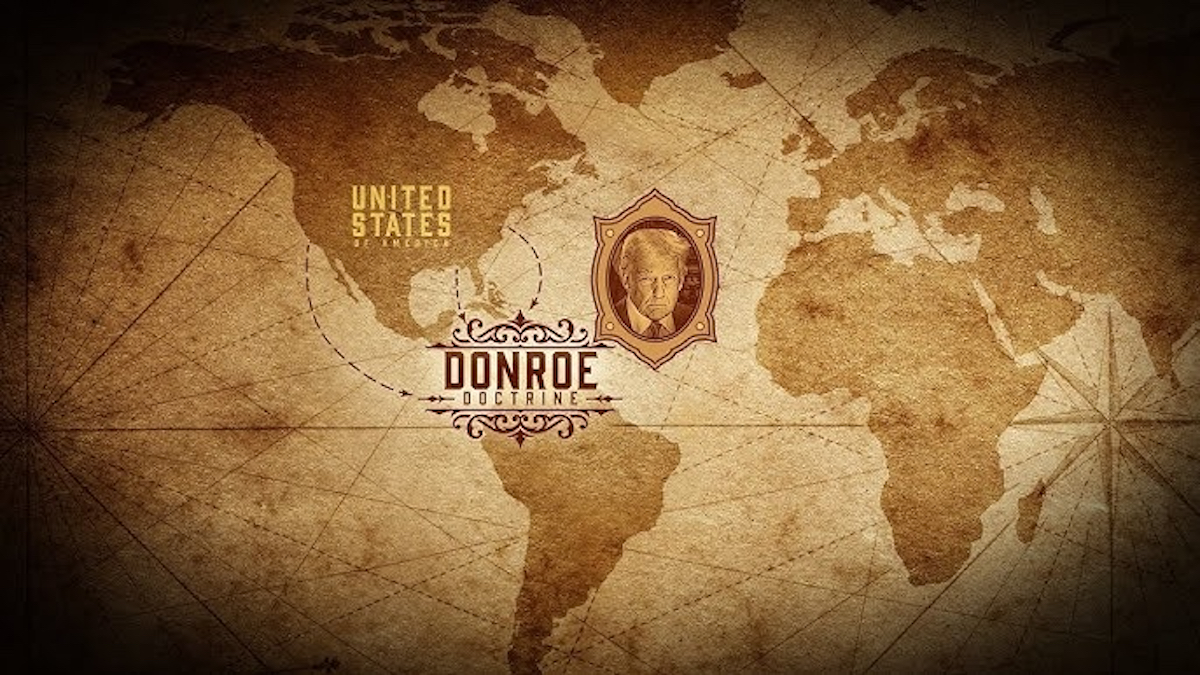
The Trump administration’s controversial ‘Donroe Doctrine’ represents a radical reassertion of American hemispheric dominance that echoes 19th-century spheres of influence while confronting 21st-century global interconnectedness. This policy framework expands upon the traditional Monroe Doctrine by explicitly asserting Washington’s right to ‘reassert and enforce’ preeminence across the Western Hemisphere while denying non-hemispheric competitors access to strategic assets.
In practical application, this doctrine has manifested through threats to seize control of the Panama Canal, acquire Greenland through coercive means, rename the Gulf of Mexico as the ‘Gulf of America,’ and deploy substantial military and economic pressure throughout Latin America. The administration’s declaration that Washington now ‘runs’ Venezuela following Nicolás Maduro’s capture has effectively reframed the hemisphere as an American protectorate rather than a community of sovereign nations, drawing criticism from European officials who describe this approach as a return to ‘imperial’ thinking.
For Asian powers, particularly China, the Donroe Doctrine presents both strategic challenges and opportunities. Beijing’s significant investments in Arctic energy projects, research stations, and its Polar Silk Road initiative—which could dramatically reduce Asia-Europe shipping times—face direct threat from American moves toward Greenland. The island’s rare-earth mineral deposits, energy resources, and strategic position along emerging Arctic shipping routes make it a crucial nexus between North America, Europe, and Asian trade corridors.
The doctrine’s hemispheric focus creates ambiguous implications for Asian security. While Washington’s concentration on Latin American affairs might reduce resources available for confrontation in the Western Pacific, its aggressive efforts to counter Chinese influence throughout the Americas—including pushing Panama out of Belt and Road initiatives and isolating Venezuela and Cuba—demonstrate clear anti-China objectives.
Asian middle powers including Japan, India, South Korea, Australia, and ASEAN states now face three critical challenges: reducing over-dependence on US security guarantees through enhanced indigenous defense capabilities and minilateral cooperation, engaging Latin America and the Arctic as genuine strategic theaters rather than distant peripheries, and resisting any great-power arrangements that trade away regional principles for hemispheric deference.
The fundamental paradox of the Donroe Doctrine lies in its attempt to revive territorial spheres of influence in a world where supply chains, finance, and data flows transcend hemispheric boundaries. As Latin America’s trade remains deeply integrated with China and Greenland’s resources serve global commerce, American actions in one sphere create immediate ripple effects across worldwide markets.
For Asia, the ultimate concern extends beyond strengthened American regional dominance to the potential normalization of geographic veto rights claimed by great powers while remaining economically interdependent—a contradiction that threatens the very foundation of global connectivity.