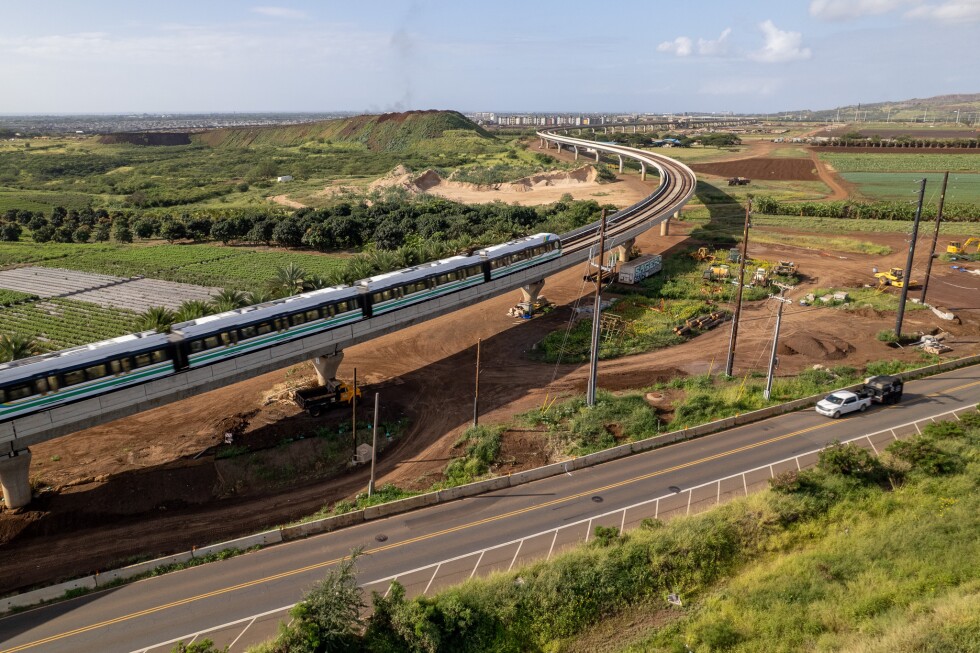
Hawaii’s ambitious Skyline rail project stands at a critical juncture, facing stark operational realities while pursuing transformative development through an unprecedented international partnership. Governor Josh Green’s administration is finalizing a memorandum of understanding with Tokyo-based Tokyu Group, a century-old railroad conglomerate renowned for creating thriving urban centers around transit hubs.
The contrast between Tokyo’s vibrant station communities and Honolulu’s underutilized Skyline stops could hardly be more dramatic. Where Japanese stations pulse with commercial activity and public amenities, Honolulu’s stations frequently offer little more than barren landscapes and restricted access. This partnership aims to bridge that gap by leveraging Tokyu’s expertise in creating high-density, mixed-use neighborhoods that naturally attract ridership.
Governor Green’s vision extends beyond mere infrastructure development to address Hawaii’s acute housing crisis. The strategy incorporates modular housing technology from Japanese firm Daiwa House Industry, complemented by traditional construction methods. This hybrid approach has garnered rare support from Hawaii’s powerful construction unions, who have historically been skeptical of prefabricated housing solutions.
The collaboration represents a sophisticated evolution in foreign investment practices, consciously avoiding the problematic patterns of 1980s Japanese investment in Hawaii. Rather than creating isolated foreign-owned developments, the initiative emphasizes co-development structures with local leadership and mutual growth opportunities. The partnership remains aspirational without binding financial commitments, focusing instead on knowledge transfer and strategic planning.
With current ridership languishing at approximately 12,000 daily passengers—far below the projected 84,000 target—the initiative represents a comprehensive approach to transit-oriented development that integrates housing, commercial spaces, and community infrastructure to create sustainable urban environments around rail stations.