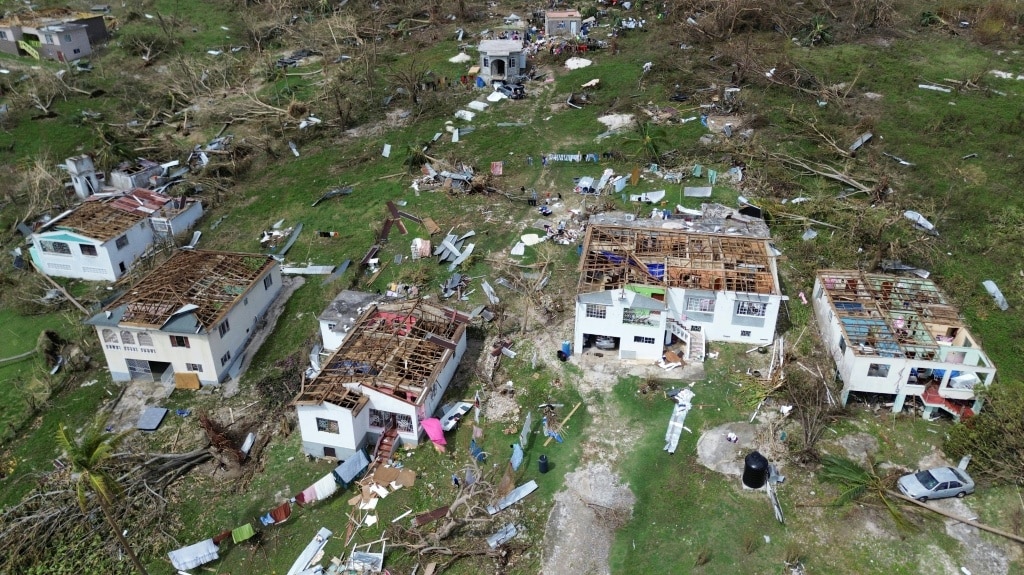
A significant decline in global financial losses from natural disasters marked the year 2025, though the underlying climate trends remain deeply concerning, according to a comprehensive annual report from reinsurance giant Munich Re. Total worldwide losses reached $224 billion, representing a dramatic 40% decrease from the previous year. A primary factor in this drop was the absence of a major hurricane making landfall on the U.S. mainland for the first time in several years.
Despite the overall financial improvement, the human toll was severe, with approximately 17,200 lives lost—a figure that exceeds 2024’s total of 11,000, though it remains slightly below the decade’s average. The report paints a complex picture of a year characterized by extreme weather events increasingly linked to climate change.
The costliest single catastrophe was the series of devastating wildfires that swept through Los Angeles in January, resulting in total losses of $53 billion, with insured losses accounting for roughly $40 billion. The second most financially impactful event was a powerful earthquake that struck Myanmar in March, causing an estimated $12 billion in damage, only a minor fraction of which was covered by insurance.
Munich Re’s Chief Climate Scientist, Tobias Grimm, described 2025 as a year with ‘two faces.’ The first half constituted the most expensive loss period in the insurance industry’s history, while the second half saw the lowest losses in a decade. He emphasized that the Earth ‘continues to warm,’ stating, ‘More heat means more humidity, stronger rainfall, and higher wind speeds—climate change is already contributing to extreme weather.’
Regionally, the United States bore the brunt of the financial impact with $118 billion in total losses, $88 billion of which was insured. The Asia-Pacific region suffered about $73 billion in losses, but with a starkly low insurance penetration of only $9 billion. Europe recorded $11 billion in losses, while Africa experienced $3 billion, with less than a fifth covered by insurance.
The findings arrive amidst a global political landscape where skepticism toward climate science and green policies is growing, particularly following the return to power of U.S. President Donald Trump. Nonetheless, the data underscores a rising cumulative cost from smaller-scale, frequent disasters like local floods and forest fires, which amounted to $166 billion and are having the most pronounced ongoing impact.