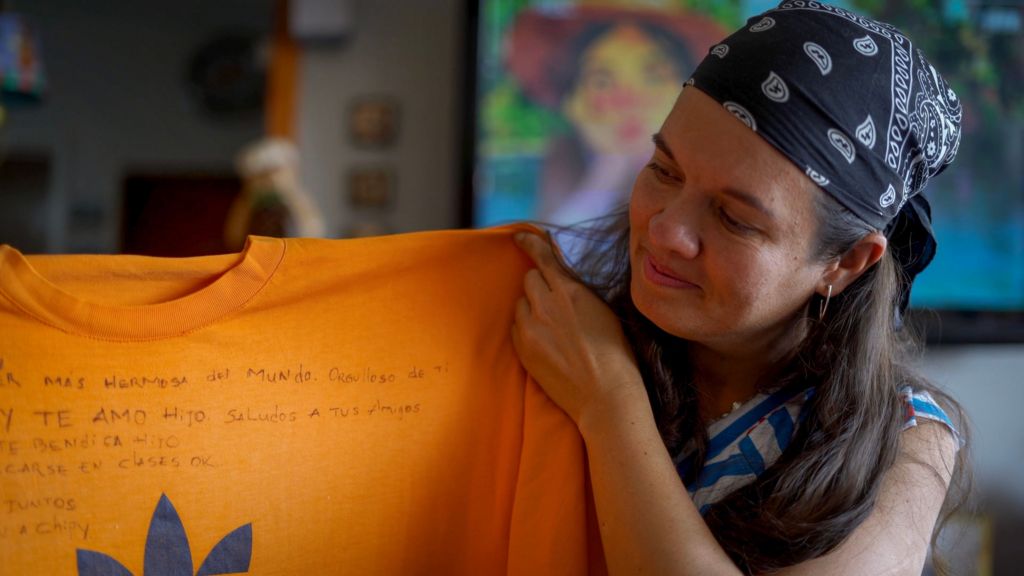
In a remarkable display of resilience, Venezuelan political prisoners and their families developed ingenious methods to maintain communication under the brutal conditions of El Helicoide, Venezuela’s most notorious detention facility. The story centers on Adriana Briceño, who smuggled messages to her imprisoned husband Ángel Godoy hidden within chocolate bar wrappers, while he reciprocated by writing clandestine notes on dirty laundry returned from the jail.
Originally conceived as a luxury shopping center in the 1950s, El Helicoide was never completed and eventually transformed into a symbol of state repression under President Nicolás Maduro’s government. The United Nations has documented its use for arbitrary detentions, forced disappearances, and systematic torture practices.
Godoy, arrested without warning by security forces, endured 96 days of complete isolation before establishing limited contact with his family. His experience mirrors that of human rights activist Javier Tarazona, who suffered 1,675 days in detention under similar conditions. Both men describe punishment cells known as ‘little tigers’—vermin-infested spaces so cramped that prisoners had to alternate lying down, using cardboard over sewer holes as makeshift mattresses.
The psychological torture extended beyond physical confinement. Guards deliberately disrupted prisoners’ sense of time by delivering meals at irregular intervals, while authorities systematically targeted detainees’ families. Briceño lost her state telecom job after 21 years of service following her husband’s arrest, while Tarazona faced threats against his 70-year-old mother during interrogations.
Despite being charged with terrorism, treason, and incitement to hatred, neither prisoner received proper legal representation. Godoy never saw his case file or met his assigned lawyer during his year-long detention, while Tarazona saw legal counsel fewer than five times throughout his nearly five-year imprisonment.
In January, Venezuela’s interim president announced plans to convert El Helicoide into a social and cultural center, a move rights groups characterize as an attempt to whitewash the facility’s dark history. While over 600 prisoners have been released since military operations began, hundreds remain detained according to prisoners’ rights organization Foro Penal.
Both released detainees express extraordinary calls for national reconciliation despite their suffering. ‘Let us move forward without hatred, resentment, or bitterness to build that wonderful Venezuela,’ Godoy urges, embodying a profound resilience that transcends the brutality they endured.