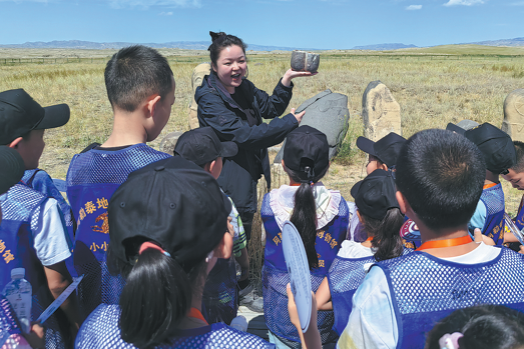
In the remote landscapes of China’s Xinjiang Uygur autonomous region, a technological revolution is quietly unfolding to safeguard ancient cultural treasures. Zoya Baqit, a 37-year-old heritage conservationist and National People’s Congress deputy, is pioneering digital preservation efforts for Altay’s invaluable stone relics, blending traditional archaeology with 21st-century innovation.
The Altay prefecture, home to 692 immovable cultural relic sites according to the third national survey, contains particularly significant rock art spanning from the Paleolithic era to the Qing Dynasty. These ancient canvases depict vivid scenes of hunting, herding, and ceremonial dancing, offering unprecedented insights into early human civilization. Among the most remarkable discoveries is a 12,000-year-old painting in Dundebrak Cave depicting hunters on skis—evidence suggesting Altay may be the historical birthplace of skiing.
“Examining these rock artworks resembles browsing ancient social media feeds,” Baqit observes. “Each carving represents a deliberate communication—whether documenting daily life, spiritual practices, or communal activities—that we strive to interpret through careful analysis.”
The preservation challenge is substantial. Many sites reside in geographically complex areas where traditional physical conservation—involving mountain reinforcement and cliff stabilization—proves logistically impractical. Instead, Baqit and her team at Altay Regional Museum have embraced digital solutions including high-precision 3D scanning, holographic imaging, and virtual reality technologies.
Their meticulous process involves comprehensive field assessments considering variable weather patterns, sunlight exposure, erosion damage, and equipment transportation logistics. Each site requires customized digital preservation strategies due to unique environmental conditions and deterioration patterns. The team’s digital rubbing technique captures intricate details without physical contact, preventing damage while revealing previously unnoticed details about the artists’ techniques.
He Huilai, director of Altay Regional Museum, emphasizes the historical significance of these sites: “Wherever rock art appears, it indicates areas that were—or remain—quality hunting or grazing grounds. These locations document not only nomadic life but also ancient belief systems, aesthetic values, and spiritual pursuits.”
Baqit’s work intersects with regional development initiatives, particularly Altay’s growing reputation as a winter tourism destination. The ancient skiing depiction and associated fur-lined ski tradition (recognized as regional intangible cultural heritage) now form part of the area’s cultural identity promotion.
As Altay completes the field investigation phase of the fourth national cultural relics survey, Baqit’s dual role as conservationist and legislative representative has enabled more informed advocacy for cultural preservation. Her efforts demonstrate how digital technology can create immutable records of fragile heritage while making ancient wisdom accessible to global audiences—ensuring that these stone narratives continue to speak across millennia.
The project exemplifies how traditional cultural preservation and cutting-edge technology can merge to protect humanity’s shared heritage, transforming ancient rock surfaces into permanently accessible digital archives for future generations.