In the arid landscapes of Turkana, northwestern Kenya, Lotkoy Ebey’s once-thriving herd of 50 goats has dwindled to merely five emaciated animals. This devastating loss represents more than economic hardship—it signifies a cultural catastrophe in a community where livestock embodies life itself. A prolonged drought has transformed grazing fields into barren wastelands and riverbeds into dusty trenches across East Africa.
Despite recent rainfall in some regions, officials from Kenya’s National Drought Management Authority caution that Turkana has received uneven precipitation, with many areas remaining parched. The sporadic showers prove insufficient to counteract two consecutive failed rainy seasons, leaving approximately 26 million people across Kenya, Ethiopia, and Somalia facing extreme hunger according to Oxfam.
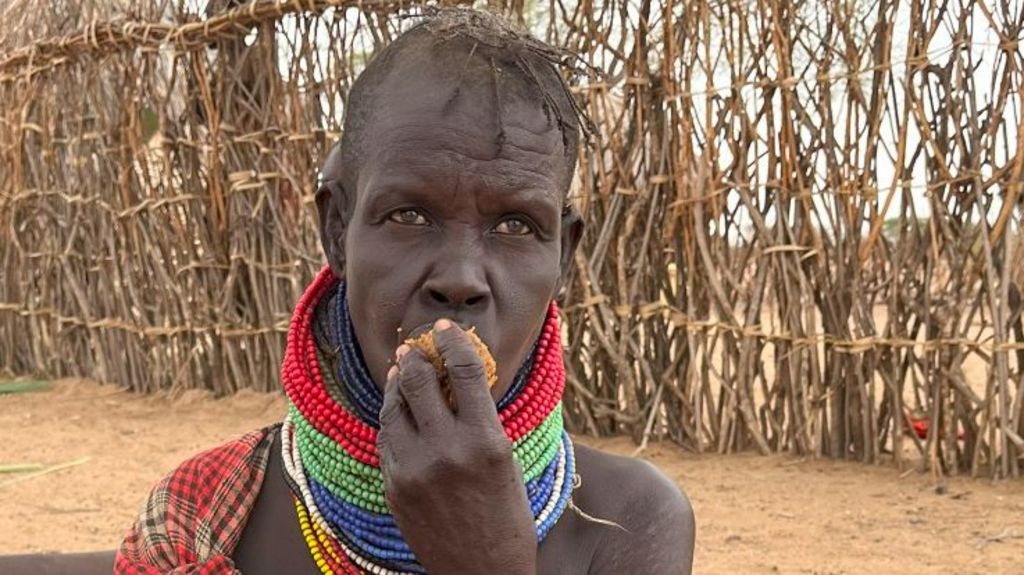
For Ebey’s household, two daily meals have become an unattainable luxury. Most days, they survive on one meager meal—sometimes enduring five days without proper nourishment. When food disappears, their only recourse is scavenging the scrublands for sustenance. This desperate reality echoes throughout Kakwanyang village, where women now pound wild doum palm fruits known locally as ‘mikwamo’—a food source traditionally consumed as snacks but now serving as primary nutrition.
Regina Ewute Lokopuu, one of the women processing these fruits, explains their dangerous dilemma: ‘We eat these because of hunger.’ The gingerbread-tasting fruits cause drowsiness and severe stomach upset when consumed in quantity. Families occasionally supplement them with maize flour purchased through broom sales made from doum leaves.
The crisis has triggered mass migration, with men departing homes to seek greener pastures across borders for remaining livestock. Turkana county’s drought management coordinator Jacob Letosiro confirms over 320,000 people require ‘urgent food assistance,’ noting that recent rains may be temporary and insufficient for immediate recovery.
Humanitarian response remains overwhelmed. At a Red Cross facility outside Lodwar, workers load food trucks for distribution to the most vulnerable households. Yet Kenya Red Cross coordinator Rukia Abubakar acknowledges ‘we have only little food, which cannot reach all people in need.’ While organizations like World Vision Kenya and the UN’s World Food Programme provide assistance, officials emphasize the crisis’ scale far exceeds available resources.