A newly brokered two-week ceasefire between the United States and Iran has triggered deep partisan division among U.S. lawmakers, while already facing imminent collapse just hours after it was signed, following fresh outbreaks of deadly violence across the Middle East.
The ceasefire, finalized Tuesday through Pakistani mediation after Washington extended its military deadline, has split congressional Republicans between cautious backing and open skepticism, with Democrats uniformly condemning the framework as a humiliating strategic defeat for the U.S. Even among supporters of President Donald Trump, there is sharp disagreement over the terms of the proposed permanent peace deal Iran has circulated.
Top Republican ally Senator Lindsey Graham, an early backer of the U.S.-Israeli campaign against Iran, struck a wary tone in remarks posted to X. While he framed a diplomatic end to hostilities as the ideal outcome, he flagged serious concerns about the emerging negotiating text. Graham insisted that any final agreement must require full U.S. control over all of Iran’s approximately 900 pounds of highly enriched uranium, which must be removed from Iranian territory to block Tehran from developing a dirty bomb or resuming large-scale enrichment programs. His tough conditions cast significant doubt over the prospects for the next round of direct talks scheduled to open Friday in Islamabad, Pakistan.
Tehran’s proposed 10-point framework for a lasting peace formalizes two key Iranian demands: full national sovereignty over the Strait of Hormuz, the world’s most critical oil chokepoint, and continued domestic uranium enrichment. Despite these terms aligned against long-standing U.S. and Israeli policy, Trump has publicly called the plan “workable.” Some senior Republicans have echoed the president’s cautious optimism: Senator Rick Scott hailed the ceasefire as “excellent news” that demonstrates the success of Trump’s “peace through strength” approach, contrasting it with what he called ineffective, weak appeasement policies of past administrations.
But even as most congressional Republicans have aligned with Trump’s position, conservative commentators close to the president and Israeli Prime Minister Benjamin Netanyahu have lambasted the deal as a catastrophic failure. Syndicated radio host and Fox News personality Mark Levin, a vocal war supporter and Netanyahu ally, wrote on X that the 10-point plan is “an absolute disaster,” arguing that the U.S. unjustly cut Israel out of the negotiating process entirely.
In a striking ideological overlap, Democratic lawmakers largely echoed Levin’s criticism, framing the ceasefire as a landmark blunder that cements a clear Iranian victory. Senator Chris Murphy, an early public opponent of the U.S. war on Iran, argued that Tehran’s eagerness to accept the ceasefire made its one-sided terms clear. “They will control and toll the Strait for the first time. They keep their nuclear program. They keep their missiles. What a disaster,” Murphy wrote on X.
Senate Minority Leader Chuck Schumer, a typically staunch supporter of Israeli security, joined the criticism, echoing calls to pass a War Powers Resolution to curtail Trump’s authority to wage unauthorized war against Iran. The resolution failed on the Senate floor last month, blocked by nearly unified Republican opposition. Schumer slammed Trump as “a military moron,” noting that the months-long war has already cost U.S. taxpayers $44 billion and pushed domestic gasoline prices above $4 per gallon, leaving the U.S. far less secure than before the conflict began. “If he restarts this war, we will be in even worse shape. We must pass our War Powers Resolution to end this war for good,” Schumer added.
Even as the political battle rages in Washington, the ceasefire has already been thrown into severe doubt by coordinated attacks across the region that began within 24 hours of the deal being signed. On Wednesday, Iran announced that one of its key oil refineries on Lavan Island had been hit in an “enemy attack,” and Tehran responded with large-scale missile and drone strikes against Gulf Arab states that it accuses of supporting the U.S.-Israeli war effort. The United Arab Emirates confirmed it was targeted by 17 ballistic missiles and 35 drones, while Qatar reported seven ballistic missile strikes and a number of drone attacks. The Financial Times also reported that a critical pumping station on Saudi Arabia’s East-West pipeline — which enables millions of barrels of oil to bypass the Strait of Hormuz for export via the Red Sea — was also hit in the coordinated strikes.
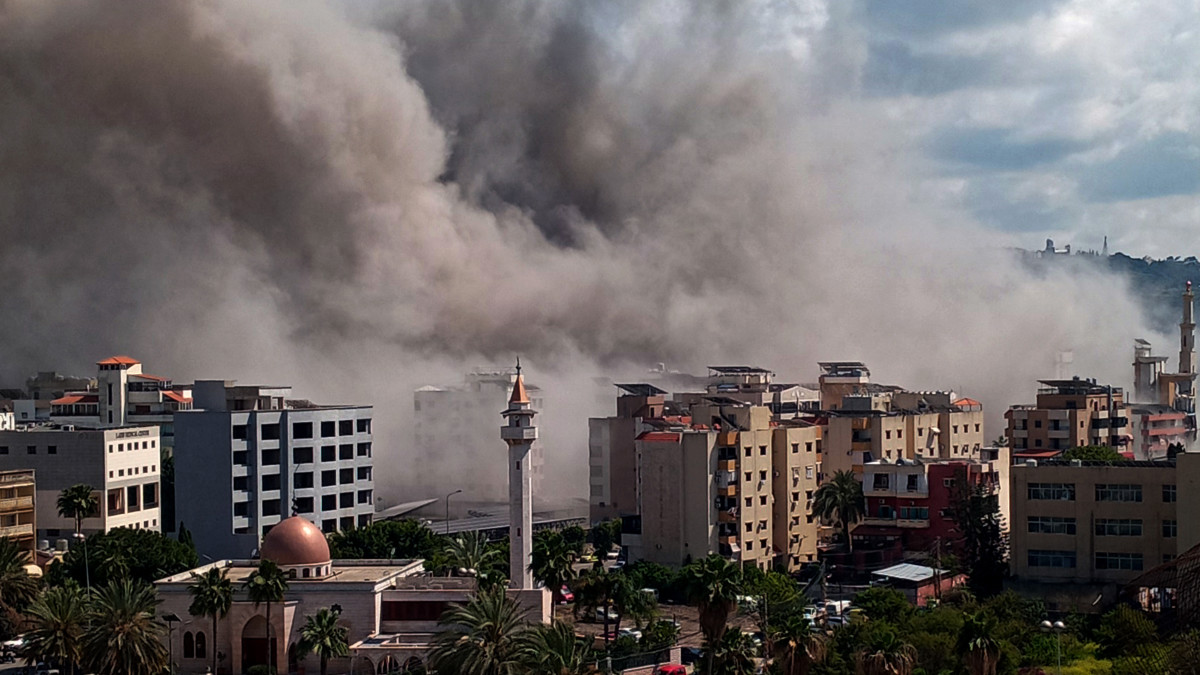
The most severe escalation came from Israel, which launched its deadliest round of airstrikes on Lebanon since the start of the wider war, hitting densely populated central Beirut and the Bekaa Valley. Lebanon’s Ministry of Health reported that at least 112 people were killed in the strikes, with more than 800 others wounded. A spokesperson for Netanyahu’s office immediately clarified that the U.S.-Iran ceasefire “does not include Lebanon,” a direct contradiction of Pakistani Prime Minister Shehbaz Sharif’s statement that all parties had agreed to an immediate ceasefire across all theaters, including Lebanese territory.
The Israeli escalation has already jeopardized the upcoming Islamabad peace talks. The Wall Street Journal reported that Iranian officials have informed mediators that Tehran will refuse to participate in Friday’s scheduled negotiations if Israeli attacks on Lebanon continue.