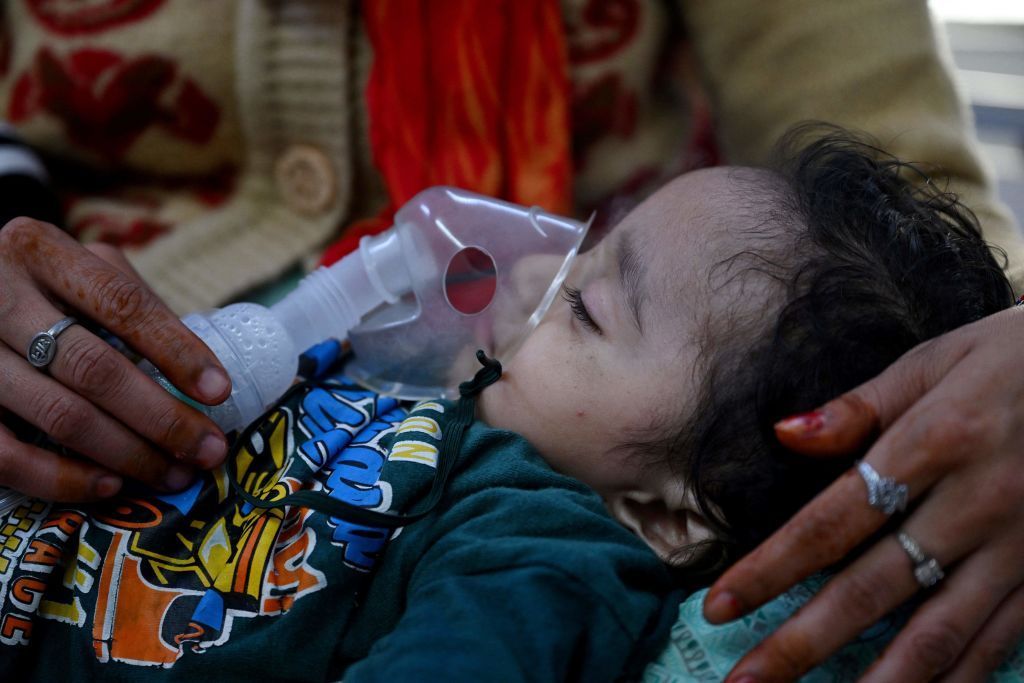
India’s capital faces a severe public health emergency as federal government data reveals staggering numbers of pollution-related respiratory illnesses. Between 2022 and 2024, six state-run hospitals in Delhi documented over 200,000 cases of acute respiratory conditions, with more than 30,000 patients requiring hospitalization during this period.
The toxic air crisis has become a recurring seasonal phenomenon in Delhi and its surrounding regions, particularly during winter months. Current measurements show Delhi’s Air Quality Index (AQI) consistently exceeding 20 times the World Health Organization’s recommended safety threshold. The AQI incorporates various pollutants including PM2.5—fine particulate matter capable of penetrating deep into lung tissue.
Multiple contributing factors create this environmental hazard: industrial emissions, vehicle exhaust, temperature inversions, reduced wind patterns, and the controversial practice of seasonal crop residue burning in neighboring agricultural states.
Statistical analysis reveals consistently high case numbers across recent years: 67,054 acute respiratory cases in 2022, 69,293 in 2023, and 68,411 in 2024. Government officials acknowledged to parliament that while elevated pollution levels correlate with increased emergency room visits, the study design cannot establish definitive causation.
Delhi’s air quality frequently surpasses the ‘severe’ threshold of 400 AQI—levels considered hazardous even for healthy individuals and critically dangerous for those with pre-existing conditions. Recent measurements recorded AQI levels around 380, maintaining the pattern of dangerously polluted air.
The crisis particularly affects vulnerable populations, with multiple hospitals reporting significant increases in pediatric patients suffering from pollution-related illnesses. The judicial system has taken note, with Delhi’s High Court preparing to hear petitions demanding immediate government action to address the hazardous air quality. India’s Supreme Court has repeatedly expressed concern about the persistent pollution problem in the capital region and surrounding areas.