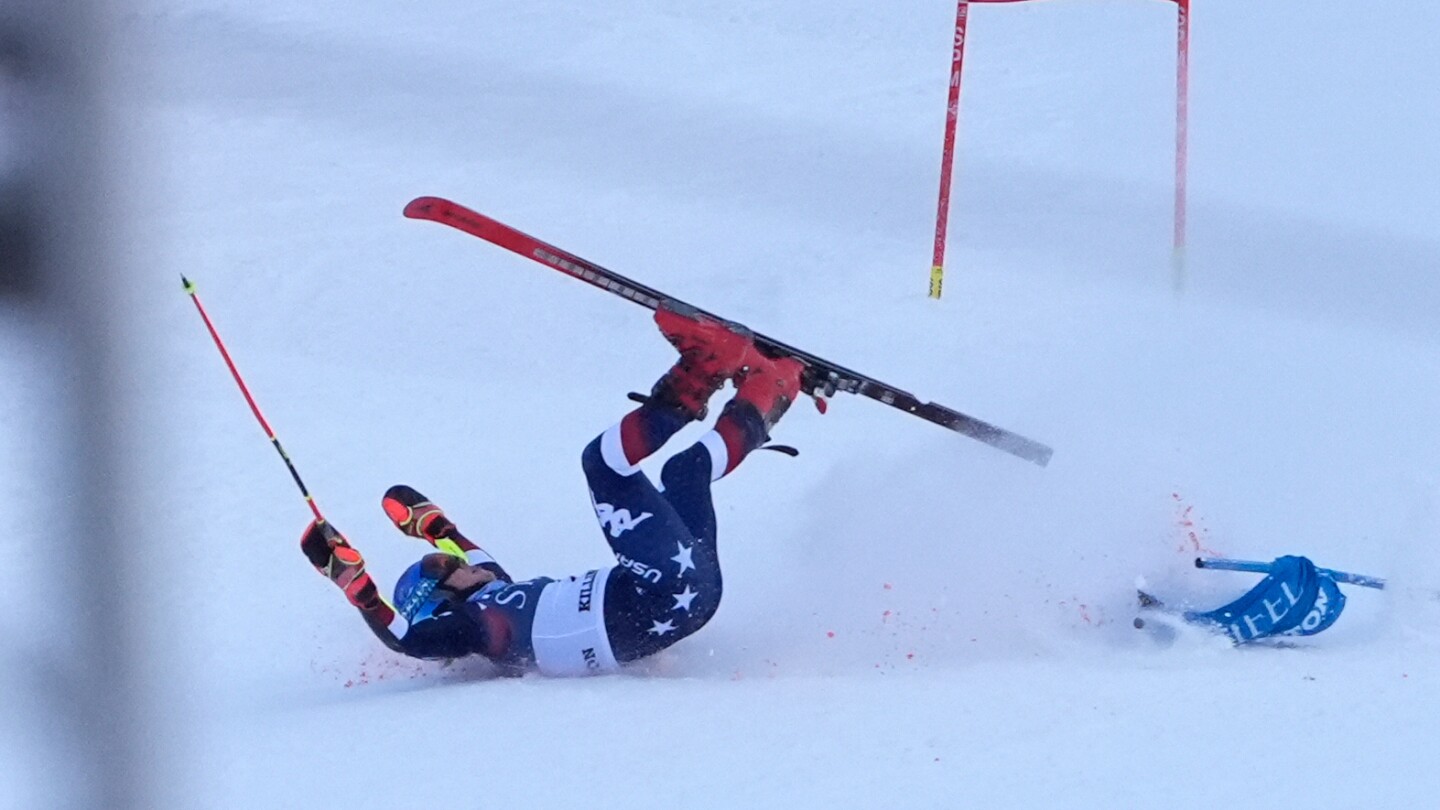
Mikaela Shiffrin, the renowned American skier, returned to the slopes with heightened caution after a severe crash last year left her with a punctured abdomen and damaged abdominal muscles. Her injuries, sustained during a World Cup giant slalom race, underscored the inherent risks of both competitive skiing and training. Shiffrin’s experience is not unique. French skier Alexis Pinturault echoed similar concerns, highlighting the unsafe conditions often faced during training sessions. The issue of safety in Alpine skiing gained renewed attention following the tragic death of Italian skier Matteo Franzoso in a preseason training accident in Chile. Franzoso’s death, the third among young Italian skiers in less than a year, has sparked urgent calls for improved safety measures. Shiffrin, who battled post-traumatic stress disorder after her crash, emphasized the need to reassess the risks athletes face. She argued that while skiing inherently involves danger, it is unacceptable to dismiss life-threatening risks as part of the sport. Training courses, often lacking the safety standards of race courses due to financial constraints, pose significant hazards. Smaller crews, fewer safety nets, and limited medical resources exacerbate the risks. Sofia Goggia, the 2018 Olympic downhill champion, likened high-level skiing to Formula 1 or MotoGP, emphasizing the extreme speeds and dangers involved. While increased safety netting is a partial solution, it is not a panacea. The Italian Winter Sports Federation has urged the International Ski and Snowboard Federation (FIS) to establish dedicated training courses with safety standards akin to those of World Cup races. FIS President Johan Eliasch acknowledged the need for improved safety measures, including better scheduling, more medical staff, and enhanced course preparation. However, implementing these changes remains a challenge, particularly for smaller federations with limited resources. The responsibility for safer training courses, according to Austrian coach Roland Assinger, cannot rest solely on local ski resorts. A coordinated effort among national federations is essential. As the skiing community grapples with these issues, the question of who will fund the necessary safety upgrades remains unanswered.
Debate on dangerous ski training courses flares at the start of Olympic season