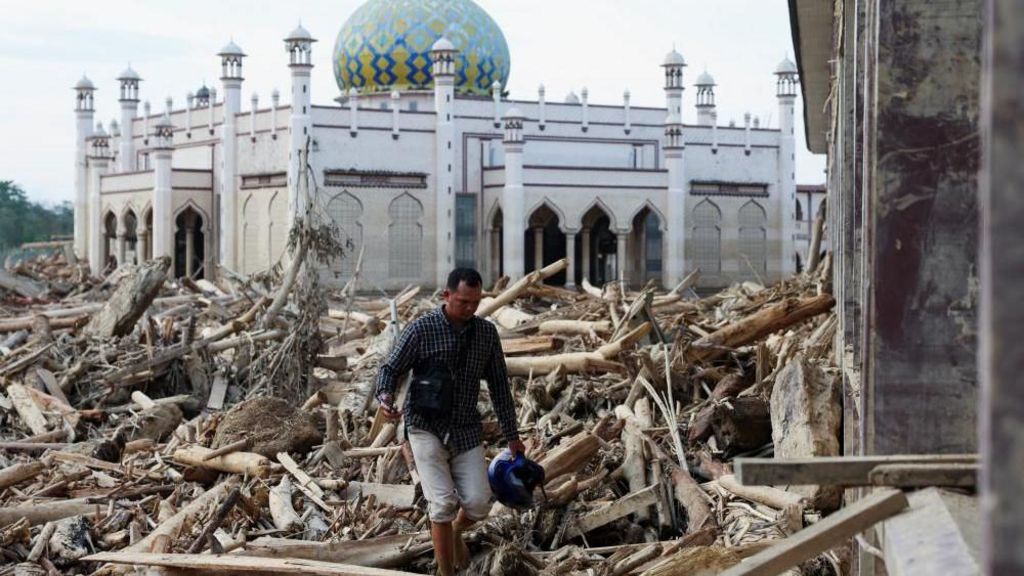
Indonesia faces a mounting humanitarian catastrophe as official figures confirm over 900 fatalities from devastating floods triggered by an unprecedented cyclone. The disaster, which struck with ferocious intensity last week, has left hundreds more missing and completely obliterated more than 100,000 residential structures across the archipelago nation.
The calamity originated when a rare cyclonic system developed over the Malacca Strait, unleashing torrential rainfall that precipitated massive landslides and catastrophic flooding throughout vulnerable regions. Rescue operations continue to face tremendous challenges, with remote areas remaining completely isolated and accessible only through complex airdrop missions delivering essential supplies.
In Aceh Tamiang, among the most severely affected regions, entire villages have been erased by powerful floodwaters. Survivors recount harrowing tales of survival against impossible odds. Fitriana, a resident of Lintang Bawah Village, described how neighbors endured three days without food or water while stranded on rooftops with young children. Preliminary assessments indicate approximately 90% of structures in her community suffered total destruction, displacing some 300 families.
Another survivor detailed a dramatic double evacuation—first by boat when waters inundated his home’s second floor, then subsequently fleeing to higher ground as flooding pursued them to neighboring Gampoeng Dalam Village. ‘Water suddenly soaked the mattresses while we slept,’ he recalled. ‘We couldn’t go anywhere else because there was no higher ground. Luckily, my daughter-in-law’s house had two levels.’
The regional governor reported recovery teams are now wading through waist-deep mud searching for victims, while warning that starvation poses a greater immediate threat than the floodwaters themselves. ‘Many people need basic necessities,’ he stated. ‘Many remote areas of Aceh remain untouched. People are not dying from the flood, but from starvation.’
The crisis has triggered extraordinary measures including the emergency release of inmates from a threatened prison facility, while isolated reports emerge of supermarket looting in desperate communities. Critical land routes to Sibolga City and Central Tapanuli remain severed, requiring ongoing sea and air supply operations.
This tragedy forms part of a broader pattern of extreme weather events sweeping across Asia, with cumulative fatalities from recent disasters in Sri Lanka, Thailand, Malaysia and Vietnam nearing 2,000 casualties, highlighting the region’s increasing vulnerability to climate-related catastrophes.