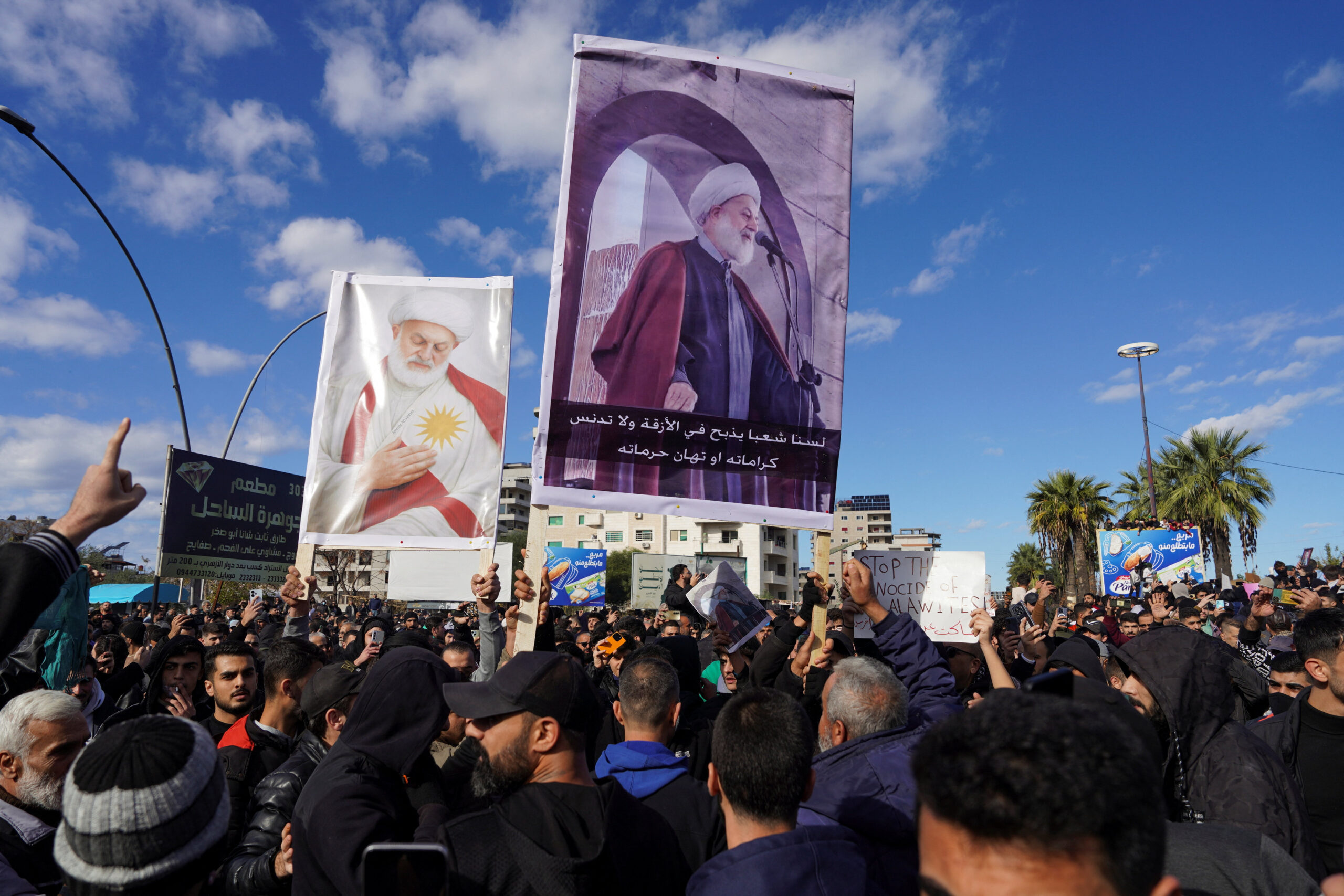
Syria’s coastal region descended into violent turmoil on Sunday as deadly clashes between armed groups and state security forces resulted in multiple casualties across Latakia and Tartous. The unrest, which claimed at least three lives and injured over 60 individuals, represents one of the most significant security challenges since the fall of the Assad regime.
The violence erupted during demonstrations organized by Alawite religious leader Ghazal Ghazal, who had called for peaceful protests demanding federal governance and condemning recent sectarian attacks. What began as organized gatherings quickly escalated into armed confrontations when elements described as former regime loyalists launched attacks against security personnel and civilians.
According to Syria’s Interior Ministry, security forces deployed to protect demonstrators came under direct assault from armed factions associated with remnants of the ousted government. The ministry confirmed several arrests of armed individuals and announced the apprehension of Basel Issa Ali Jamahiri, a member of the extremist Saraya al-Jawad group linked to former Assad loyalists.
Medical authorities reported treating victims with injuries ranging from blade wounds to gunshot trauma, while two ambulances were disabled during response operations. In a particularly concerning development, assailants targeted a police station in Banias, Tartous with a hand grenade that wounded two officers.
The Syrian Defense Ministry responded by deploying army units with armored support to restore order in both coastal cities. Security forces established strategic positions at key intersections including al-Azhari and al-Zira’a roundabouts to protect public order.
The unrest appears connected to Friday’s mosque bombing in Homs that killed eight worshippers and injured eighteen. The previously unknown Saraya Ansar al-Sunna claimed responsibility for the attack, explicitly citing targeting of Alawite community members.
These events highlight the escalating sectarian tensions that have intensified since President Assad’s ouster in December 2024. The Alawite minority, historically associated with the former ruling establishment, now reports increasing vulnerability and targeted violence across Syria.