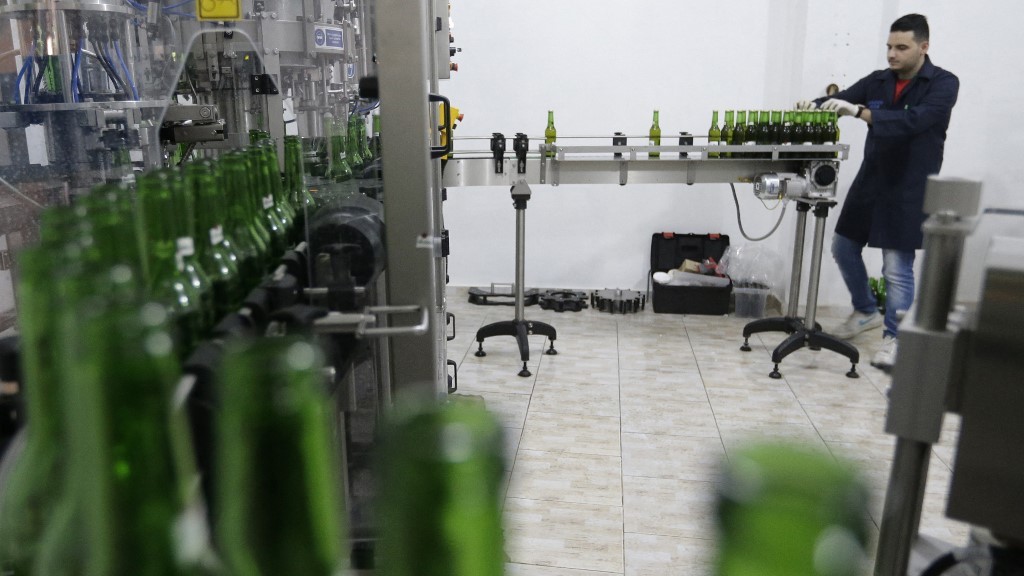
The transitional government in Damascus has enacted a sweeping prohibition on alcohol sales throughout the Syrian capital, marking a significant shift in social policy since the overthrow of Bashar al-Assad’s regime. The new regulations, announced Monday, forbid the sale of alcoholic beverages in restaurants and nightclubs across most of the city, citing numerous public complaints and aiming to eliminate practices deemed contrary to public morals.
The ban contains notable exceptions for three predominantly Christian districts—Bab Touma, Qassaa, and Bab Sharqi—where alcohol sales will be permitted under strict conditions. Establishments in these exempted areas must hold specific commercial building permits and may only sell sealed containers for takeaway consumption. Additionally, all businesses authorized to sell alcohol must maintain a minimum distance of 75 meters from religious sites, educational institutions, and cemeteries, and at least 20 meters from police stations and government buildings.
This policy represents a departure from the government’s previous restraint in imposing social restrictions since President Ahmed al-Sharaa assumed power in December 2024. Sharaa, whose former Hay’at Tahrir al-Sham group was once affiliated with al-Qaeda, had largely avoided such measures until recent months. The alcohol ban follows other controversial regulations, including January’s prohibition on makeup for female public sector employees and last year’s mandate requiring full-body swimsuits on public beaches.
The sectarian nature of the exemptions has sparked significant criticism from various segments of Syrian society. Many secular Sunnis and religious minorities view the ban as an infringement on civil liberties, while analysts argue the neighborhood-specific exemptions institutionalize religious segregation. Syrian analyst Jihad Yazigi noted on social media platform X that the decision effectively creates division between Muslim and Christian communities, reversing historical trends toward integration that had begun even during the late Ottoman period.
The controversial social policies emerge as the transitional government faces multiple challenges, including domestic unrest, Israeli attacks, and complex diplomatic relations with former allies and adversaries. The government’s legitimacy remains questioned following October’s parliamentary elections, where Sharaa directly appointed one-third of representatives while government-appointed committees selected the remainder. The electoral process notably excluded the Druze-majority Sweida province and Kurdish-held northeast regions, leaving 32 parliamentary seats vacant.
According to a temporary constitution announced in March, the current parliament will exercise legislative functions throughout a five-year transitional period until permanent constitutional arrangements can be established. Government officials maintain that conventional elections remain unworkable following Syria’s devastating 13-year conflict, which resulted in hundreds of thousands of deaths and millions displaced. However, the selection process has disappointed pro-democracy advocates who had anticipated more substantial political reforms following Assad’s ouster.