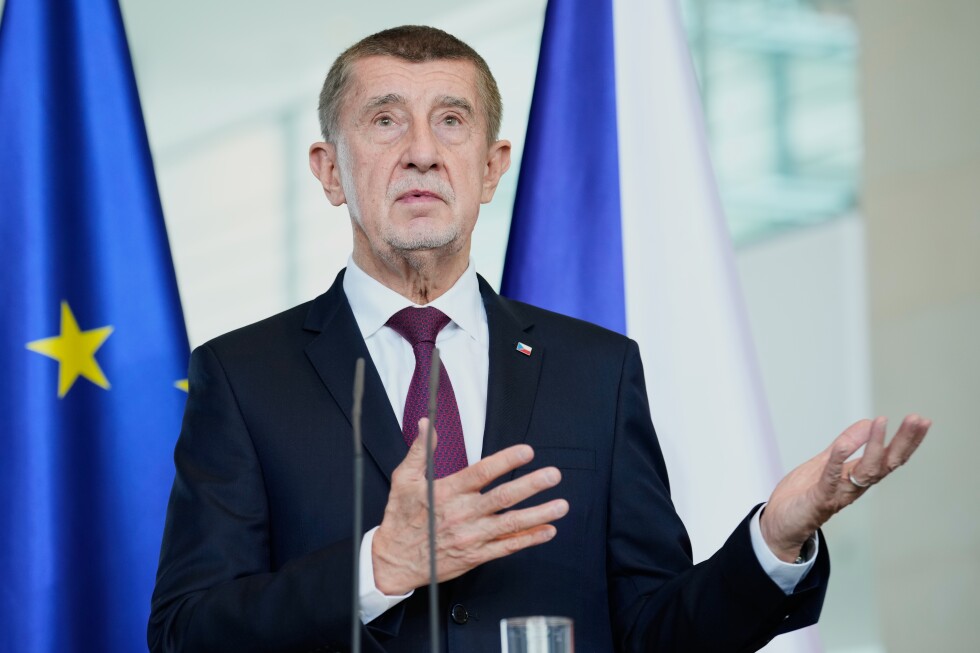
PRAGUE — The Czech Parliament has formally ratified a 2026 national budget that fails to meet NATO’s defense spending benchmark, defying calls for increased military investment from both the United States and Czech President Petr Pavel. The lower house of Parliament, dominated by supporters of populist Prime Minister Andrej Babiš, approved the spending plan with a 104-87 vote in the 200-seat chamber.
The approved budget allocates approximately 155 billion koruna ($7.4 billion) to defense, representing just 1.7% of the country’s gross domestic product—falling short of NATO’s established 2% target. While the figure could technically approach the alliance requirement if supplementary defense-related funding across other ministries is considered, it remains uncertain whether NATO would accept this accounting approach for a member state that joined the alliance in 1999.
Prime Minister Babiš defended the budget decision, emphasizing competing priorities including public health initiatives and citing constrained fiscal conditions inherited from the previous administration. “This represents the maximum possible allocation given our current financial circumstances,” Babiš stated during parliamentary deliberations.
The spending decision comes despite NATO members’ 2014 commitment to reach the 2% threshold by 2023, with subsequent agreements at the 2025 Hague Summit calling for even more ambitious targets of 3.5% of GDP for core defense requirements and an additional 1.5% for security-related expenditures by 2035.
President Pavel, a former army general, voiced strong objections to the budget, referencing Russia’s ongoing invasion of Ukraine as justification for enhanced military preparedness. “In the current security environment, there exists no defensible rationale for allowing defense and security expenditures to remain stagnant,” Pavel asserted.
The budgetary decision reflects the political orientation of Babiš’s governing coalition, which includes the Freedom and Direct Democracy party and the Motorists group—both known for their skepticism toward continued support for Ukraine and certain European Union policies.
U.S. Ambassador Nicholas Merrick previously emphasized the collective nature of NATO commitments, warning that “Czechia would risk being among the lowest spenders in the alliance” with the proposed budget and would demonstrate “negative momentum compared to peer NATO partners.”