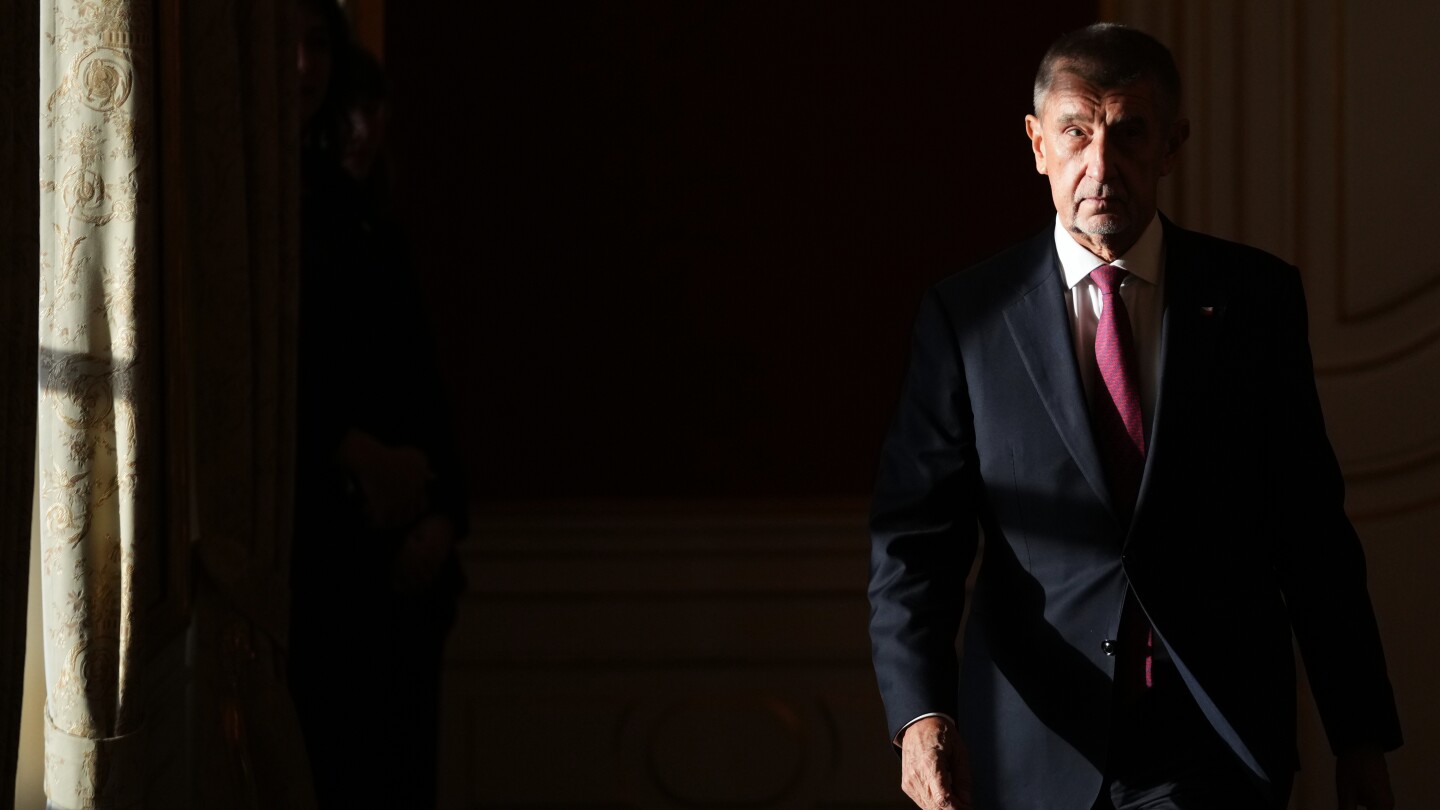
PRAGUE — Andrej Babiš, the populist billionaire leader, officially assumed the role of Czech Prime Minister on Tuesday following his October parliamentary election victory. This political comeback marks a significant shift in the nation’s trajectory, particularly regarding European Union relations and support for Ukraine amidst ongoing regional conflicts.
Babiš, who previously governed from 2017 to 2021, took his oath of office with ambitious promises to champion Czech interests globally and transform the country into ‘the best place for life on earth.’ His appointment came after President Petr Pavel formally requested him to form a government, recognizing the strong electoral performance of Babiš’s ANO (YES) movement.
The new administration represents a coalition between Babiš’s centrist ANO party, the anti-migrant Freedom and Direct Democracy party, and the right-wing Motorists for Themselves group. This alliance commands 108 seats in the 200-member lower parliamentary house, effectively sidelining the previous center-right coalition led by Petr Fiala.
Government structure will see ANO controlling eight ministerial positions including the premiership, while coalition partners receive four and three portfolios respectively. The complete cabinet is scheduled for formal appointment by President Pavel next Monday.
International observers note this development aligns the Czech Republic more closely with the foreign policy approaches of Hungary and Slovakia, particularly regarding reduced support for Ukraine in the ongoing conflict with Russia. The coalition has additionally expressed strong criticism toward EU policies, especially concerning environmental regulations and migration management.
Hungarian Prime Minister Viktor Orbán, widely regarded as Vladimir Putin’s closest EU ally, welcomed Babiš’s return to power with enthusiastic remarks: ‘An old ally has returned. Welcome back on board Andrej!’
The 71-year-old billionaire’s return to power comes despite ongoing legal challenges, including fraud charges related to EU subsidies. The new parliament must lift his immunity before courts can proceed with a verdict.
Babiš secured the premiership after meeting President Pavel’s condition to address potential conflicts of interest by transferring his extensive business empire—approximately 200 companies under the Agrofert conglomerate—into a trust fund managed by an independent trustee. The arrangement stipulates the businesses will remain under independent supervision during his lifetime before passing to his descendants.