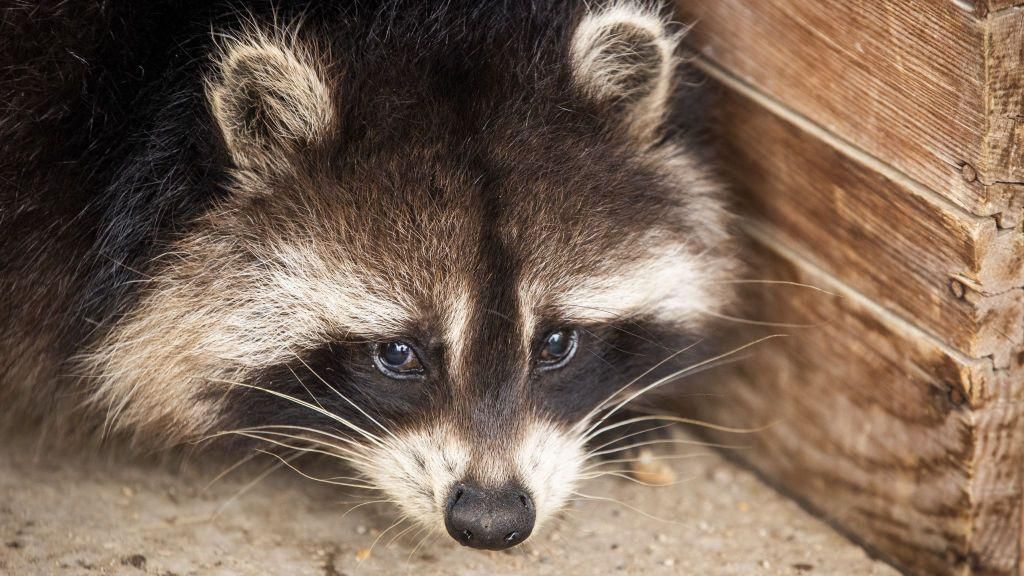
Raccoons, often affectionately dubbed ‘trash pandas’ for their notorious habit of scavenging through garbage, are showing signs of domestication, according to a groundbreaking study. The research, published in the journal Frontiers in Zoology, analyzed nearly 20,000 photographs and revealed a notable reduction in snout length among urban raccoons compared to their rural counterparts. This physical change mirrors the early stages of domestication observed in cats and dogs. The study suggests that these masked mammals are adapting to human environments, potentially dampening their innate fight-or-flight responses. Raffaela Lesch, a co-author from the University of Arkansas at Little Rock, emphasized that trash plays a pivotal role in this urban domestication. ‘Trash is really the kickstarter,’ she told Scientific American. ‘Wherever humans go, there’s trash — and animals love our trash.’ The study also highlights the ‘domestication syndrome phenotype,’ which includes traits like curly tails, floppy ears, and reduced facial skeletons, commonly seen in domesticated animals. Interestingly, the authors argue that domestication might not always be initiated by humans but could begin naturally as animals adapt to human environments. This process, they suggest, is driven by natural selection, favoring animals with reduced flight responses. As raccoons continue to thrive in both wild and urban settings, they occupy a unique space in American life — cherished as pets in some neighborhoods and viewed as pests in others. Their increasing comfort around humans, coupled with their evolving physical traits, suggests that raccoons might be inching closer to becoming America’s next beloved pet.
Cuter and closer: Raccoons may be on their way to becoming America’s next pet