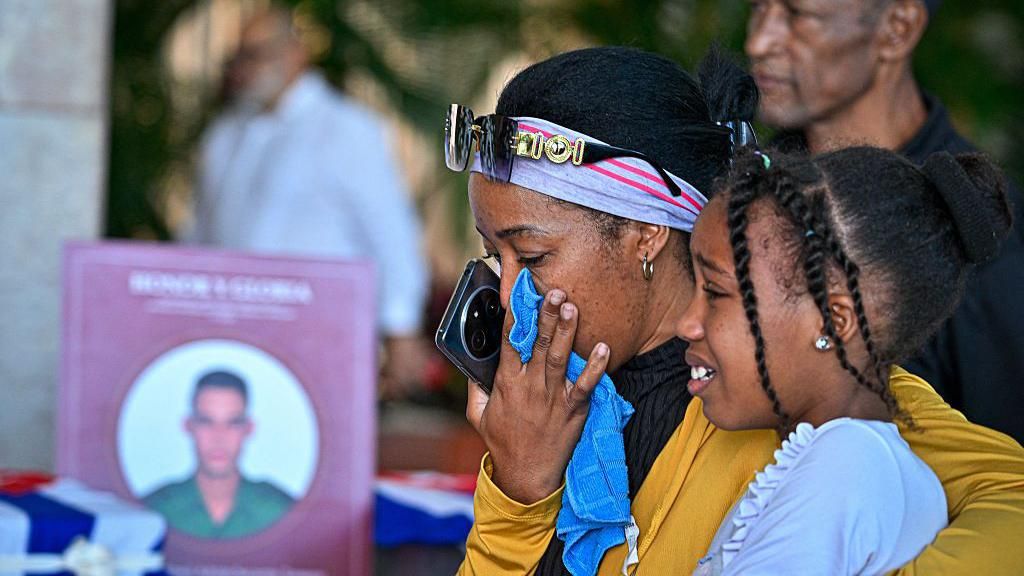
Havana witnessed a solemn procession as the remains of 32 Cuban personnel killed during recent US military operations in Venezuela returned home. From sunrise, military formations, government officials, and civilians lined the route between José Martí International Airport and the Armed Forces Ministry, paying respects to what state media termed “fallen heroes.” The country’s leadership, including Raúl Castro and President Miguel Díaz-Canel, received flag-draped boxes containing cremated ashes, each displayed alongside photographs of the deceased beneath inscriptions reading “honor and glory.
This incident represents the most significant combat loss for Cuban forces at US hands since the 1961 Bay of Pigs invasion, highlighting the rarity of direct military engagements between the two nations over the past six decades. The successful Delta Force operation, resulting in no reported American casualties, demonstrated the tactical disparity between US special forces and Cuban operatives.
The aftermath has forced Havana’s unprecedented acknowledgment of deploying intelligence officers within Venezuela’s power structures, confirming long-standing allegations about Cuban involvement across Caracas’ security apparatus. This revelation exposes the深度of intelligence cooperation that formed a cornerstone of bilateral relations, with Cuba sharing decades of experience in maintaining political control with its Venezuelan partners.
Geopolitical shifts are accelerating following Venezuela’s leadership transition. Interim President Delcy Rodríguez’s telephone diplomacy with Donald Trump—who subsequently praised her as “a terrific person”—marks a dramatic reversal from previous US characterization of Venezuela’s government as “narco-terrorists.” This emerging modus vivendi between Caracas and Washington leaves Cuban officials uncertain about their future influence in the region.
Amid these developments, 88-year-old revolutionary veteran Víctor Dreke—a contemporary of Fidel Castro and Che Guevara—draws parallels with the 1961 invasion, insisting Cuba would vigorously resist any US incursion. “If the Americans put a single foot on Cuban soil, it won’t be like their cowardly ambush of our combatants in Venezuela,” Dreke asserted, quoting Raúl Castro’s warning about stirring “a hornets’ nest.”
The nation prepares under difficult circumstances: widespread blackouts, an economy crippled by embargo and mismanagement, scarce fuel, and stagnant tourism recovery. The potential loss of Venezuelan support compounds these challenges, creating what many perceive as a bleak outlook. Yet revolutionary veterans like Dreke maintain that Cuba has endured previous crises and will persevere through continued resistance, even as officials emphasize they seek no escalation with Washington.