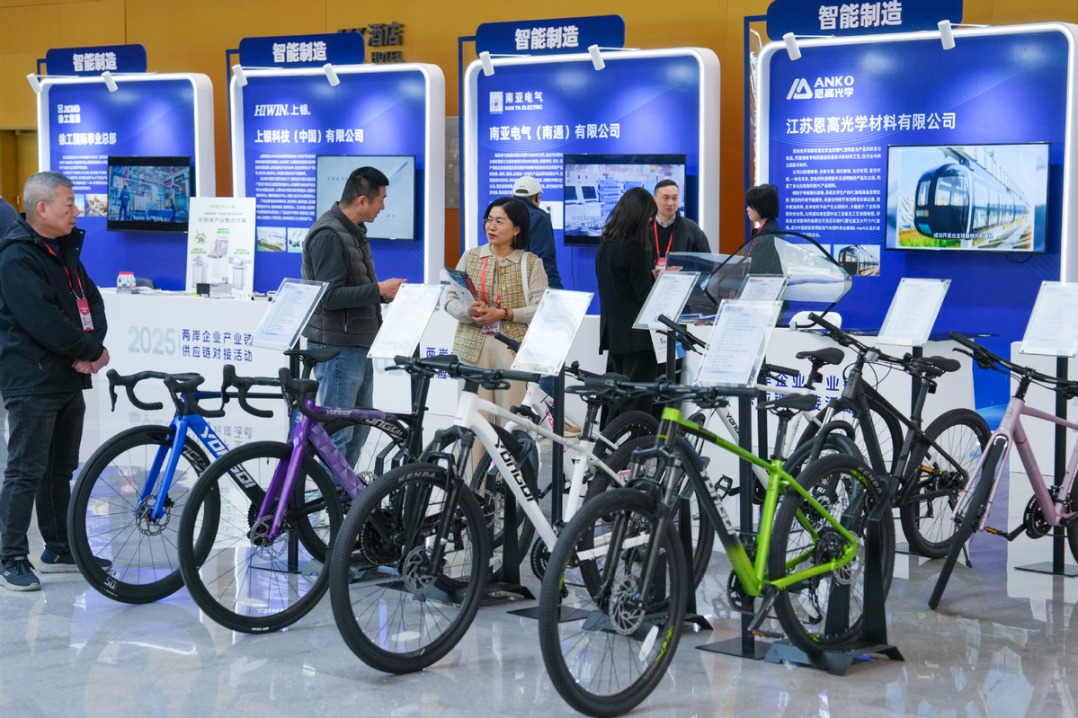
NANJING—Senior Chinese official Wang Huning has emphasized that enhanced economic collaboration between mainland China and Taiwan is indispensable for national rejuvenation and common prosperity. Speaking at the 2025 Cross-Strait CEO Summit in Nanjing on December 16, the chairman of the Chinese People’s Political Consultative Conference National Committee articulated that businesses across the Strait must deepen cooperation to advance shared economic interests and fortify the Chinese nation’s future.
Wang, a Standing Committee member of the CPC Central Committee Political Bureau, reinforced President Xi Jinping’s stance that China’s revitalization presents substantial opportunities for cross-Strait economic synergy. He asserted that compatriots on both sides are integral components of China’s national economy and would collectively benefit from a prosperous, powerful nation.
The summit occurred amid strategic implementations following the CPC’s 20th Central Committee fourth plenum, which outlined developmental blueprints for the 15th Five-Year Plan (2026–2030). Wang characterized these designs as catalytic for cross-Strait relations, potentially injecting fresh momentum into economic cooperation and advancing peaceful reunification efforts.
Taiwanese representatives echoed the sentiment. Liu Chao-hsuan, chairman of the summit’s Taiwan side, acknowledged the mainland’s enduring role as a critical production base and market for Taiwan businesses despite global economic volatility. He highlighted the summit’s adherence to the 1992 Consensus as a foundational principle for industrial collaboration.
Corporate leaders provided ground-level perspectives. Fei Kuang-han, general manager of Kunshan Bonteck Precision Co, reported robust support for Taiwanese entrepreneurs in Jiangsu province, noting increasing long-term investments. Lee Cheng-hung, president of the Association of Taiwan Investment Enterprises on the Mainland, urged young Taiwanese to explore opportunities in e-commerce, digital economies, and artificial intelligence.
Academic insights from Kao Chang, an honorary professor at Taiwan’s Dong Hwa University, underscored the inevitability of cross-Strait integration. He described Taiwan’s economy as inherently outward-looking and emphasized that mainland market forces would continue to drive collaborative growth despite international uncertainties.
The event attracted approximately 800 participants, including entrepreneurs, scholars, and summit council members, all engaged in dialogues aimed at fostering industrial innovation and economic unity.